Get Full Government Meeting Transcripts, Videos, & Alerts Forever!
Get email alerts on the School Facilities topic
No spam. Unsubscribe anytime.
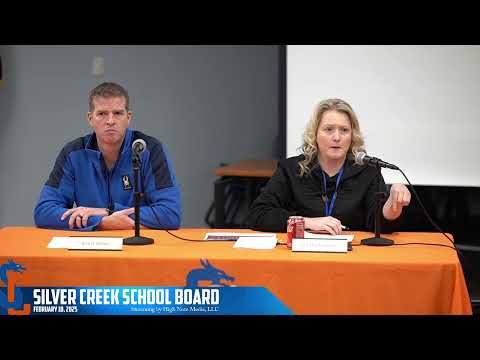
Silver Creek board hears $62.9 million facilities plan; district says transfers sustain staff pay
Summary
Board leaders presented a multi-part construction and renovation proposal that would create new classroom capacity and a field house, and explained how out‑of‑district transfer students affect the district's operating revenue and staffing.
The Silver Creek School Corporation board on Feb. 18 heard a detailed presentation on a proposed facilities plan that would expand primary and elementary capacity, build a new two-grade school with room for future expansion, and potentially add a field house. Presenters also explained the district's long-standing policy to accept out-of-district transfer students and described how those transfers affect annual operating revenue and staffing.
The presentation included a construction cost estimate of $62,856,250 (rough total construction and soft costs). District planners said the plan would shift building capacities so the primary school moves from about 20% over capacity to about 20% under, the new school would be about 16% under capacity at opening, the elementary would go from 5% over to about 18% under, and the middle school would move from 21% over to about 22% under. The district described the package as sized to absorb roughly 10 years of projected growth at a historical growth rate of a little more than 3% per year.
Why transfers matter: board presenters reviewed state funding and average daily membership (ADM) mechanics and said the district counts students twice a year for state funding. Using a per-pupil figure for comparison (presented at $7,500 per student for the purpose of the discussion), the presenter said transfers out of the district increased from 660 students in 2021 to 871 in the most recent year, a difference of 211 students and an estimated cumulative lost revenue of roughly $1.5 million (about $527,000 per year), using the discussion's per-student benchmark. The district reported that transfers in over the same period partially offset losses, producing an average net offset of about $307,000 per year compared with 2021, and said those inflows helped fund starting-pay increases and other staffing costs cited by the administration.
Work-based learning and extracurricular capacity: the board discussed how the state's new diploma structure increases emphasis on work-based learning and career seals. District staff said they already offer early-release and other options for juniors and seniors and are expanding work-based learning partnerships, including a named career navigator working with Ivy Tech to coordinate internships and employer connections. Board staff cautioned that large student demand for internships could strain placement capacity and that the district may need to assign staff to manage placements and employer agreements.
Planned scope and next steps: the proposal enumerated five priorities: expand Silver Creek Primary (pre-K–1) to add classroom space and special-education rooms; build a new two-grade school (planned to take second and third grade), repurpose the existing elementary into a 4–6 building, modify the middle school into a 7–8 building, and a field house funded if resources remain. The presentation included a tax-calculator link on the district website for taxpayers to estimate local cost by assessed value and said architect and estimate work is preliminary; figures were described to the board as estimates subject to change with market conditions and final design.
Board members and staff also described operational needs tied to facilities: continued preventive maintenance, HVAC and roof replacement, and a bus-replacement program. Construction-phase dates were discussed as dependent on approvals and market timing; the presentation said earlier construction would likely yield somewhat lower costs than projects delayed by several years.
Votes at a glance: several routine board motions taken during the meeting passed unanimously. The board approved emergency additions and revisions to the agenda (motion carried 5-0), approved minutes for the Jan. 28 executive session and regular meeting (motion carried 5-0), and approved the full consent agenda (motion carried 5-0), which included personnel appointments, resignations, leaves, donations and other routine items. The meeting adjourned after a final approval motion (carried 5-0).
Why it matters: board leaders said expanding capacity and preserving staff pay are linked: accepting transfer students affects ADM and operating revenues that the district uses to fund teacher pay and classroom services. The district framed the package as a multi-year plan to create room for growth, support extracurricular and work-based learning opportunities, and maintain staffing levels the administration said are necessary to sustain educational programs.
What the board will do next: presenters said the district will continue community outreach, publish a tax-calculator tool online, and return to the board with additional detail on academic impacts, enrollment scenarios, and referendum timing in upcoming meetings. No referendum vote or binding authorization was taken at the Feb. 18 meeting.