Get Full Government Meeting Transcripts, Videos, & Alerts Forever!
Get email alerts on the Land Use topic
No spam. Unsubscribe anytime.
Council approves rezoning, plat for Northwind wind‑tunnel complex on 60.7 acres
Summary
Rosemount City Council voted 5-0 to rezone 60.7 acres from agricultural to B-2 employment and approved a preliminary and final plat for Northwind Test LLC’s proposed Minnesota Aerospace Complex, which developers say will include three wind‑tunnel facilities, a University of Minnesota presence and a new right‑of‑way.
The Rosemount City Council on Feb. 18 approved two motions to allow Northwind Test LLC to move forward with early development of a wind‑tunnel testing complex on a 60.7‑acre site immediately south of the META data center.
Councilmember Esler moved to adopt an ordinance rezoning the parcel from A‑2 (agricultural) to B‑2 (employment); the motion was seconded by Councilmember Tyson and passed on a 5‑0 roll call. The council then approved a resolution adopting the preliminary and final plat for the “Northwind Addition,” a motion moved by Esler, seconded by Klimpel and also passing 5‑0.
Senior Planner Nemechek told the council the two items before it were limited to rezoning and platting; additional entitlements — including any planned unit development (PUD), site plan reviews and building permits — would be required before construction. The plat creates two buildable lots: a larger main parcel where the testing facility is proposed and a smaller parcel in the northeast corner reserved for an electrical substation; the plat also dedicates right‑of‑way for a new 150 First Street and includes a temporary easement to allow a cul‑de‑sac until adjacent development occurs.
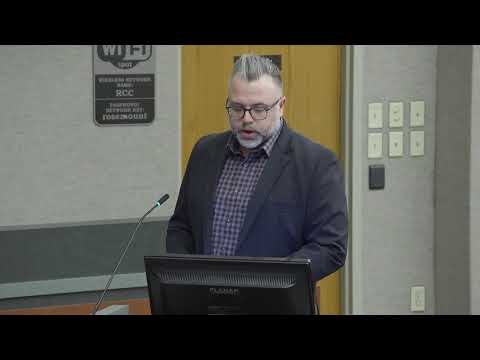
David Meyer, chief executive officer of Northwind, said the project — which the company described as the Minnesota Aerospace Complex — would house three wind‑tunnel facilities, university research space and multiple tenants. “We’re excited to design and build and operate the Minnesota Aerospace Complex in Rosemount,” Meyer said. He told the council the long‑term employment at the full buildout was expected to be about 100 people and that the company anticipates total building area in the 200,000–250,000 square‑foot range. Meyer said the project’s capital investment is anticipated at about $1 billion and that the developer’s goal is to have site design work and some bidding occur this year with a five‑year timeline to bring all three facilities online.
Leslie Krieger, assistant vice president for planning, space and real estate at the University of Minnesota, told the council a deed restriction placed by the university on land sold to META requires a 1,000‑foot buffer from META’s borders. Krieger said the restriction covers heavy industrial uses as well as residential development and schools. “That was a condition of the sale,” she said, referring to the deed restriction.
Council questions at the meeting focused on site layout, parking capacity, the composition of anticipated jobs and sequencing with nearby construction at the META site. Meyer said the University of Minnesota will provide modeling and simulation expertise and that the project team expects to sequence foundation and site work alongside META’s construction to avoid conflicts.
Staff noted the rezoning recommendation conformed with the city’s comprehensive plan and municipal urban services area boundary. Nemechek said a PUD overlay may be sought later to allow multiple principal structures on a single parcel but that no PUD or site plan had been approved at this stage.
Votes at a glance: • Approval of agenda with addition (item 6 ks — lifetime change orders 14 and 15): motion by Mayor (mover name not specified), second not specified; passed 5‑0. • Consent agenda (items 6a–6k, including donation acceptance to Rosemount Community Band): motion by Councilmember Tyson, second by Councilmember Klimpel; passed 5‑0. • Ordinance to rezone 60.7 acres from A‑2 to B‑2 employment (Northwind site): motion by Councilmember Esler, second by Councilmember Tyson; roll call yes votes — Klimpel, Weisensel, Tyson, Reske, Esler; passed 5‑0. • Resolution approving the Northwind Addition preliminary and final plat (subject to staff conditions): motion by Councilmember Esler, second by Councilmember Klimpel; roll call yes votes — Klimpel, Weisensel, Tyson, Reske, Esler; passed 5‑0.
Why it matters: Rezoning and plat approval clear early regulatory hurdles for a large private research and testing project that developer and university representatives described as a major local investment. The approvals do not authorize construction; further reviews and permits are required before buildings can be sited or built.
What’s next: City staff and the applicant will address outstanding plat conditions required by the city before final recording. Future filings likely include a PUD application (if sought), site plan and building permit applications, and any utility or access agreements required for the substation and 150 First Street right‑of‑way.
Reporting notes: The council’s discussion and the motions were limited to land‑use approvals (rezoning and plat). Statements about employment numbers, square footage, investment and timeline were provided by David Meyer, CEO of Northwind, and reflect the developer’s estimates rather than city approvals.