Get Full Government Meeting Transcripts, Videos, & Alerts Forever!
Get email alerts on the Workers Compensation topic
No spam. Unsubscribe anytime.
Department-requested cleanup bill would simplify workers’ compensation reporting and tighten privacy on medical status forms
Summary
House Bill 428, carried by Representative Thiel, would clarify which employer is responsible for workers’ compensation when one firm loans a worker to another, change a quarterly insurer report to annual reporting, and remove personal health information from the medical status form.
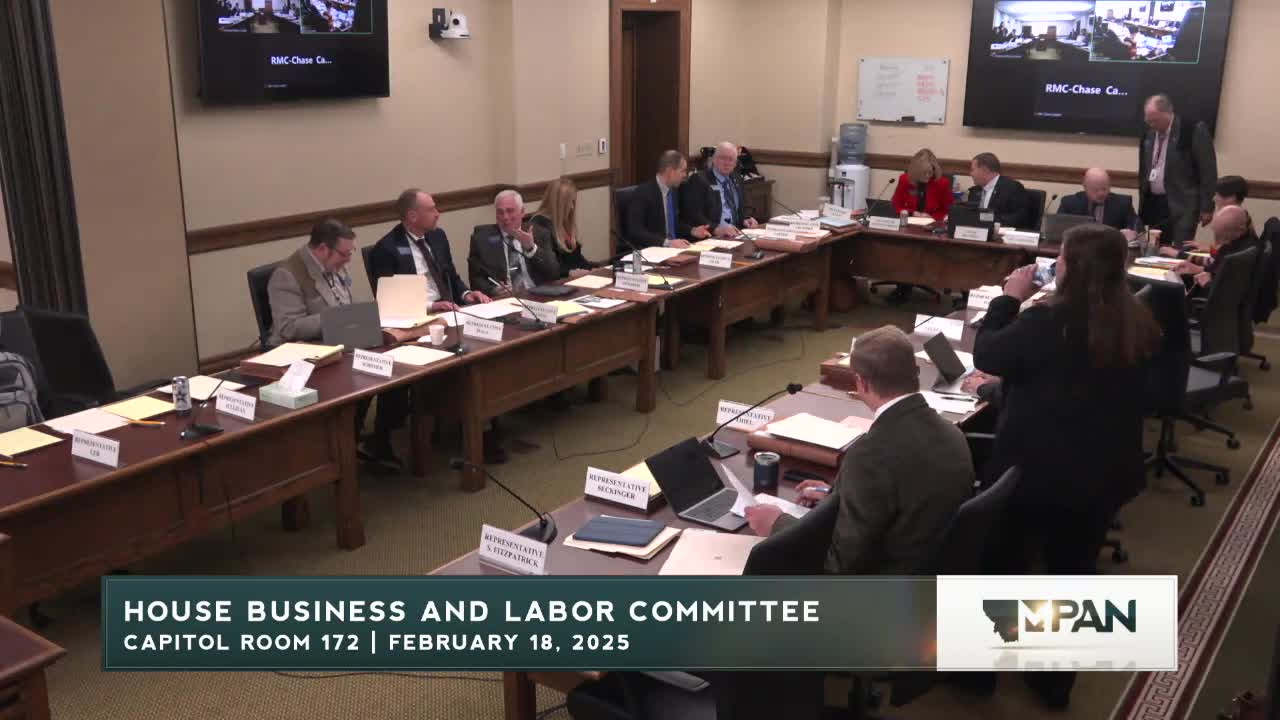
Representative Thiel opened the hearing on House Bill 428 and described it as a Department of Labor cleanup bill with four specific changes: clarification of employer responsibility when one employer furnishes a worker to another, a cross-reference cleanup, changing an insurer reporting requirement from quarterly to annual, and limiting personal health information on the workers-compensation medical status form.
Quinlan O'Connor, chief legal counsel for the Department of Labor and Industry, told the committee section 1 addresses litigation that produced an unfair result when two uninsured employers were involved: under current drafting, the employer that did not control the work sometimes ended up liable. “All this section is doing is saying that whoever controls the work is liable. That is standard in work comp, it makes sense to us, and it closes this, sort of backwards loophole,” O'Connor said.
O'Connor said section 3 will change reporting from quarterly to annual because the department consolidates the reports at year end, so annual reporting reduces administrative burden for insurers and the department. Section 4 removes personal health details from the medical status form so employers do not receive unnecessary protected information.
Kevin Bartsch of MSGIA (a self-funded school group workers-comp pool) supported the bill, saying annual reporting would save staff time and the redrafted medical-status form contains the information employers need to get employees back to work without exposing detailed treatment plans.
Al Smith, identifying himself as counsel for a plaintiffs'/litigation group, said he signed in as an opponent only to flag concerns about section 1’s language; he asked that the law continue to require that the loaning entity be held responsible in appropriate circumstances. O'Connor responded that Montana law already requires employers to carry coverage and that the amendment is intended to make liability align with who controls the work; if both lack coverage the Uninsured Employers Fund would address recapiture.
No formal committee vote took place during the hearing. The sponsor asked the department to continue stakeholder engagement; representatives asked procedural questions about why the bill was not labeled “by request” for the agency and Commissioner Sarah Swanson explained the interim committee pre-introduction process.