Get Full Government Meeting Transcripts, Videos, & Alerts Forever!
Get email alerts on the Water Infrastructure topic
No spam. Unsubscribe anytime.
Troy issues citywide boil advisory after major water main break; tests show no contamination
Summary
A major water main break near the city’s treatment plant left about 7,500 customers without water, prompted a citywide boil-water advisory and a multiagency response. City officials say 54 water samples were clear and the advisory was lifted after testing.
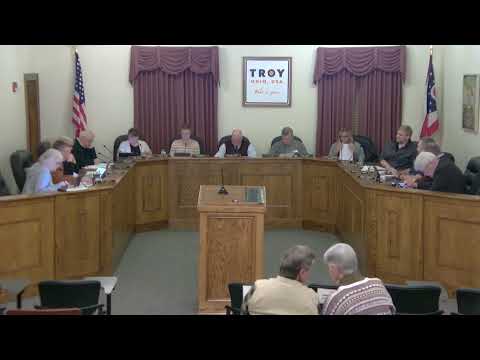
Troy City officials described a multi-stage response after a major water main break outside the city’s water treatment plant forced crews to shut a remote valve and temporarily cut service to about 7,500 customers northeast of the river.
Director of Public Safety Mr. Titterington gave a detailed timeline of the incident during the council meeting, saying city staff discovered the break in the afternoon when SCADA alarms indicated a large drop in system pressure. Crews traced the affected 12-inch high-service line and, after working through dozens of valves, found the shutoff at Community Park at about 9:30 p.m. The superintendent repaired the split section of pipe by about 3:15 a.m., city staff said.
The city issued a boil-water advisory at about 6:30 p.m. the evening of the break, initially limited to the northeast side because only that area had depressurized to the 20-psi threshold that triggers the advisory. City staff later broadened the advisory to the whole city while monitoring tank levels and system pressure, Titterington said.
Nut graf: The advisory followed a prolonged repair and flushing effort; city officials said they took 54 water samples that required a minimum 24-hour incubation window. Tests on all samples showed no growth, and the city lifted the advisory once public-health criteria were met.
City staff described the repair as technically difficult because several large-diameter pipes exit the plant in the same area and multiple valves had to be exercised to isolate the break. The crew ultimately removed and replaced about 6 feet of 12-inch pipe where the radial split occurred and pumped the excavation clear before beginning repairs. Hydrants across town were flushed through Saturday to clear air and sediment stirred by the pressure change, the director said.
Titterington said the Environmental Protection Agency monitored the response and was prepared to deploy a mobile water unit if service outages exceeded 24 hours. He also said the EPA provided positive feedback on the city’s handling of the incident.
Council members asked several operational questions during the meeting. Councilmember Westfall asked whether any tests were positive; Titterington said none of the 54 samples showed contamination. Councilmember Whitten asked about the likely cause; staff cited a combination of pipe age and freeze-thaw shifting. Staff named several employees involved in the response, including water treatment plant superintendent Gary Evans, city engineer Jill Rhodes and assistant engineer Christy Butera.
City communication: Titterington acknowledged problems with one distribution method for the advisory, saying an autogenerated notification did not reach all intended destinations even though staff’s system showed the message was sent at 6:30 p.m. He described subsequent communications to high-volume water users, schools and event venues, coordination with Miami County Public Health and social-media and website updates. The city is reviewing its notification tools and the after-action notes from a staff debrief are being compiled.
Ending: Officials emphasized that the city followed EPA guidance and that laboratory results were clear; the council thanked utility crews and other staff for extended work on site. A formal after-action debrief will document lessons learned and potential improvements to the city’s notification systems.