Get Full Government Meeting Transcripts, Videos, & Alerts Forever!
Get email alerts on the School Meals topic
No spam. Unsubscribe anytime.
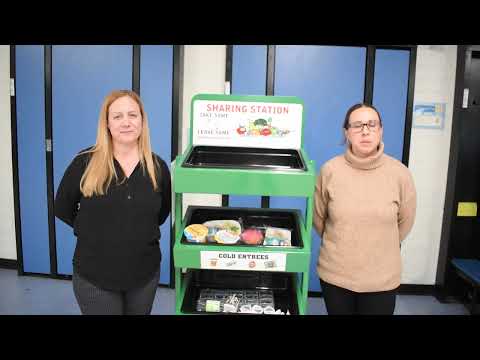
East Whittier City School District to roll out 'Share Station' lunch carts to reduce waste and feed students
Summary
District nutrition staff said the Share Station program will let students place unopened or uneaten cold and room-temperature items in share carts during meal service, starting this month; items must be unopened and whole for fruit, and hot entrees are excluded.
The East Whittier City School District will roll out a Share Station program that lets students place unopened or uneaten cold and room-temperature items in centrally located share carts during meal service, district nutrition officials said.
District officials described the program as a way to reduce food waste while offering extra nutrition to students who need it. The district will make share-table carts available to all students during meal times; only unopened items and whole, unbitten fruit are allowed, and hot entrees will be excluded.
Kristy Ford, director of nutrition services for the East Whittier City School District, said the program will give students "an opportunity for students to place any unopened or uneaten items in the share carts." Ford added, "The Share Station program is a win win for everyone. It helps reduce waste, it provides additional nutrition for students that need it, and it builds a stronger school community."
Lorena Quezada, assistant director of nutrition services, explained what can be placed in the carts: "This could be things like unopened note cartons, juice boxes, and even whole fruit. Only unopened and cold and room temperature items can be placed in here. No hot entrees. Fresh fruit must be whole and unfitten, like bananas and oranges." She also said unopened items "can be shared with someone who might be hungry or who just wants a little something extra."
District staff said the program begins "starting this month," but the meeting transcript did not specify which month that refers to. The rollout will apply to all students during meal service; no information on staffing, signage, or sanitation protocols was provided in the remarks on the record.
Officials framed the program as both a waste-reduction measure and a community-building practice inside school cafeterias. Questions from board members or follow-up steps such as pilot sites, timelines beyond the month-to-start remark, or written policy changes were not recorded in the provided transcript.