Get Full Government Meeting Transcripts, Videos, & Alerts Forever!
Get email alerts on the Investments topic
No spam. Unsubscribe anytime.
Commissioners hear quarterly investment briefings and adopt revised county investment policy
Summary
Investment advisers presented a quarterly portfolio report showing steady returns; commissioners voted to adopt an updated county investment policy that raises the maximum corporate maturity slightly to 5.5 years and allows limited corporate exposure under state rules.
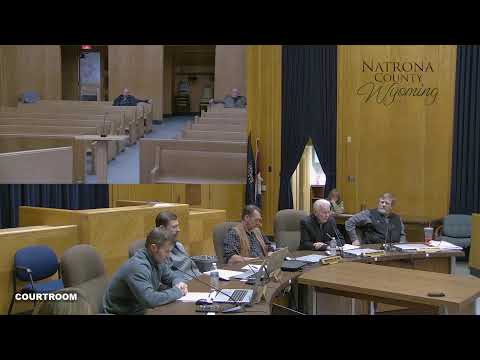
Commissioners on the Natrona County Board of County Commissioners heard quarterly briefings from two outside advisors on the county portfolio and adopted an amended investment policy for county funds.
The presentations gave commissioners a snapshot of fixed-income markets and how county funds are positioned. Joan, an advisor from PFM’s public finance team, told the board the county’s $40 million-plus portfolio ended Dec. 31, 2024, with an effective duration near 2.5 and that managers were keeping a “neutral duration” to stay agile as maturities roll off.
“The portfolio was just over $40,000,000 at inception,” Joan said, and she summarized how recent Fed decisions and volatile Treasury yields shaped the team’s posture. Troy Hunsucker of Wyoming Class and PEAKS Investment Management described the county’s Wyoming Class holdings and a separate Peaks account, saying both strategies are complementary and that the county was on track to earn roughly $4 million in income across the two programs this year. Hunsucker said Wyoming Class yielded about 4.4% as of the most recent month and that the Peaks account yield was about 4.97.
Why it matters: The presentations framed two related actions for commissioners—regular reporting on portfolio performance and a proposed revision to the county investment policy that would clarify corporate bond limits and the maximum allowable maturity. Commissioners discussed how to balance yield, credit quality and statutory limits such as those in Wyoming state statute and the state treasurer’s policy.
Discussion and outcome: Commissioners questioned yield assumptions for budgeting and whether longer maturities or corporate allocations would increase risk. Troy and Joan both said managers seek only high‑grade corporate notes if the policy permits corporate exposure, and that the advisory teams limit corporate allocations and monitor credit quality.
After discussion, the board voted to adopt the investment‑policy resolution as amended to change the stated maximum corporate maturity from five years to 5.5 years (the specific policy language amended was listed as 6.1, sub 1.b.8 in the draft). The board also accepted the committee recommendation leaving a corporate allocation cap in policy (the draft discussion referenced a typical 20% cap in other jurisdictions). The motion to adopt the policy with the 5.5‑year change was seconded and approved by voice vote.
What was not decided: Commissioners did not change other parts of the draft policy at this meeting; specific numeric limits on corporate percentage exposure were described as a maximum allowance in the draft and as subject to manager discretion and committee oversight.
Next steps and follow up: Advisors said quarterly performance reports will continue; Joan and Troy offered to return for regular updates and to support the commission as the new policy is implemented. Commissioners asked staff to file the updated policy language and circulate the final signed resolution.