Get Full Government Meeting Transcripts, Videos, & Alerts Forever!
Get email alerts on the Civic Conduct And Community Relations topic
No spam. Unsubscribe anytime.
Mayor Rowan apologizes after NAACP letter, community presses for written response
Summary
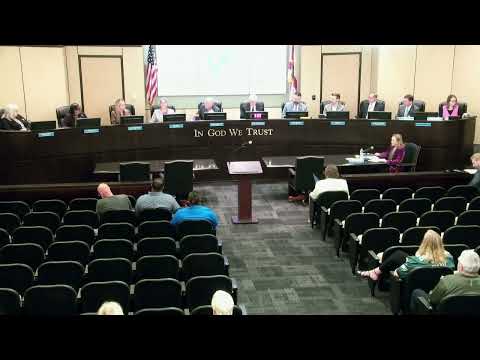
Mayor Michael Rowan opened the Feb. 11 Panama City Commission meeting with a public apology after the Bay County NAACP sent a letter saying his remarks at the branchBlack History Month proclamation were "incorrect and inappropriate." The NAACP requested a written response; commissioners and speakers pressed for further community dialogue.
Mayor Michael Rowan began the Panama City Commission meeting by addressing criticism of remarks he made while recognized at the Bay County NAACP Black History Month proclamation. "If you are one of those who felt offended or embarrassed by my remarks, I publicly apologize to you," Rowan said at the meeting, adding, "Let me be clear I am not a racist."
The Bay County NAACP sent a formal letter to the commission and the mayor after the Feb. 3 event, saying Rowan had characterized Black History Month as "to remember slavery" and had used phrases the branch deemed offensive. Matthew Schack, first vice president of the Bay County NAACP, read the letter during audience participation and asked for a public apology and a written response. The letter also requested the mayor avoid the contested language in the future and provide a written response to the branch's concerns.
Several residents used the meeting's audience participation period to weigh in. Rufus (Rufus) Wood, who identified himself as NAACP branch president earlier in the meeting packet materials, and other speakers described the remarks as hurtful and asked the commission to hold the mayor accountable. Some speakers urged the commission to focus on actions to address long-standing disparities and to ensure minority residents' concerns receive continuing attention.
Commissioners responded in different ways. Commissioner Lucas, who noted historical barriers to political representation for Black residents in Panama City, framed the episode in historical context and urged listening and learning. Commissioner Halligas said she appreciated the mayor's public apology but emphasized the need for education and for elected officials to explain themselves when words cause pain. Other commissioners and members of the public defended the mayor or urged calmer dialogue rather than instant political retaliation.
The commission did not take any formal disciplinary action. Several commissioners and the city manager said staff would work with the mayor and NAACP representatives on follow-up; members of the public requested a written response from the mayor as the NAACP had asked. The NAACP letter remains part of the record; the branch requested a written reply and said it would not be satisfied with silence.
The exchange dominated public comment for much of the morning and prompted calls from multiple residents for improved communication and more civic education, particularly around how public officials should discuss race and history in ceremonial settings. The commission scheduled no specific vote or formal inquiry on the topic at the meeting.