Get Full Government Meeting Transcripts, Videos, & Alerts Forever!
Get email alerts on the Parks And Recreation topic
No spam. Unsubscribe anytime.
San Ramon commissioners review phased plan for Crow Canyon Gardens renovation, seek funding clarity
Summary
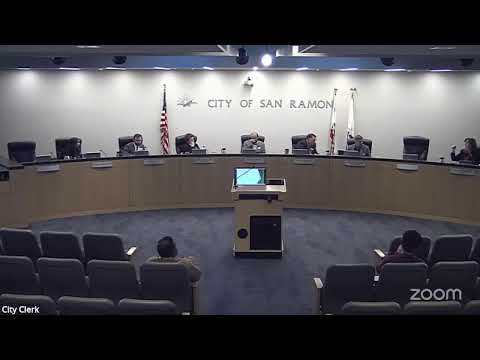
San Ramon’s Parks and Community Services Commission on Jan. 22 reviewed and moved to approve a multi‑phase renovation plan for Crow Canyon Gardens that prioritizes work on the former Mudds building and ties later site work to capital improvement program funding timelines.
San Ramon’s Parks and Community Services Commission on Jan. 22 reviewed and moved to approve a multi‑phase renovation plan for Crow Canyon Gardens that prioritizes work on the former Mudds building and ties later site work to capital improvement program (CIP) funding timelines.
The plan presented by PlaceWorks principal Sarah Sutton and the city’s parks staff lays out five phases that start with detailed building assessments, hazardous‑materials testing and mothballing; continue with schematic design and construction of a preserved “jewel box” room and pavilion; and culminate in parkwide pathways, garden improvements and a creek access and stabilization project that would require separate regulatory permitting and additional study.
Why it matters: the building that anchors the park is in deteriorated condition and has been closed for years. Staff told commissioners the initial work is intended to remove safety hazards, document what can be salvaged and establish a basis of design so later construction is not driven only by the conceptual master plan. The phasing decision will inform what staff requests in the March CIP and how development fee revenue (and other sources) can be applied.
PlaceWorks’ Sutton summarized the approach: “the building is the heart of the project,” and said phase 1 will pay for structural, geotechnical and hazardous‑materials investigations and for cataloging what can be salvaged. The consultant and city staff said the first phase is intentionally “front loaded” with design and testing costs so later construction documents and cost estimates are reliable.
Staff said $517,000 already sits in the project CIP and is sufficient to complete most assessments and prepare a demolition bid package. The fiscal‑year 2024–25 CIP included an additional $1.7 million that is approved and allocated but the timing of when those development fees arrive has been delayed by recent state law changes. Staff explained an assembly bill now shifts some collections from permit issuance to occupancy, which can slow the cash flow used for projects like this one.
That timing creates uncertainty: staff estimate phase 1 is roughly $150,000 short of fully funding the assessment and mothballing scope. City staff presented options if the fee revenue is late: borrow temporarily from the city’s public art/beautification fund (staff said that fund is “healthy”), reduce scope and delay some work until funds arrive, or bundle phases to avoid remobilization costs for contractors.
Commission discussion focused on cost controls and schedule risk. Commissioners pressed for clarity about whether the preserved “jewel box” would be an enclosed building or an open pavilion (staff and consultants repeatedly said the master plan calls for an open‑air pavilion with one small indoor room preserved and interpreted as the Jewel Box). Commissioners also questioned a roughly $250,000 estimate staff gave for moving a PG&E transformer and suggested design changes to avoid that relocation if possible.
Sutton and the project team said the creek access and bank stabilization work is likely the last phase because it requires additional geotechnical work, structural engineering and regulatory permits; staff described that component as “grant fundable” but separate from the building and garden phases.
Public comment: resident Max Zhang urged caution on pace and cost, saying, “I just feel like as a citizen, there isn't enough transparency on the cost of the project for the commission to really make an informed decision about approving it,” and noting the city’s broader budget pressures.
Formal action on phasing: a commissioner moved to approve the proposed phasing with the understanding that phases 3–5 would be subject to reevaluation after phases 1–2; the motion was seconded. The transcript records the motion and second but does not include a recorded vote tally in the public minutes available in the transcript.
Next steps: staff will use the commission’s phasing guidance to refine the CIP ask in March and to complete the investigations, hazardous‑materials testing and basis‑of‑design work needed before any major demolition or construction contract is released. Staff indicated that completing phases 1 and 2 together reduces remobilization risk and may lower overall cost compared with doing many isolated short phases.
Planning and funding context: staff said the project’s cost estimates include a 25% contingency for early‑phase budgets and assume a 5% annual escalation for later phases. The consultant and staff repeatedly warned uncertainty around supply chains and construction pricing as additional risk factors.
Commissioners urged staff to continue searching for cost‑savings (including public‑works or in‑house city work where feasible), to explore grant opportunities for creek restoration, and to return to the commission with updated cost and timing information as the CIP process proceeds.
The commission’s direction will feed the city’s March CIP materials and future public updates on schedule and budget.