Get Full Government Meeting Transcripts, Videos, & Alerts Forever!
Get email alerts on the Utilities Sewer Billing topic
No spam. Unsubscribe anytime.
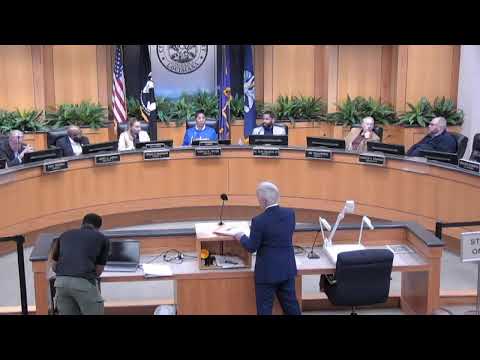
Squirrel Point residents press council over doubled sewer bills, city officials promise review
Summary
Squirrel Point residents told the City Council they were billed an outside-city sewer flat rate after a billing-system correction, raising monthly charges from roughly $75–$85 to about $166 and prompting the city to promise follow-up.
Residents from the Squirrel Point area urged the Shreveport City Council on Monday to review a billing change that raised their monthly sewer bills after a computerized billing update exposed and corrected an earlier undercharge.
Multiple residents and homeowner association representatives described receiving letters and higher bills after the city audited accounts and applied a flat outside-city sewer rate for customers who receive sewer service but not city water. Speakers said the new monthly charge was about $166.34; several recalled prior bills of roughly $75–$85. Residents said their actual metered water use was commonly 2,000–3,000 gallons per month and objected to a flat 6,500-gallon billing assumption used to compute sewer charges for customers in this billing class.
Homeowner and resident speakers said they have paid a lower rate since at least 2019 and were surprised when the bill correction appeared. They asked whether the parish or the city could allow private septic systems because they live adjacent to Cross Lake and contend that private systems have been permitted for nearby communities such as Mallard Bay. City officials said parish rules and a city ordinance determine connection requirements and billing classifications.
Tom Dart, the city—s chief administrative officer, told Squirrel Point residents the city is holding interdepartmental meetings that include fire, police, property standards, public works and zoning to address complaints about squatters and other neighborhood challenges. He said he had discussed billing questions with the residents and would follow up after getting more information from water and sewer staff.
William Daniel, director of the city—s Water and Sewer Department, explained the billing change: the subdivision receives sewer service but not city water. The city—s water-and-sewer ordinance requires a flat rate for outside customers who do not receive city water; that rate uses a standard usage proxy (the department referenced a 6,500-gallon per household figure). Daniel said the rate is applied to a small class of customers and that an earlier computer-system migration to the UMBS system did not transfer those customers— correct classification; an audit discovered the error and the department corrected the billing.
Daniel said the undercharge dated back at least to February 2019 and that the audit corrected the accounts; he said the customers were being billed according to the ordinance on the books and that staff had mailed letters explaining the change. The CAO and water director said they would research whether nearby communities were treated differently and would follow up with residents.
Residents asked whether the city could make an exception for properties near Cross Lake, citing water-quality concerns and the limited feasibility of installing septic systems close to the lake. Council members asked staff to investigate how many similar outside-city flat-rate customers exist and whether the ordinance or parish permitting rules allow any special exemptions for lakeside properties.
Council members told residents they would investigate the discrepancy, review the ordinance, and report back with data on bill history, the number of similarly classified customers, and whether alternative options exist, including the potential costs of extending full city water or revisiting the ordinance. No formal vote or ordinance change was taken at the meeting; officials asked for time to gather records and return with options to the council.