Get Full Government Meeting Transcripts, Videos, & Alerts Forever!
Get email alerts on the Roads And Transportation topic
No spam. Unsubscribe anytime.
Council presses transportation staff on trash and mowing cycles along Shreveport interstates
Summary
Council members asked city and state transportation representatives for clearer schedules and responsibilities after multiple constituent complaints about trash, large debris and mowing along I-220, I-20 and I-49.
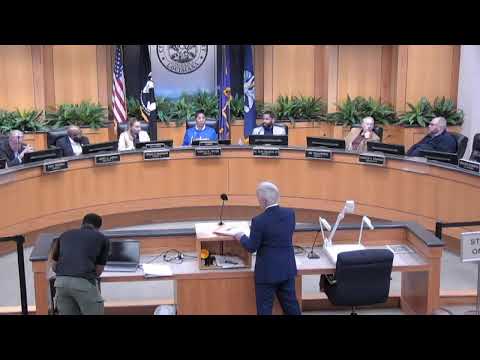
Shreveport City Council members pressed transportation and public-works staff on schedules, responsibilities and contractor performance for litter pickup and mowing along the city—s interstates, saying residents have called repeatedly about visible trash and large debris.
Council members raised the issue during the council—s regular meeting, saying callers report mattresses, tires and lumber along I-220 near Jefferson Paige and other exits; they asked for a clear timetable residents can use when they call. Council members and staff discussed when city crews and state contractors will perform litter cycles and mowing and how responsibility is split between the city and the state.
The city—s transportation representative, identified in the meeting as Mr. Morgan, said the city has a contract that includes litter and mowing cycles and that a notice to proceed for a contractor was issued in February. Morgan said the contractor has been directed to begin a litter pickup cycle starting in the Goodwood area and moving west toward the Texas line. He said the program includes an initial litter cycle now, another litter pickup in early March, followed by a mowing cycle; city mowing cycles generally occur every six weeks, weather permitting.
Morgan told the council that large items in the roadway or shoulder (mattresses, furniture, tires) are inspected daily by a Roadrunner truck and that residents can report hazards by calling the city—s district office at 549-8300. He said the city will respond if the debris poses an immediate danger and that items on the shoulder can be reported and collected.
Council members asked how responsibilities are divided for different stretches of I-20 and I-220. Morgan said the city-state maintenance agreement covers stretches from the Red River line to points west; the contractor handles other stretches beyond that line. He said the city maintains and picks up weekly on the interstates it is responsible for (I-312? I-302? as referred to in the meeting transcript), and that the state contractor handles I-220 beyond the city-maintained segments. Council members asked for a clear map or GIS layer showing which agency is responsible for specific segments so council offices can give callers a definitive answer; Morgan said staff will look into creating a map and can provide mowing and pickup schedules.
The council also asked for clarity about the program—s cost and frequency. Morgan said the I-220 mowing program covers 300 acres and quoted per-cycle line items: $3,939.89 for a listed item and $12,000 per cycle to mow the 2-20 portion (those amounts were given by the transportation representative in the meeting). He said the city aims for up to six mowing cycles a year depending on rainfall and drought conditions.
Council members requested that staff share scheduled dates for litter pickups and mowing for the stretches the city controls so council offices can respond to constituent inquiries. Morgan said Port City 311 can be used by residents to report debris; both the 311 system and the district number will initiate the city—s response and, when required, the city will coordinate with the state.
The exchange closed with the council asking staff to provide a map or GIS-based guide showing jurisdiction by segment, to give the council a consistent response to callers, and for the city to continue coordinating with the state contractor to address large debris in the roadway.
The city provided contact and reporting guidance during the meeting: report dangerous debris at 549-8300 or through the Port City 311 app so the city can dispatch crews or notify the state contractor as appropriate.