Get Full Government Meeting Transcripts, Videos, & Alerts Forever!
Get email alerts on the Master Plan Implementation topic
No spam. Unsubscribe anytime.
Staff outlines timeline and engagement plan to implement 2024 Community Master Plan and rewrite zoning ordinance
Summary
Planning staff provided a progress update on implementing the 2024 Community Master Plan and previewed a multi-phase zoning ordinance rewrite, including a story map, dashboard, technical advisory committee, consultant solicitation, and a public "roadshow" to explain zoning changes.
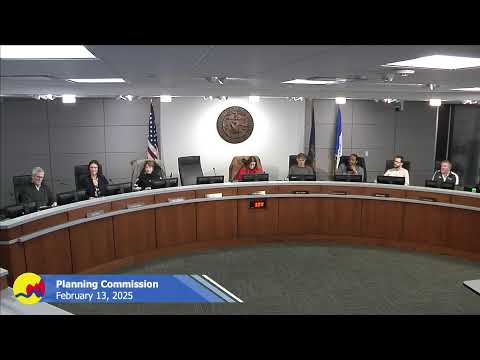
Kristen, a city planning staff member, presented an update Feb. 13 to the Grand Rapids City Planning Commission on progress implementing the 2024 Community Master Plan and on plans to rewrite the zoning ordinance to align local law with the plan's recommendations.
Staff said they have published a story map and chapter videos to make the master plan more accessible and are developing an online dashboard to track implementation actions and improve transparency. The zoning ordinance rewrite is framed as a multi-phase effort: an initial phase to form a technical advisory committee and issue a request for proposals for a consultant; a second phase, with consultant support, to draft and test ordinance language and to engage technical stakeholders and the public on specific code provisions; and a target timeframe to pursue adoption of the rewritten ordinance by spring 2027, aligned to the city's budget calendar.
Staff emphasized that the rewrite is not intended to relitigate the master plan's goals, but rather to convert the plan's recommendations into enforceable ordinance language. Staff described a proposed technical advisory committee made up of planning commissioners, Board of Zoning Appeals members, building-code officials, design professionals, neighborhood representatives, and business-district leaders to provide practical feedback on how proposed code changes would function in practice. "We are not redoing the community master plan," Kristentold commissioners; "our job is to make sure when we're meeting with individuals... we explain what is their role and what are some of the limitations of this role."
Staff also discussed outreach and education: a planned "roadshow" of zoning 101 sessions (one meeting in each ward, meetings with neighborhood associations, business districts, and targeted outreach to architects and contractor groups), a user survey sent to frequent code users (design professionals, contractors, developers) to identify pain points, and targeted reporting back on prior housing-focused ordinance changes adopted in the last cycle to evaluate implementation results.
Commissioners asked about avoiding repeated debates of the master plan during the rewrite and about timing. Staff said strong project leadership and a consultant's technical expertise would limit relitigation, and that some targeted ordinance updates (for example, housing measures) could be advanced sooner if staff capacity and priorities allow. Staff noted state law constraints that affect zoning options in Michigan, citing the Rent Control Act and limits on certain exactions and inclusionary zoning approaches as examples of external legal constraints that must be considered when drafting code.
Commissioners provided suggestions on engagement partners (AIA chapter, contractor associations, neighborhood schools as meeting locations) and volunteer representation for the technical advisory committee; one commissioner volunteered to serve. Staff asked commissioners to submit recommended names for advisory members by email.
Staff said the rewrite will emphasize better user tools, including interactive mapping that lets users click a parcel and see applicable code sections, to reduce reliance on staff interpretation. No formal action was taken; staff will return with drafts and milestones during the rewrite process.