Get Full Government Meeting Transcripts, Videos, & Alerts Forever!
Get email alerts on the Education Literacy topic
No spam. Unsubscribe anytime.
Brookings district outlines districtwide literacy overhaul guided by South Dakota framework
Summary
Brookings School District officials told the school board they are aligning curriculum and teacher training with the South Dakota literacy framework and the science of reading, using MTSS grant supports and districtwide progress monitoring to improve early literacy outcomes.
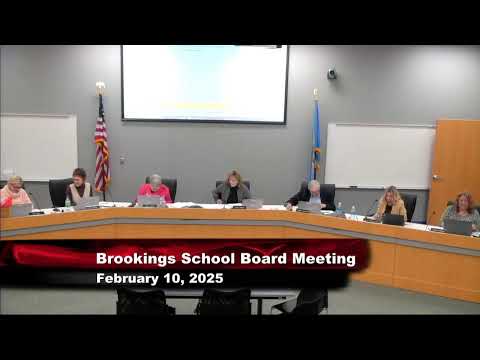
Superintendent Dr. Schultz and district literacy staff told the Brookings School board Wednesday that the district is implementing a systematic, research-based literacy strategy intended to raise reading outcomes from pre-K through 12.
The plan draws on the South Dakota literacy framework and prioritizes “intentional, systematic, and explicit reading instruction,” said Corey Davis, the district’s literacy coordinator and reading intervention lead. "We must implement evidence based methods that support strong reading instruction," Davis said.
The literacy work is anchored in a district plan created last May and supported by an MTSS grant that brought Compass learning specialists to coach teachers, officials said. Staff described aligning core Tier 1 instruction across grade levels, using NWEA and other progress-monitoring tools strategically, and devoting Wednesday early-release time to teacher collaboration and problem-solving.
"We have been aligning our curriculum and instruction with the science of reading in response to our ELA scores," Davis said. He said the district has focused on phonemic awareness, phonics, fluency, vocabulary and comprehension and is preparing middle and high school teachers to teach explicit reading strategies to support content-area comprehension.
Sarah Wavercick, principal at Dakota Prairie Elementary and a member of the literacy team, described professional development that includes AIMS Pathways coursework, a DSU book study on reading instruction, letters training and MTSS coaching. "Many of our administrators have taken the AIMS pathway coursework in reading and writing," Wavercick said.
Board members pressed for implementation details: one asked what percentage of staff had completed the pathways coursework; Davis answered, "I would say almost all. Not a percent, but almost all in each of the buildings — in the elementary for sure." Another board member encouraged continued board communication about items the literacy team needs from trustees.
Superintendent Schultz said the district already had assessment systems in place but lacked consistent instructional alignment; recent work seeks to use those assessments to drive instruction. He noted state and federal attention to literacy and said Governor Noem had provided substantial funding to literacy initiatives statewide.
District leaders emphasized the time required for curricular change and said the work is not a single instructional "method" but a coordinated set of practices based on current reading science. They cautioned that research suggests large-scale literacy change takes years; the district is using targeted training and scheduled progress monitoring to accelerate improvement.
Board members thanked staff for the work and affirmed support for continued professional development and reporting back to the board.
Officials said they will continue to report progress and bring specific requests for resources or changes to the board as the literacy plan advances.