Get Full Government Meeting Transcripts, Videos, & Alerts Forever!
Get email alerts on the Right Of Way Eminent Domain topic
No spam. Unsubscribe anytime.
Transportation Commission approves resolution of necessity for Petaluma parcel amid owner objections
Summary
The Transportation Commission approved a resolution of necessity to acquire part of the Teresa F.R. Touma 2009 Trust parcel in Petaluma for a US‑101/Old Redwood Highway interchange project, despite the property owner’s requests to delay adoption and objections about visibility, vibration risk, and appraisal calculations.
The Transportation Commission approved a resolution of necessity to acquire land owned by the Teresa F.R. Touma 2009 Trust to build a revised northbound US‑101 on‑ramp and redesigned Old Redwood Highway interchange in Petaluma. Caltrans staff told the commission the acquisition is needed for a safety‑ and congestion‑reduction project that is consistent with Petaluma’s general plan and regional plans.
Caltrans Chief Deputy District Director Dan Mackliny told commissioners the project would reconstruct the Old Redwood Highway interchange, replace the existing bridge with a four‑lane structure that includes bicycle lanes and sidewalks, and reconfigure ramps to current design standards. Mackliny said the department needs about 21,549 square feet in fee and 1,948 square feet in temporary construction easement from the Tuma parcel for the northbound on‑ramp; Caltrans said the department reduced the originally proposed full take to avoid greater impacts.
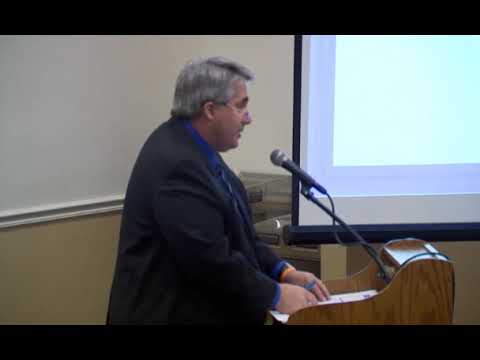
The owner, Teresa Touma, disputed Caltrans’ cost and visibility judgments and asked the commission to delay adopting the resolution. Touma told the commission she has owned the parcel since 1994 and said a proposed design will leave her commercial building largely out of view from US‑101. She pressed Caltrans and the City of Petaluma on several points: the absence of a vibration study for a nearby proposed retaining wall, a claimed shortfall in the appraisal that she says omitted about 25,000 square feet of developable building area, and uncertainty about where funding for the broader overpass construction will come from. Touma also said the City of Petaluma has told her signage oriented to the freeway is generally prohibited and that a variance is likely to be denied; she asked for further assurances about post‑taking business viability.
Caltrans responded that the department’s design minimized right‑of‑way impacts, that abutter’s rights affecting visibility were previously acquired and are part of the title history, and that the department had sought to avoid a retaining wall that would have required a guardrail. Mackliny said the department included loss of display parking in the appraisal and that the City of Petaluma’s fire marshal reviewed and approved clearance distances adjacent to the building. Suzanne Smith of the Sonoma County Transportation Authority said SCTA has a construction cooperative agreement with Caltrans and that SCTA is committed to delivering the project and supporting the resolution of necessity.
Touma also expressed concern that the department’s written offer under Government Code section 7267.2 did not account for her asserted before‑and‑after highest‑and‑best use and therefore did not represent a complete statutory offer of just compensation; Caltrans said any compensation dispute would be resolved through negotiations or eminent‑domain proceedings and that the commission’s role is limited to the three legal issues set by statute: public interest and necessity, planning and location that provide greatest public good with least private injury, and whether the property is necessary to the project. The commission also heard that Code of Civil Procedure section 1245.24 requires eight affirmative votes for a resolution of necessity.
After discussion, the commission voted to adopt the resolution of necessity. The transcript records a verbal aye vote; one commissioner said they would abstain because they had missed the testimony. The owner was thanked for her testimony. The commission did not address the compensation amount, which Caltrans and the property owner said would be resolved through separate negotiation or court proceedings.
What happens next: adoption of the resolution authorizes Caltrans to proceed with acquisition under eminent‑domain law and does not set compensation. Touma may continue negotiating with the department, accept an offer, or pursue legal remedies as the statute and Code of Civil Procedure provide.