Get Full Government Meeting Transcripts, Videos, & Alerts Forever!
Get email alerts on the Budget Reductions topic
No spam. Unsubscribe anytime.
Nordonia Hills City officials outline wide budget‑reduction package; counseling and transportation cuts draw concern
Summary
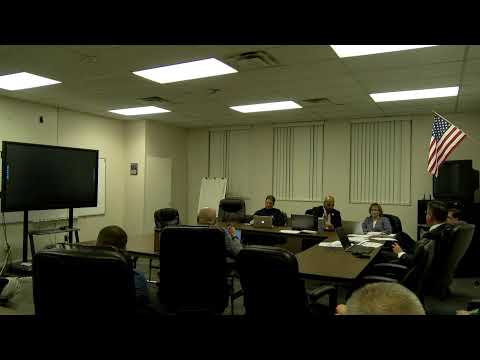
District staff presented a detailed set of proposed budget reductions at a Feb. 18 work session, including teacher and paraprofessional layoffs, cuts to clinical counseling, custodial‑hour reductions and possible changes to transportation routes.
District staff presented a detailed set of proposed budget reductions during the Feb. 18 Nordonia Hills City Board of Education work session, including teacher reductions at middle and high school, layoffs of paraprofessionals, cuts to clinical counseling, changes to custodial staffing and possible changes to transportation routes.
Kyle and committee leads described the package as a response to declining enrollment and projected budget pressure; staff repeatedly emphasized that some proposals depend on the outcome of a future levy and the governor’s budget. The administration showed multiple committee reports (middle school, high school, building utilization, transportation and a budget‑efficiency committee) that fed the recommendations.
Key proposals discussed (as described by staff): middle school reductions of four teaching positions (one each in math, science, English and social studies), which the administration said would increase middle‑school class loads and require teachers to carry about 20% more teaching time. At the high school, staff outlined a 5.5‑teacher reduction plan (3.5 positions in the current year and additional reductions next year) with program‑specific impacts including one art teacher, one math teacher, one Spanish teacher and a half‑time English position this year; next year’s reductions would include additional social studies and half‑time English/German adjustments.
Staff said some elective courses may not run because of low enrollment and that the district will continue to offer online course alternatives when feasible. Dr. Zincarelli’s dual role in college‑credit English and German was highlighted in discussion; staff said replacing that German instruction will be difficult and that German could be phased out unless a part‑time teacher is hired or levy revenue is approved.
The proposal also includes immediate layoffs of 11 paraprofessionals hired this year, with staff noting some roles could be rehired if needs change over the summer. Custodial reductions were proposed at three elementary sites (four‑hour positions at Lea, Northfield and Lakeview). The YMCA contract for the high school in‑school suspension program was proposed to be replaced with an internal solution; staff said the current contract cost rose significantly last year and an internal reallocation could address the need.
Clinical counseling — described by staff as school‑based clinicians serving K–6 students — was flagged as one of the most painful cuts: the administration proposed reducing one and a half clinical counseling positions. Carrie (student‑services lead) cautioned that early clinical counseling often addresses acute trauma and that cutting the positions could increase later special‑education or behavioral costs; she said many students are on waiting lists and that outside community options have long waits. "This one hurts," Carrie said. "A kid that goes into clinical counseling is a kid in desperate need."
Transportation options under consideration ranged from eliminating some high‑school routes to reducing all routes to a state‑minimum configuration. Staff estimated there are 33 routes now and that moving to 24 routes at state minimum would reduce routes and could save roughly $700,000 (staff emphasized this figure is an approximation and dependent on state reimbursements and schedule details). Staff also estimated high‑school busing reductions could lower district costs by roughly $174,000 (approximate). Board members asked staff to return with firmer numbers before any final action.
Board members voiced several concerns during the discussion. One board member said they could not support cutting K–6 clinical counselors and asked that the item be removed and voted on separately. Other trustees emphasized the need to examine tradeoffs between short‑term savings and long‑term costs, noting that early counseling and stable staff relationships can prevent costlier special‑education placements later.
Staff recommended tabling transportation until more data and transportation director input (Steve) were available; the board discussed pulling line 9 (transportation) from the approval agenda for further study. The work session ended without formal votes on the reduction package; the board discussed procedural motions to approve the agenda with modifications and then adjourned the work session.