Get Full Government Meeting Transcripts, Videos, & Alerts Forever!
Get email alerts on the Energy Efficiency topic
No spam. Unsubscribe anytime.
Board hears StrataLine energy-feasibility findings; no RFP vote tonight
Summary
Consultant Bob McKinney of StrataLine presented a feasibility study recommending virtual energy management, retro‑commissioning and pilot solar installations to reduce the district's $1.3 million annual utility bill; board did not take formal action but staff said it will seek permission to release an RFP.
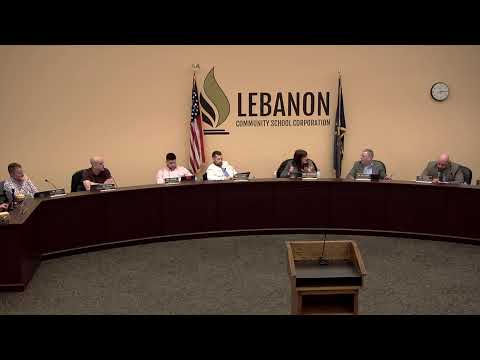
Lebanon Community School Corporation board members heard a report Feb. 18 from Bob McKinney of StrataLine on a districtwide feasibility study for energy conservation measures, including virtual energy management software, retro‑commissioning of HVAC systems and selective solar installations.
The presentation examined all district buildings and identified three near‑term measures StrataLine recommends testing through a request for proposals: a virtual energy management overlay on existing meters and controls, retro‑commissioning of aging HVAC equipment, and limited solar at select buildings. “We are an owner's rep energy solutions firm,” Bob McKinney said when introducing StrataLine's role in leading studies and managing RFPs.
The study framed the work as a response to rising utility costs and constrained operational revenue. Mr. Dennis, district staff, noted utilities “are a $1,300,000 expenditure from our operations fund every year.” McKinney said StrataLine modeled a conservative 10% reduction from virtual energy management and reported most clients see greater savings; he said retro‑commissioning typically shows a roughly 5½‑year payback and that solar projects in the district's current rate tariff show paybacks “a little greater than a 12 year payback.”
McKinney described how the virtual energy management systems use high‑frequency metering to identify equipment runtimes and reduce energy overhead, and said the software approach often produces sub‑3‑year payback opportunities. He urged testing measures on a single asset before wider implementation and said the feasibility study and an RFP would be provided to the district at no cost.
Board members asked about financing and verification. McKinney and Mr. Dennis discussed two financing paths: issuance of general obligation bonds and guaranteed energy savings contracts under the state statute; McKinney emphasized StrataLine’s verification and bonding practices for guaranteed‑savings work. Board members also pressed on whether the district would need new staff to operate a virtual energy management system; McKinney said the systems generally simplify operations and that existing staff could manage them after training.
No formal motion or vote was taken on releasing an RFP during the Feb. 18 meeting. Mr. Dennis said he would ask the board for permission to release an RFP for energy conservation measures at a future meeting after questions and the presentation were complete. If the board later authorizes an RFP, McKinney said the procurement responses would present firm prices and a menu of energy conservation measures the board could accept, reject or phase in over time.
The presentation highlighted site‑specific findings: Hattie B. Stokes Elementary registered an energy use intensity about 100 (about double the cited national comparison in the report), a result McKinney attributed to building geometry, older roof/envelope components and HVAC/controls communication problems that retro‑commissioning aims to address. McKinney and district staff recommended market testing with multiple contractors and noted several local firms have expressed interest.
The board said it appreciated the information and asked staff to return with any recommended next steps, including a proposed schedule and the formal request for permission to issue an RFP.
Ending: The district will not proceed with procurement until the board explicitly authorizes an RFP. Staff and StrataLine said they will return with additional details and a proposed timeline for an RFP and possible pilot projects.