Get Full Government Meeting Transcripts, Videos, & Alerts Forever!
Get email alerts on the Land Management Code topic
No spam. Unsubscribe anytime.
Hagerstown holds public hearing on annual Land Management Code amendments, record open 10 days
Summary
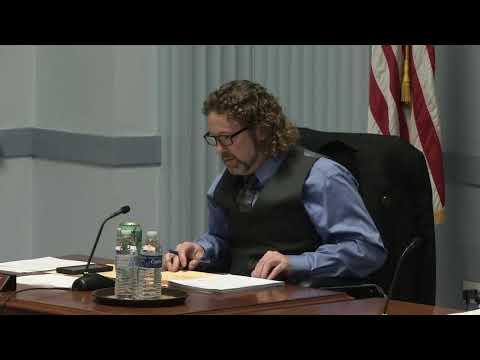
Hagerstown zoning staff on Jan. 28 presented an annual package of proposed text amendments to the city’s Land Management Code and asked the mayor and city council to leave the public record open for 10 days for additional comment.
Hagerstown zoning staff on Jan. 28 presented an annual package of proposed text amendments to the city’s Land Management Code and asked the mayor and city council to leave the public record open for 10 days for additional comment.
The presentation, given by Steven Bachmiller, the city’s development review planner and zoning administrator, outlined about 17 discrete proposals ranging from technical cleanups to new regulatory options for downtown signs and limits on group homes. Bachmiller said the city bundles suggestions once a year rather than amending the code piecemeal and that the council can accept or reject any individual proposal before an ordinance is introduced.
Why it matters: the package would change rules that affect street geometry and public safety (cul‑de‑sacs and roundabouts), how downtown signage is reviewed, where and how recreational vehicles may be stored on residential lots, conversions of existing buildings to mixed use, and limits on how many small group homes may occupy a single multi‑unit building. Many of the proposed edits were prompted by property owners or developers who hope to use the changes for specific projects.
Bachmiller walked the council through the principal items. Proposals include: requiring cul‑de‑sacs with center islands to have a larger turning diameter when parked cars impede plow or fire apparatus movement and stating a preference for roundabouts; a requirement that parking lots be kept maintained (including restriping) and a path for owners of older lots to regularize a formal parking plan when seeking zoning approvals; revising the child daycare definition so it aligns with the city’s separate rules for in‑home (maximum eight children) versus commercial daycares; creating a special‑exception path for larger freestanding signs in the downtown CCMU district (from 10 to 20 feet tall and up to 150 square feet); allowing the historic district commission to approve larger projecting signs and theater marquee signs for performance venues; and new screening and landscaping rules for automobile, boat and RV storage and sales facilities.
The package also would limit group‑home concentration: for buildings with three or more dwelling units the proposal would allow only one small group home or halfway house per building; large group homes would be capped at one per structure. Another proposal would remove certain housing types from the RMED district to align city zoning with county rules for properties that annex into the city. A proposed rule would require parking when outdoor restaurant seating exceeds 25% of indoor seating to address neighborhood impacts.
Bachmiller noted a minor drafting error in the packet concerning storage of campers and similar vehicles: the council had previously directed that height‑based requirements apply only to vehicles over 6 feet tall; staff discovered that language had been placed in the wrong paragraph and provided a correcting memo to the city clerk the morning of the hearing. He said the corrected language (which lessens the restriction compared with the published packet) is posted on the city website and additional copies of the memo were available.
Next steps: the council will keep the record open for 10 days for written comments, then discuss the proposals in a February work session and decide which items to include in an ordinance. Bachmiller said adoption would typically take roughly three more months after the council selects items to move forward.
Bachmiller took no public testimony beyond the staff presentation; no members of the public spoke during the hearing. The council did not vote on the amendments at the Jan. 28 meeting.
The record will remain open for 10 days for written comments; staff will return with follow‑up materials at a February work session and then, if directed, draft an ordinance for introduction and later adoption.