Get Full Government Meeting Transcripts, Videos, & Alerts Forever!
Get email alerts on the School Boundaries topic
No spam. Unsubscribe anytime.
Jamestown board reviews boundary study; refers detailed plan to facilities committee
Summary
RSP & Associates presented a five‑year enrollment forecast and two phased boundary scenarios designed to redistribute students while Washington Elementary is offline and if/when it reopens.
RSP & Associates presented a five‑year enrollment forecast and two phased boundary scenarios designed to redistribute students while Washington Elementary is offline and if/when it reopens.
The presentation, delivered by Jenna Wallace of RSP, projected a districtwide enrollment decrease of about 85 students over five years and outlined two immediate (Phase 1a and 1b) and two long‑term (Phase 2a and 2b) boundary options. "The district continues to decrease over these next five years, a more stable enrollment with a decrease of about 85 students district wide," Wallace said.
The study explained that the largest losses are expected in elementary and middle grades, while high school enrollment remains more stable, and that neighborhood planning areas were used to make granular projections. The forecast factors included local births, in‑ and out‑migration of students, recent housing (including the 2023 Eagle Flats Apartments uptick), and student yield rates by housing type.
RSP described Phase 1a as a minimal boundary shift that would move roughly 50 students and balance enrollment to about 80–90% utilization across most schools; Phase 1b would make larger shifts (about 220 students impacted) to achieve a closer demographic balance among schools. "Phase 1a is more of a minimal boundary change. Phase 1b does a little bit more balancing on the demographic lens of our students," Wallace said.
Board members questioned logistics, impacts to programming and waivers, and transportation constraints. Dr. Leck (Superintendent) said programmatic services such as early childhood special education "would not see any likely change" from the short‑term consolidation, but noted waivers and legacy enrollment patterns would factor in the district's transition. Board discussion included concerns about moving some families twice under a phased plan and whether to prioritize minimizing immediate moves or pursuing longer‑term demographic balance.
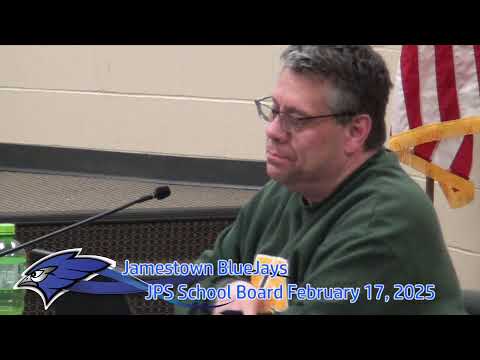
A motion to adopt Phase 1a as presented was made and seconded but failed on roll call (Melissa Gleason voted yes; nine members voted no). Following further discussion, the board voted to refer the RSP boundary study, the Phase 1 options, and related operational questions to the Facilities Committee for a deeper review and to return a recommendation at the next board meeting. The referral motion passed on a unanimous roll call.
The board requested that Facilities Committee members work with district administration (Dr. Leck and Mr. Gaylor), compile operational pros and cons (including transportation, waiver policy, classroom staffing impacts and timelines), and email specific questions for staff to address at the committee meeting. The Facilities Committee will meet before the board's next regular meeting so families can be given timely guidance about fall placements.
Board members emphasized minimizing repeated student moves where possible and balancing short‑term disruption with long‑term equity goals. RSP offered to provide additional mapping options (a potential "1c") if the committee requests more granular alternatives.
Next steps: Facilities Committee review, targeted operational analysis requested by the board, and a return to the full board with recommendations at the next scheduled meeting.