Get Full Government Meeting Transcripts, Videos, & Alerts Forever!
Get email alerts on the Rezone Data Center topic
No spam. Unsubscribe anytime.
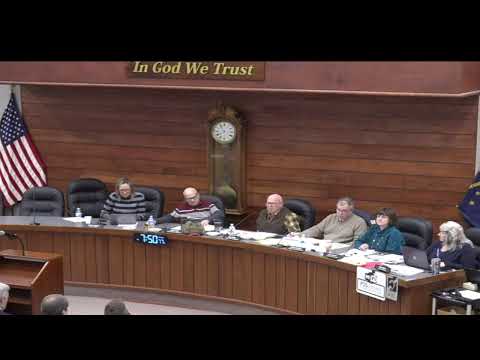
Morgan County commissioners approve PUD rezoning for proposed data center after extended public comment
Summary
After an extended public-comment period focused on noise, water and property-value concerns, the Morgan County Board of Commissioners voted 3-0 to adopt a planned-unit-development (PUD) rezoning that would allow construction of a data center on parcels near State Road 42 and Antioch Road.
Morgan County commissioners voted 3-0 to adopt a planned-unit-development rezoning that would allow a proposed data center near State Road 42 and Antioch Road. The vote followed multiple hours of public comment from residents who live within walking distance of the proposed site and a presentation from the applicant’s attorney.
The PUD ordinance before the commissioners was drafted to define the project’s uses, set development standards and add a measurable noise limit. Joe Calderon, an attorney representing the applicant, told the board the PUD specifically limits uses to data-center operations and related light-industrial activities and incorporates a 65-decibel maximum noise standard measured at the property line. Calderon said the applicant also proposed setbacks that are larger than the county’s base standards and that the project will conduct a noise study after buildings become operational and make mitigation changes if needed.
Supporters of the rezoning argued the PUD provides protections beyond the county’s Unified Development Ordinance and that the project could bring new tax and job opportunities. Planning staff told the board the Planning Commission reviewed the request and forwarded it with a favorable recommendation of 7-1.
Opponents said the site is next to established neighborhoods in and around Monrovia and raised a range of concerns, including long-term construction disruption, traffic on rural county roads, possible impacts to private wells and drainage, light and noise pollution, wildlife impacts and the potential for long-term tax abatement. Several residents asked who would pay to repair wells or property if the project drained groundwater or reduced property values.
Resident Janice Webber, who said her home would be across the street from the proposed entrance, asked: “Are they going to take care of our property value goes down? Are they going to take care of our wells?”
Several speakers also emphasized the length of construction cited by the developer’s materials and by neighbors; attendees frequently mentioned a planning estimate of “five to eight years” of staged work. The applicant’s attorney said construction timelines can vary, that initial buildings sometimes take less than a year to open, and described the five-to-eight-year figure as an estimate that depends on available power and water infrastructure.
Other residents urged the board to require a local benefit package if the project proceeds. Monroe resident Lindsey Robinson asked the board to earmark a share of any new tax revenue for Monrovia’s schools, roads, fire service and library, saying those local needs would otherwise go unaddressed.
During its deliberations the board noted the zoning vote is an early-stage decision. County staff and the applicant both told commissioners that detailed site plans, permitting, stormwater controls and building-level reviews would follow the rezoning if the county approved the PUD, and that those later steps would be opportunities to evaluate drainage, lighting and other development details.
Commissioner Adams moved to approve the ordinance; Commissioner Cline seconded. The board recorded a 3-0 vote in favor of adopting the PUD ordinance.
The rezoning is procedural: it changes allowed uses and development standards for the parcels but does not itself approve final site plans, building permits or construction schedules. Those steps will return to county review and permitting processes if the developer advances the project.