Get Full Government Meeting Transcripts, Videos, & Alerts Forever!
Get email alerts on the Historic Tax Credit topic
No spam. Unsubscribe anytime.
Committee hears bill to double commercial historic rehabilitation tax-credit cap
Summary
House Bill 376 would increase Georgia’s aggregate historic rehabilitation tax-credit cap from $30 million to $60 million and raise per-project caps; supporters said the program is oversubscribed and catalyzes redevelopment statewide.
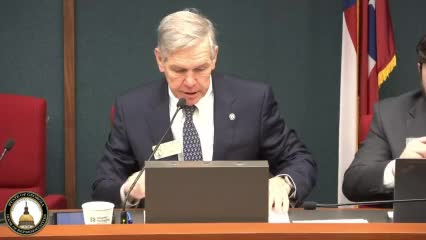
House Bill 376 (substitute LC590091) received a first hearing in the Income Tax Subcommittee. The bill would raise the historic rehabilitation tax-credit program’s aggregate annual cap from $30,000,000 to $60,000,000, increase per-project caps (from $5,000,000 to $7,500,000 for most projects and from $10,000,000 to $15,000,000 for projects creating more than 200 jobs) and extend program availability through its sunset year.
Supporters, including the Georgia Trust for Historic Preservation and preservation advocates, told the committee the program is oversubscribed and that projects seeking credits are queued into the late 2020s without available credits. Wright Mitchell, president and CEO of the Georgia Trust for Historic Preservation, said the program’s backlog prevents preservation projects from moving forward and risks losing historic structures while they remain vacant. "The sooner we can increase the caps in this program, the sooner we can get these buildings revitalized and put it back into use," Mitchell said.
Committee discussion: Members and stakeholders pointed to local examples of successful revitalization using credits (Ponce City Market, downtown Bristol examples were discussed) and questioned conflicts of interest and recusal practices; one member recused due to business involvement monetizing credits. The bill’s sponsor said the measure previously passed the House by a large margin and intends to return it for further consideration.
Outcome: First hearing; no committee vote. Supporters said increasing caps would accelerate projects currently waiting for credit allocations.
Ending note: The sponsor and witnesses said the measure is designed to remove a bottleneck in an existing program; staff and members asked for fiscal and program pipeline details before further action.