Get Full Government Meeting Transcripts, Videos, & Alerts Forever!
Get email alerts on the Public Safety topic
No spam. Unsubscribe anytime.
Senate committee advances bill allowing 90-day impoundment for certain traffic offenses, adds agency-policy and stolen-vehicle exceptions
Summary
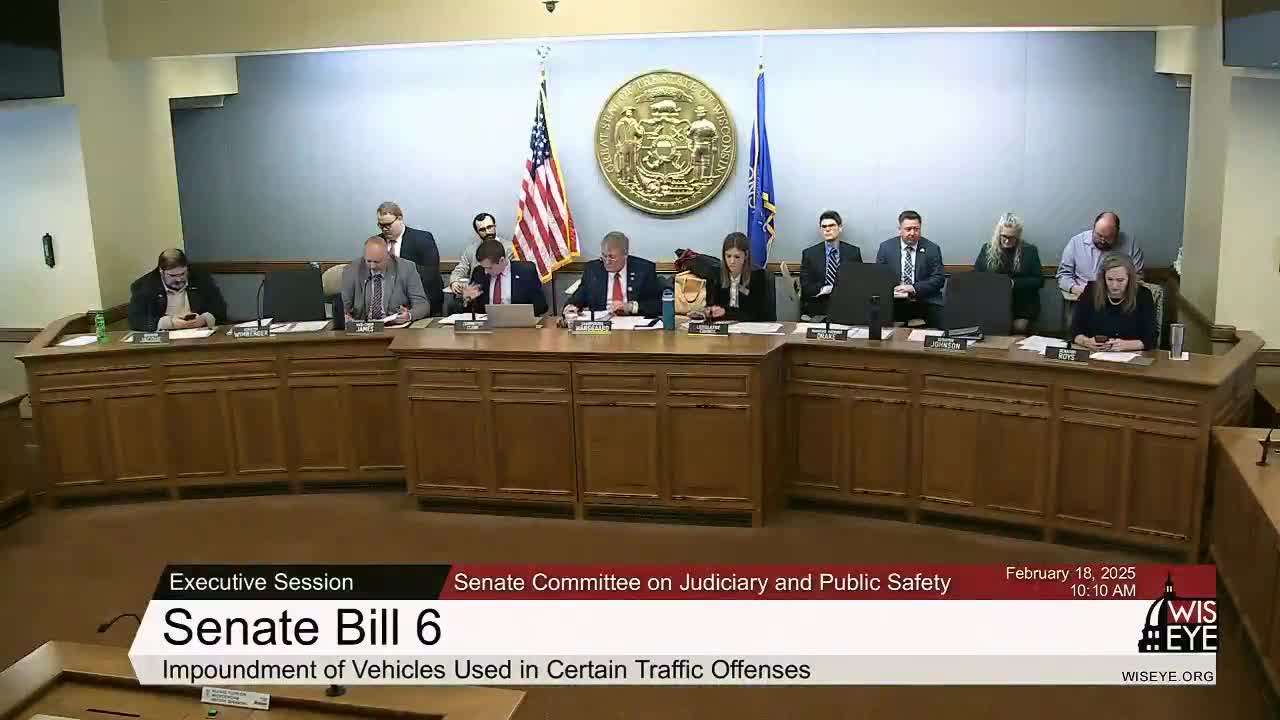
The Senate Committee on Judiciary and Public Safety advanced Senate Bill 6, which sets a default 90-day vehicle impoundment period for certain traffic offenses while adding agency-policy and stolen-vehicle exceptions.
The Senate Committee on Judiciary and Public Safety advanced Senate Bill 6, which would authorize a law-enforcement officer to impound vehicles when an officer arrests or issues a citation for certain traffic violations and set a default 90-day impoundment period.
The bill, as amended, requires that an officer’s agency have a written impoundment policy before the officer may impound under the law and creates an exception allowing immediate return of a vehicle reported as stolen without payment of fees. The committee approved two amendments and then recommended passage of the bill; the executive-session tally later in the record shows the measure advanced on a committee vote of 5–2.
Why it matters: The measure expands police authority to remove vehicles tied to specified traffic offenses and establishes a presumption of a lengthy impoundment period. Advocates characterize the bill as a tool to remove repeat reckless drivers from the road; critics say the impoundment regime could impose economic harm on vehicle owners and people who lend vehicles to others.
What the bill and amendments do: Legislative staff summarized the bill to the committee, saying SB 6 would create a default 90-day impoundment period but allow local governments to adopt a shorter period by ordinance. The summary said vehicle owners could request release at any time and that courts would be required to take certain actions depending on a finding of guilt or innocence, including imposition of costs if a defendant is found guilty. Senate Amendment 1 conditions impound authority on the officer’s agency having a written impoundment policy and clarifies that courts may impose storage costs. Senate Amendment 2 adds an exception when an impounded vehicle has been reported stolen: the agency must determine whether the vehicle was reported stolen and, if so, attempt to contact and return the vehicle without fees or charges.
Debate in committee: Opponents raised concerns about the law’s breadth. Senator Royce said she would vote no because the bill “is really not as described in the testimony” and “targets anyone who has lent the a driver their vehicle,” risking job loss and other economic harms for people who did not commit the offense. She said the remedy “does not fit the crime” in many cases.
Supporters, including the bill’s sponsor, characterized the amendments as technical or requested by local law enforcement and said the changes improved the bill. One sponsor told the committee the amendments addressed concerns raised during the hearing and “made the bill a better bill.” Senator James and others said the provision allowing courts to exempt vehicles that were not operated with the owner’s consent and the stolen-vehicle exception were important safeguards.
Votes and next steps: The committee adopted Senate Amendment 1, adopted Senate Amendment 2, and then recommended passage of SB 6 as amended. The minutes record the committee advancing SB 6; the executive-session summary later lists the bill as advancing on a 5–2 committee vote. The committee carried its roll call to remain open with the public hearing and recessed the executive session pending the roll.
Details to note: The bill text referenced local ordinances as a way for municipalities to shorten the default impoundment period and left the court’s handling of costs and releases contingent on judicial findings. The committee record shows members asked about the scope of agency discretion and emphasized that an owner may request release when the vehicle was not being operated with the owner’s consent.
The committee carried the item forward; the next procedural step is the full Senate (the committee record indicates the bill “advanced”), where any final action will be recorded.