Get Full Government Meeting Transcripts, Videos, & Alerts Forever!
Get email alerts on the Land Use Design topic
No spam. Unsubscribe anytime.
Pocomoke planning commission reviews draft mural ordinance and proposes neighborhood-compatibility rules
Summary
Planning staff presented a draft mural ordinance and a proposed neighborhood-compatibility evaluation to guide how new and manufactured housing and future murals will be reviewed; the commission asked staff to circulate drafts for public input and to schedule a public hearing before forwarding to city council.
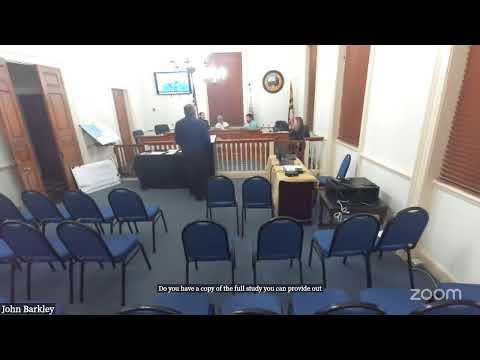
The Pocomoke City Planning Commission on Nov. 20 reviewed a draft ordinance that would regulate public murals and discussed a separate neighborhood-compatibility rubric intended to guide how new houses — including manufactured and modular homes — are evaluated for fit in established neighborhoods.
The mural draft sets a definition of "mural," lists acceptable locations, design and materials standards, a process for review, and preservation/maintenance and enforcement language. Planning staff also proposed a neighborhood-compatibility tool that would evaluate setbacks, living area, predominant land use, number of stories, parking and architectural features when new houses are proposed.
Why it matters: commissioners said the city is balancing support for affordable housing with a desire to protect the character and property values of older neighborhoods. Staff said the neighborhood-compatibility approach grew out of state changes (identified in the meeting as "House Bill 538") that require permitting manufactured and modular housing in residential districts while still allowing fair, uniform local regulations.
Planning Director Dan (identified in the meeting as the presenter) told commissioners the mural ordinance is being drafted for a possible urban design chapter of the zoning code and that staff would circulate a revised draft with edits and a redline. He said the compatibility tool would be modeled on a neighborhood worksheet and would consider items such as setbacks, living area, number of stories, parking access and roof design.
Commissioner and staff comments focused on enforcement and public input. "My, I guess biggest concern when I saw their first draft ... was just making sure for enforcement, if somebody puts up a mural that's not approved, or if somebody doesn't maintain a mural that has been approved and it's starting to look bad, that they're both considered violations under the main zoning ordinance under 2 30," said Ms. Witts, whose suggested edits asked the commission to locate enforcement for murals in the same enforcement section as other zoning violations.
Resident Todd Knob spoke during public comment urging broader outreach and input: "I believe in in my heart that you all should probably table this until your next meeting where you all can sit down ... and we can make suggestions on how you all can get the information out to the citizens to say, hey. We want your input." Commissioners agreed staff should circulate the draft and the commission would take public comments at a later public hearing before forwarding the text amendment to the city council.
The commission did not take a vote on the ordinance at the meeting. Staff was directed to circulate the revised draft, schedule a public hearing before the Planning Commission (with an internal target that applications be scheduled within 30 days of receipt), and return with a draft neighborhood-compatibility section for the next meeting. The commission also discussed whether mural approvals should automatically be referred to the Planning Commission rather than decided administratively; staff's draft was revised to refer murals to the commission for review.
Looking ahead: staff will distribute the redlined ordinance and the neighborhood-compatibility draft ahead of the next meeting and will advertise the public hearing on the city website; any adopted text amendment would later follow the city's required public-notice and council-reading process.