Get Full Government Meeting Transcripts, Videos, & Alerts Forever!
Get email alerts on the Fairgrounds topic
No spam. Unsubscribe anytime.
Pocomoke council hears extended review of fairgrounds governance, funding and appointments
Summary
Council discussion centered on overlapping entities that manage the Pocomoke fairgrounds, missing board appointments, questions about a $16,000 pass‑through check and the need for clearer procedures for events and grant applications.
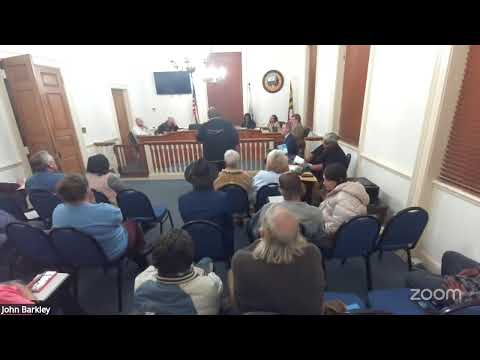
Pocomoke City elected officials and members of the public spent the largest portion of the Feb. meeting reviewing the status of the Pocomoke fairgrounds and the city-appointed Fair Board.
The discussion recounted historical documents and an existing 1994 resolution and charter language that establish the city Fair Board as the body that advises the mayor and council and oversees operations at the fairgrounds. Speakers said the board currently lacks a sufficient number of appointed members to conduct binding votes and contrasted the city board with a separate nonprofit, Great Pocomoke Fair, Inc., that runs events.
City officials and public speakers said there are only three city‑documented Fair Board members on file (Alice Jean Ennis, Dean Ennis, and Pam Polk) and that two vacancies remain. Participants asked the council to appoint replacements so the board can meet a five‑member minimum required by the charter text cited in the meeting.
Public speakers and council members also pressed for clearer financial records and oversight. One attendee asked about a roughly $16,000 check described as a pass‑through intended to pay maintenance and purses; speakers said the check traditionally has been deposited to the fair account and used to pay track and facility expenses. The meeting record shows a city staff member said she would check the treasurer of the nonprofit corporation to confirm receipt of that check.
Council members and the mayor stressed the need to standardize practices: open meetings with minutes, clear lines about when large events require city paperwork or a council vote (for example, events serving alcohol), and timely submission of grant applications. The council noted that the city budget included roughly $30,000 for fairgrounds upkeep in 2024 and that the city could be the applicant for some grants if deadlines are missed by the nonprofit.
Speakers also described two distinct legal entities that operate at the fairgrounds: the city Fair Board (a city board established under the Pocomoke City charter) and the Great Pocomoke Fair, Inc., a 501(c)(3) nonprofit. Several speakers asked the council to clarify which body handles specific tasks, including maintenance, grant administration and payment of racing purses, and to confirm which council member will serve as the ex officio liaison called for in the charter.
Council members asked staff to prepare a resolution and follow‑up materials for the council’s next meeting so the city can fill board slots, update minutes and publish procedures for scheduling and permitting major events. The meeting record includes reminders from staff that event requests for smaller private rentals should go to the finance department and that alcohol sales require council review.
Why it matters: The council flagged the lack of membership and recordkeeping as contributing to unclear oversight and to regulatory problems such as the Maryland Department of the Environment findings referenced in the discussion. Council members said filling vacancies, recording minutes, clarifying the relationship with the nonprofit and documenting which entity receives state racing funds will reduce future confusion and help sustain events at the fairgrounds.
The council did not take a formal vote to change the Fair Board’s membership during the meeting; members said they will return with a draft resolution and a timeline for appointments.
Ending: Council members urged continued cooperation with the nonprofit and said they will work with staff to bring a resolution back to the next regular meeting so the Fair Board can reach a full membership and the city can clarify financial flows and event‑approval procedures.