Get Full Government Meeting Transcripts, Videos, & Alerts Forever!
Get email alerts on the Sentencing Reform topic
No spam. Unsubscribe anytime.
Legislators hear wide support for 'Second Look' law to let long‑served prisoners ask judges to reduce life terms
Summary
Lawmakers took hours of testimony on HB 853, a 'Second Look' bill allowing people who have served at least 20 years to petition a court for sentence review, drawing large panels of formerly incarcerated people, victims, defense lawyers and civil‑liberties groups.
Delegate Cheryl Pasteur introduced HB 853 (the “Second Look Act”), telling the committee the measure would create a judicial review process letting people who have served at least 20 years ask a judge to reconsider their sentences. “Second look is not a ‘get‑out‑of‑jail‑free’ card,” Pasteur said. “It is an assessment and an opportunity for review.”
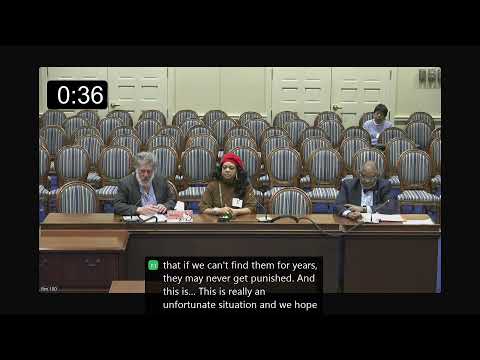
The hearing drew one of the largest witness lists of the day: formerly incarcerated speakers who described reentry work and rehabilitation; survivors who said they favored a process that allows victims to be heard but still permits review; public‑defense lawyers and legal advocates who said existing post‑conviction routes are insufficient; and civil‑liberties organizations that emphasized racial disparities and the aging prison population. The Maryland ACLU, Office of the Public Defender and multiple reentry nonprofits urged a favorable report. Anthony Mohammed, released under the Juvenile Restoration Act and now active in mentoring, told the panel that returning people have reduced violence and help prevent crime.
Prosecutors and some victims’ advocates questioned the bill’s effects on victims’ privacy and whether repeated review hearings would re‑traumatize families. Supporters pointed to statutory protections requiring victim notification and to programs that already have included victim‑offender mediation. Data cited at the hearing included Maryland statistics on life‑without‑parole sentences, patterns of discretionary charging, and research showing low recidivism after lengthy incarceration for people released under related statutes elsewhere.
Committee members asked about statutory scope (whether all offenses would be eligible), parole board overlaps, and whether the bill would bring meaningful public‑safety benefits. Pasteur and witnesses described judicial discretion built into the bill and said judges would weigh offense seriousness, individual rehabilitation and public safety. The hearing included dozens of formerly incarcerated people who said they now hold jobs, mentor youth, and work to reduce violence. Supporters asked the committee to report favorably; members requested timing and technical amendments and additional briefing on implementation.
The panel did not vote on HB 853 at the session; staff will circulate proposed amendments and fiscal/legal analyses before a later markup.