Get Full Government Meeting Transcripts, Videos, & Alerts Forever!
Get email alerts on the Transportation Funding topic
No spam. Unsubscribe anytime.
Sponsor seeks partial restoration of excise tax on short‑term rental fleets in bid to raise transportation funds
Summary
Delegate Stephanie Smith told the committee House Bill 898 would repeal a longstanding exemption and impose a 3.5% excise tax on the fair market value of short‑term rental vehicles, a change she said would restore revenue to the Transportation Trust Fund; the rental industry strongly opposed the measure.
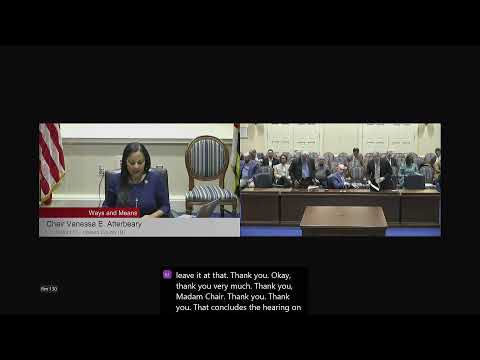
Delegate Stephanie Smith (sponsor) asked the Ways and Means Committee on Feb. 18 for a favorable report on House Bill 898, which would repeal the long‑standing vehicle excise tax exemption for short‑term rental fleets and impose a 3.5% excise tax on the fair market value of each short‑term rental vehicle purchase.
Nut graf: Smith said the exemption dates to the early 1990s and has not been revenue neutral for Maryland; the sponsor presented the change as a partial restoration that would add roughly $46–50 million a year to the Transportation Trust Fund while leaving the industry subject to the existing 11.5% rental‑transaction sales tax at the counter.
Smith described the existing arrangement as a “very bad deal” for Marylanders, saying rental fleets do not pay the same excise tax as ordinary vehicle purchasers and that foregone excise tax revenue has underfunded highways and local allocations to counties. “By foregoing excise taxes on rental car fleets, the state of Maryland loses north of $70,000,000 annually,” the sponsor said in her presentation.
Industry witnesses strongly opposed the bill. Rental operators and dealer associations told the committee the proposal would amount to double taxation because the industry currently remits the state’s 11.5% rental sales tax on transactions, and the proposed excise would require businesses to pay tax on vehicle inventory before any revenue is earned. Enterprise Mobility and independent operators said the bill would raise costs for consumers, cause competitive distortions with neighboring jurisdictions, and disproportionately harm smaller rental and truck rental companies that cannot re‑title fleets out of Maryland. Dealer witnesses also said an excise on loaner fleets would raise costs for dealerships that provide complimentary service loaners to customers.
Committee members asked technical questions about how the excise would affect small operators, loaner fleets at dealerships, and the potential for cross‑border shifts of activity. Industry witnesses showed calculations claiming rental inventories generate more tax revenue over time under the existing scheme because the customer‑facing rental tax is collected repeatedly as vehicles are rented during their service life; industry witnesses asked instead to keep the current business model or to change the counter tax rate rather than impose an excise on inventory.
Ending: The hearing record shows the industry asked for an unfavorable report and emphasized competitive and administrative concerns. The bill remained before the committee for further consideration with no recorded committee vote at the hearing.
Sources: Committee hearing transcript, Feb. 18, 2025 (presentation by Delegate Stephanie Smith; testimony from rental‑industry representatives including Enterprise Mobility, American Car Rental Association, Maryland Automobile Dealers Association).