Get Full Government Meeting Transcripts, Videos, & Alerts Forever!
Get email alerts on the Zombie Mortgages topic
No spam. Unsubscribe anytime.
Bill would require 24 months of billing before foreclosing on old second liens, lawmakers told
Summary
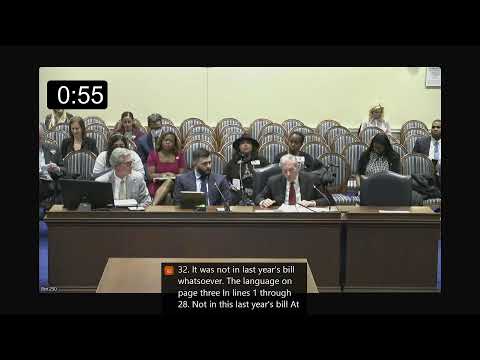
Delegate Dana Jones described House Bill 769 to the House Environment and Transportation Committee on Feb. 18 as a response to what she called "zombie mortgages": older subordinate liens that were charged off, sold to debt buyers and — after home values rose — resurrected in foreclosure actions that surprised homeowners.
Delegate Dana Jones described House Bill 769 to the House Environment and Transportation Committee on Feb. 18 as a response to what she called "zombie mortgages": older subordinate liens that were charged off, sold to debt buyers and — after home values rose — resurrected in foreclosure actions that surprised homeowners.
The lede: HB 769 would require holders of materially‑delinquent mortgages to issue periodic billing statements for a prescribed interval before initiating foreclosure and would give homeowners statutory defenses tied to latches and fair notice. Proponents said the change would protect long‑standing borrowers who believed an old subordinate lien had been discharged or written off and were then blindsided by foreclosure notices for large arrearages.
Why supporters say the bill is needed Office of Financial Regulation officials told the committee that Maryland lacks a statute of limitations for mortgage foreclosures and that federal protections do not always apply to second liens or to debt buyers that acquire charged‑off debt. Tony Salazar, commissioner of OFR (standing in for a deputy), said the absence of regular statements and of time limits left homeowners vulnerable decades after an original loan was made. Assistant Commissioner Meredith Merchant described cases in which homeowners were unaware of long‑dormant subordinate liens until they received a notice of intent to foreclose; she said the average outstanding amount on such "zombie" loans in the state's data was about $193,000.
Legal and practical mechanics in the bill Jones said the measure would not erase debts but would require more transparent billing before enforcement steps and would allow homeowners to raise latches, statute‑of‑limitations and other defenses. Supporters cited the example of Virginia’s HB 184 and other states that established pre‑foreclosure billing or notice requirements for old subordinate liens. OFR and tenant advocates recommended a 24‑month statement period to provide homeowners time to evaluate options and to allow counsel and regulators to investigate the debt’s chain of title.
Advocacy and service providers’ accounts Legal aid providers, community development groups and service organizations described clients who were current on primary mortgages but faced foreclosure on a subordinate lien they had believed resolved. Witnesses said the phenomenon disproportionately affects communities of color and middle‑income homeowners who had acquired ‘‘second’’ instruments prior to the 2008 crisis and later assumed the debt was extinguished or addressed in bankruptcy or loan modifications.
Industry concerns and counterarguments Banking and mortgage‑industry representatives opposed aspects of the bill. They argued purchasers of charged‑off debt still hold enforceable liens, that resurrected claims can be legitimate, and that retroactive limitations could create uncertainty for secured creditors. Lenders urged caution about imposing new procedural requirements that could increase litigation and titling complexity.
Next steps and technical issues for the committee Committee members asked about details the bill frames but does not fully quantify in statutory text: the mechanics of notice, how to identify the holder of a line that was sold multiple times, whether courts would be asked to abate portions of interest if billing was not provided, and operational impacts for county recorders and court dockets. Supporters said the bill’s goal was narrow: to require meaningful written billing and a short defensive window before foreclosure on materially‑delinquent mortgages.
Ending Proponents argued the bill would reduce surprise foreclosures, give homeowners a fair chance to cure or dispute aged debts and limit avoidable displacement; opponents urged careful drafting to avoid unintended lien uncertainty. The committee will consider technical amendments to define time frames and remedies before a vote.