Get Full Government Meeting Transcripts, Videos, & Alerts Forever!
Get email alerts on the Local Alcohol Bills topic
No spam. Unsubscribe anytime.
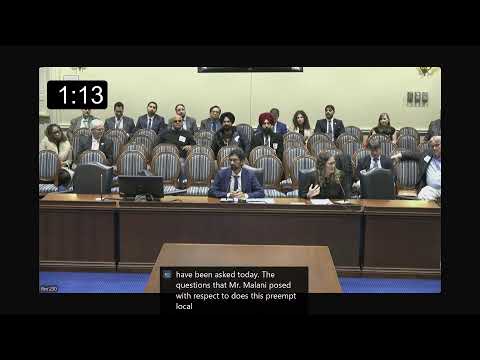
Subcommittee hears dozens of county delegation alcoholic-beverage bills; many carry local support
Summary
The alcohol subcommittee heard a large package of county delegation bills that would change local licensing rules and create specialty license types in multiple Maryland counties.
The Economic Matters Committee’s alcohol subcommittee heard a large package of county delegation bills affecting local alcoholic-beverage licensing across Maryland counties, including bills from Anne Arundel, Baltimore City, Baltimore County, Frederick, Garrett, Harford, Howard, Washington, Dorchester, Wicomico, Somerset, St. Mary’s, Caroline, Charles and others.
Common changes presented to the subcommittee included: creating new specialty license classes (for theaters, tasting permits, event venues, rural special-event licenses and golf-simulator facility permits); allowing limited retail or delivery expansions (for barbershops/salons and restaurant-to-go sales); adjusting quota formulas (licenses per population); and technical or administrative fixes (clarifying transfer rules and reviving lapsed licenses).
Several delegations reported unanimous or strong votes in support: Delegate Seth Howard said HB 1259 (Anne Arundel distance-exception measure) passed the delegation unanimously; Delegate Jason Buckle said House Bill 1108 (Allegheny County clarification of minimum working age for liquor employees) had unanimous delegation backing; Delegate Mike Rogers said HB 515 (conversion to veterans organization licenses in Anne Arundel) passed the delegation 15–0; and HB 99 (county quota changes) carried a 15–0 delegation vote after amendment work. Delegation letters and vote sheets were provided for many but the committee noted several bills were still missing formal delegation letters and requested those documents be filed with staff.
Liquor-board officials and county licensing staff frequently testified on technical provisions. Anne Arundel County Liquor Board chair Wayne Harris and staff repeatedly said they supported several bills as amended but opposed language in others — for example, the board opposed a broad quota change that combined retail and tavern license classes because it would shrink opportunities for taverns.
Subcommittee members and staff asked each delegation to provide missing delegation letters, vote counts, and amendment text before any subcommittee recommendation. No committee-level final actions were taken at the hearing; each local bill remains pending in the subcommittee and will be scheduled for follow-up or a formal recommendation once paperwork and any technical fixes are filed by sponsors or local delegations.