Get Full Government Meeting Transcripts, Videos, & Alerts Forever!
Get email alerts on the Tobacco Policy topic
No spam. Unsubscribe anytime.
Legal cigar lounges with on-site alcohol draw opposition from health groups and restaurants
Summary
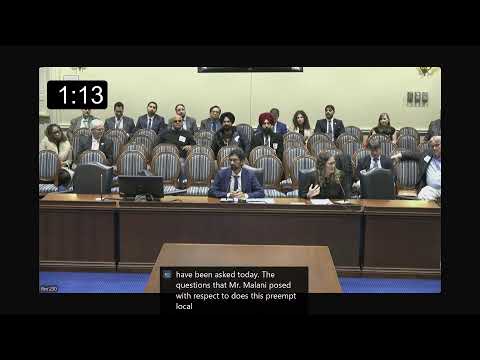
At an Economic Matters Committee hearing, proponents of House Bill 13 18 sought a statewide framework to allow licensed premium cigar shops to operate lounges that may also serve alcohol under a restricted license.
At an Economic Matters Committee alcohol-subcommittee hearing, supporters of House Bill 13 18 told lawmakers the bill would create a clear statewide framework to allow certain premium tobacconists to operate cigar lounges that may also serve alcohol under a restricted license.
Sponsor Delegate Alonzo Johnson said the measure would “give small businesses stability, flexibility, and protections” and allow Marylanders to patronize cigar lounges and spend dollars in-state instead of traveling out of state. Attorney Matt Foley, representing the Premium Cigar Retailers Association of Maryland (PCRAM), described a limited expansion: licensed lounges would be grandfathered if they already held local liquor authority, and new licenses would be constrained by population-based caps (roughly one license per 150,000 residents or one per county in small jurisdictions), a 60% tobacco sales / 40% alcohol sales ratio, air-filtration and employee-safety signage requirements, and limits on the tobacco products that may be consumed on-premises.
Owners of shops and lounges said a local liquor license has helped retain customers and drive food and beverage spending at nearby restaurants; they asked the General Assembly to allow similarly regulated operations statewide.
Opponents strongly resisted the proposal. The Maryland Department of Health, the American Heart Association, the American Cancer Society Cancer Action Network and the Restaurant Association of Maryland all urged the committee to reject the bill. MDH Deputy Secretary Nilesh Kalyanaraman said the state has made large gains reducing youth smoking and that expanding venues where indoor smoking occurs would threaten those gains. Melvin Thompson of the Restaurant Association said the industry wants a level playing field and recalled the competitive disruption restaurants faced after the statewide indoor-smoking ban. Lance Kilpatrick of the Cancer Action Network noted research showing ventilation cannot fully remove secondhand tobacco smoke particles.
Public-health witnesses and legal experts on the panel urged the committee to await the report of a work group that the legislature convened in 2024 to study tobacco retail and smoking exemptions: that group has met repeatedly and expects to deliver recommendations to lawmakers. Opponents argued the work-group process should complete before any statutory carve-out is enacted.
Committee members asked about grandfathering, how the bill’s population caps would apply across counties, whether the statutory text might be amended to narrow the license to “premium cigar and pipe” shops, and whether proposed ventilation or hours limits could mitigate public-health risks. No committee vote was taken. The subcommittee requested proposed technical amendments and further legal review; members signaled they expect additional conversation before any committee report.