Get Full Government Meeting Transcripts, Videos, & Alerts Forever!
Get email alerts on the Criminal Justice Expungement topic
No spam. Unsubscribe anytime.
Cannabis Expungement Board lays out plan to review tens of thousands of records; aims to start bulk reviews in March
Summary
The Cannabis Expungement Board told a House committee it has identified at least 98,000 potentially eligible records for review under the Adult Use Cannabis Act of 2023 and plans to begin bulk reviews of low-severity convictions starting in March.
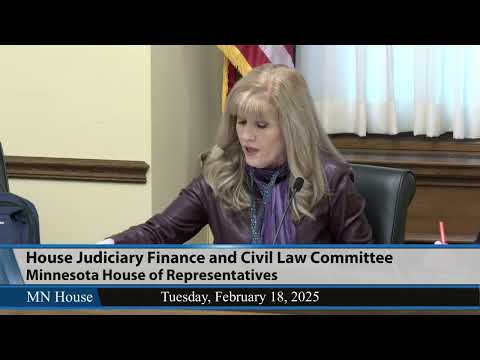
The Cannabis Expungement Board briefed the House Judiciary Finance and Civil Law Committee on Feb. 18, outlining its plan to review at least 98,000 criminal cases that the Bureau of Criminal Apprehension has identified as potentially eligible for expungement or resentencing under the Adult Use Cannabis Act of 2023.
Executive Director Jim Rauder told the committee the board's purpose is to review records to determine eligibility when the underlying conduct would not be a felony under current law and when cases do not involve violence or weapons. "The Bureau of Criminal Apprehension has identified at least 98,000 cases for potential review for eligibility," Rauder said.
Deputy Director and General Counsel Mark Hasse described a phased approach intended to make the workload manageable: staff will first review low-severity convictions — notably fifth-degree possession — and present batches of qualifying cases to the board for action; more serious cases will receive closer, case-by-case scrutiny. Hasse summarized the board's eight-factor public-interest analysis, which includes the nature and severity of the offense, risk to the public, aggravating or mitigating factors, victim or law-enforcement statements, and whether sealing licensing or educational records or restoring firearm rights is appropriate.
Board leadership described steps already completed: staff hires for key leadership roles, a vendor selection for a case-management system, and a Minnesota IT (MNIT)-mediated procurement expected to be fully implemented by June. The board reported a first-year operating budget of approximately $5.8 million, reflecting up-front technology and start-up costs, and said the ongoing annual appropriation for 2025 is approximately $5.5 million.
Rauder and Hasse said the board anticipates bringing an initial bulk of cases to the board in March — Rauder estimated about forty cases initially — and that current staff capacity could process about 100 cases per month; leaders said that as they hire additional staff attorneys and paralegals the monthly throughput should rise into the hundreds. The board currently plans a staff of roughly 35, primarily staff attorneys and paralegals, to carry out reviews.
The board told the committee there are relatively few people incarcerated solely on cannabis-related felonies identified by the BCA; the board had worked with the Department of Corrections to identify roughly 29 such cases for early review. The board also noted a statutory requirement to meet in open session when considering specific cases and an annual reporting requirement: the board files an annual report, due Jan. 15 each year, outlining activities and case data.
Committee members expressed support for expedited reviews and asked practical questions about staffing and timelines. Representative Finke called the work "life changing" for affected individuals, and several members asked the board to provide periodic milestone updates. The board said it will report detailed outcome data and decision metrics going forward once the case-management system and staffing are in place.