Get Full Government Meeting Transcripts, Videos, & Alerts Forever!
Get email alerts on the Short Term Rentals topic
No spam. Unsubscribe anytime.
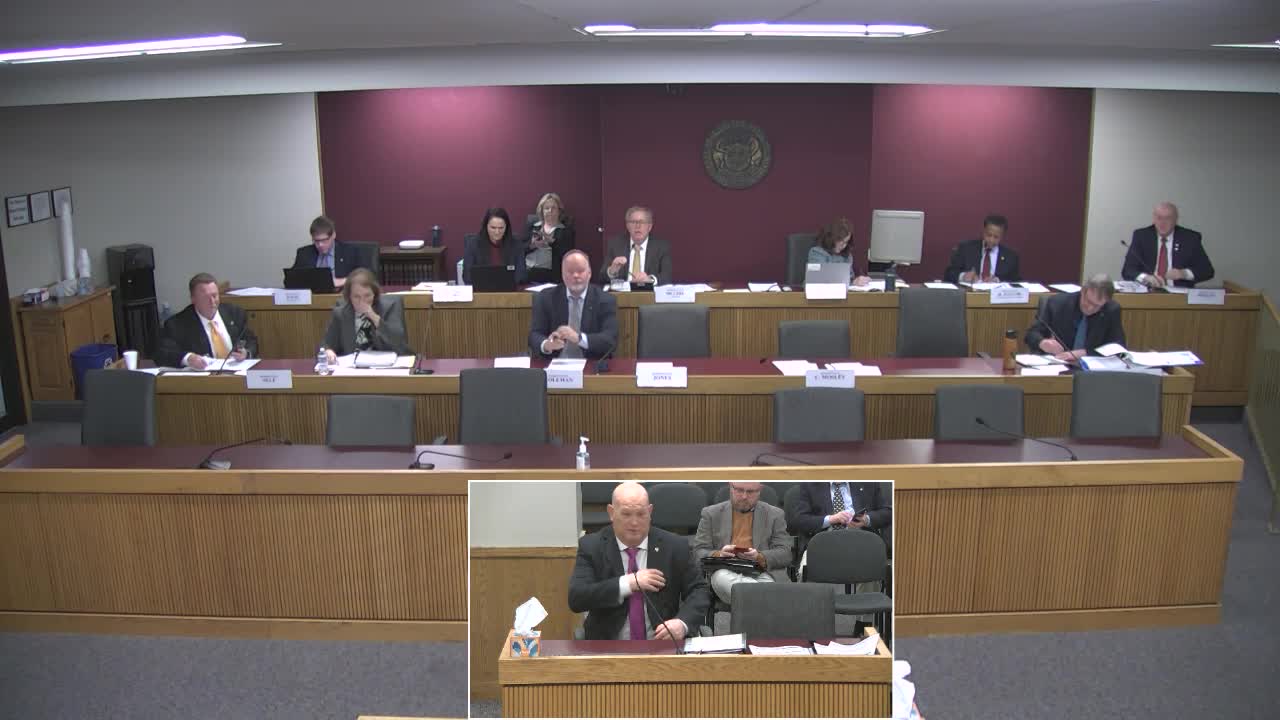
Committee hears House Bill 1086 to keep single‑family short‑term rentals classified as residential; industry witnesses urge state standard
Summary
House Bill 1086 would require single‑family homes leased for under 30 consecutive days to be classified only as residential property; sponsors said several counties reclassifying such homes as commercial have sharply increased owners’ tax bills.
Representative Brown introduced House Bill 1086 to revise Chapter 137 to state that a single‑family home leased for less than 30 consecutive days is classified only as residential property, and that leasing a single‑family home for less than 30 days “does not in itself constitute transient housing.”
Brown and multiple witnesses said assessors in several counties recently reclassified short‑term rental homes from residential to commercial, which increases assessed valuation (the sponsor described moving from a 19% assessment rate for residential to a 32% rate on commercial property in one example). The sponsor and witnesses described cases in Taney County, Stone County and other tourist areas where owners of vacation cabins and lake properties faced large assessment increases.
“I talked to my assessor this morning. … A home, really, no matter what you're doing in terms of making money on that home, if you're doing short term rentals, it is still a home,” Representative Brown said. Supporters — several of whom testified they operate vacation rentals or manage them for owners — said the reclassifications are inconsistent across counties and harm small “mom and pop” operators who use short‑term rentals as retirement income.
Witness Lance Mayfield of Stone County and Alex Simeonik of St. Louis offered quantified examples from property tax rolls: Simeonik said one 4‑unit parcel he rehabilitated saw taxes rise from roughly $1,500 to $22,000 after reassessment and classification changes. Diane Marsink, who said she rehabilitated a downtown bank building into a vacation home that spurred local revitalization, said reclassifying short‑term rentals as commercial threatens visitor access and local jobs.
The Missouri Hotel Lodging Association offered a formal opposition sign‑on, arguing commercial lodging businesses and short‑term rentals are not identical and asking for a level playing field. Katie Gamble, representing the association, said the group opposed the legislation and asked to continue conversations with the sponsor.
Committee members asked technical questions about how the statute currently treats bed‑and‑breakfasts and other transient housing and whether the bill would interfere with local ordinances. The sponsor said the bill was intended to provide a statewide, consistent approach and to prevent county‑by‑county divergence in classification practices.
Why it matters: The bill would standardize assessment treatment for many short‑term rental single‑family homes and prevent disparate county reclassifications that supporters say can sharply raise taxes and make local rental businesses unviable. Opponents including the lodging association said commercial lodging and short‑term home rentals can differ in scale and economic footprint and deserve careful treatment.
The committee closed the hearing after receiving both proponent and opponent testimony; no committee vote is recorded in the excerpt.