Get Full Government Meeting Transcripts, Videos, & Alerts Forever!
Get email alerts on the Dei Policy Ban topic
No spam. Unsubscribe anytime.
Missouri House advances bill to block certain DEI trainings in state departments after heated debate
Summary
Lawmakers debated House Bill 742 for more than two hours before advancing the measure to the next stage; supporters say DEI trainings are ineffective and divisive, opponents warn of broad language and unintended impacts on agencies, medical training and corrections.
The Missouri House voted to advance House Bill 742, a measure that would bar state departments from spending money on programs the bill defines as promoting "preferential treatment" or certain identity-based doctrines, following extended debate on Feb. 13, 2025.
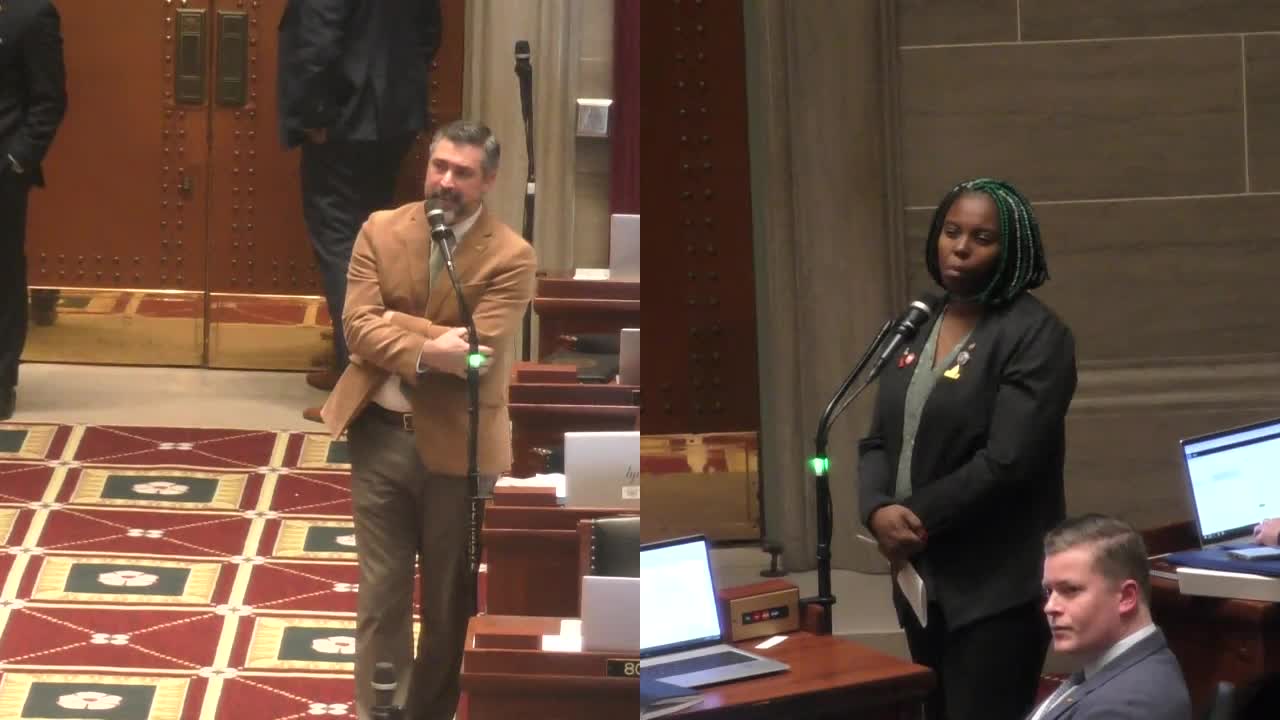
Representative from Newton (bill sponsor) told colleagues the measure "aims to eliminate and prohibit DEI initiatives from our state departments politically," arguing the programs have not produced the intended results and can be divisive. He pressed lawmakers to reconsider taxpayer funding for such programs and said the state should return to hiring based on "merit and competency."
Supporters framed the bill as a question of efficacy and use of public funds. Representative from Newton cited aggregated academic reviews and cited specific authors and organizations discussed during debate, saying research has shown training sometimes fails to reduce bias and can "make things worse." He said the bill would not prevent departments from following federal anti-discrimination law.
Opponents said the bill's language is overly broad and could strip funding from programs aimed at increasing access and safety for vulnerable populations. Representative from Saint Louis City District 84 called the measure a step backward and urged her colleagues to "vote this down," while the gentleman from Saint Louis County said the proposal was "performative legislation" and warned it could cause employers to relocate and workers to feel less belonging.
Several members raised technical and practical concerns. The lady from Jefferson and the gentleman from Boone questioned whether line-by-line language — in particular the bill's use of "or" across multiple listed items — could unintentionally limit programs targeted at specific groups, such as maternal-health initiatives, minority business outreach, or disability employment supports. The bill sponsor said the bill's definitions had been revised over multiple sessions and that the intent was to prohibit programs that teach an oppressor/oppressed framework or compel collective guilt.
Lawmakers also debated implications for law enforcement and corrections training. The lady from Saint Louis City asked whether the measure would affect Department of Corrections initiatives; the sponsor answered that programs meeting the bill's definition and funded by state dollars would be prohibited, adding he did not believe established, legally required training would be affected.
Debate included repeated references to academic reviews; Representative from Newton cited an aggregated review of studies (described in debate as a 985-study aggregation by researchers then at Harvard and Yale) and other authors. Opponents pointed to possible harms if targeted medical, education or public-safety training were constrained.
Procedural votes during the session moved the bill forward. A motion to end debate (previous question), moved by the gentleman from Green, passed on a recorded vote of 100 yeas to 49 nays. The House then ordered House Bill 742 "perfected and printed" on voice vote; the chair announced "the ayes have it." Earlier in the day the body also approved the House journal for the Feb. 13, 2025 session (yays 152, nays 1).
The House did not adopt final passage of HB 742 on Feb. 13; the action taken was to order the bill perfected and printed, a procedural step that advances the measure toward committee and future floor action. Supporters said technical fixes could be made before later steps; opponents said they would continue to press for narrower language or for the bill to be defeated in later stages.
The bill prompted wide participation from members in both parties and repeated calls from colleagues to clarify the bill's mechanics and exempt commonly funded programs they said provide practical services — for example, maternal-health supports, vocational outreach and disability employment programs. Representative from Newton said exemptions for compliance with federal anti-discrimination law were included in the text.
Votes at a glance
- Approval of House journal (Feb. 13, 2025): approved (yays 152, nays 1). - Motion to move previous question on HB 742 (end debate): passed (yeas 100, nays 49). - Motion to order House Bill 742 perfected and printed: passed (voice vote; chair announced ayes have it).
What happens next
Ordering the bill perfected and printed advances HB 742 to the next procedural stages, which may include committee consideration, amendment, and future floor action. Lawmakers on both sides indicated they expect further technical amendments and additional debate before any final passage vote.