Get Full Government Meeting Transcripts, Videos, & Alerts Forever!
Get email alerts on the Property Tax Rates topic
No spam. Unsubscribe anytime.
Bill to clarify when taxing jurisdictions may return to higher rate ceilings debated after Town and Country example (House Bill 783)
Summary
House Bill 783 would clarify when political subdivisions may return to a previously authorized higher tax‑rate ceiling without a new voter referendum, addressing a practice cited in Town and Country, St. Louis County, where local officials reportedly used an old ceiling to raise rates decades later.
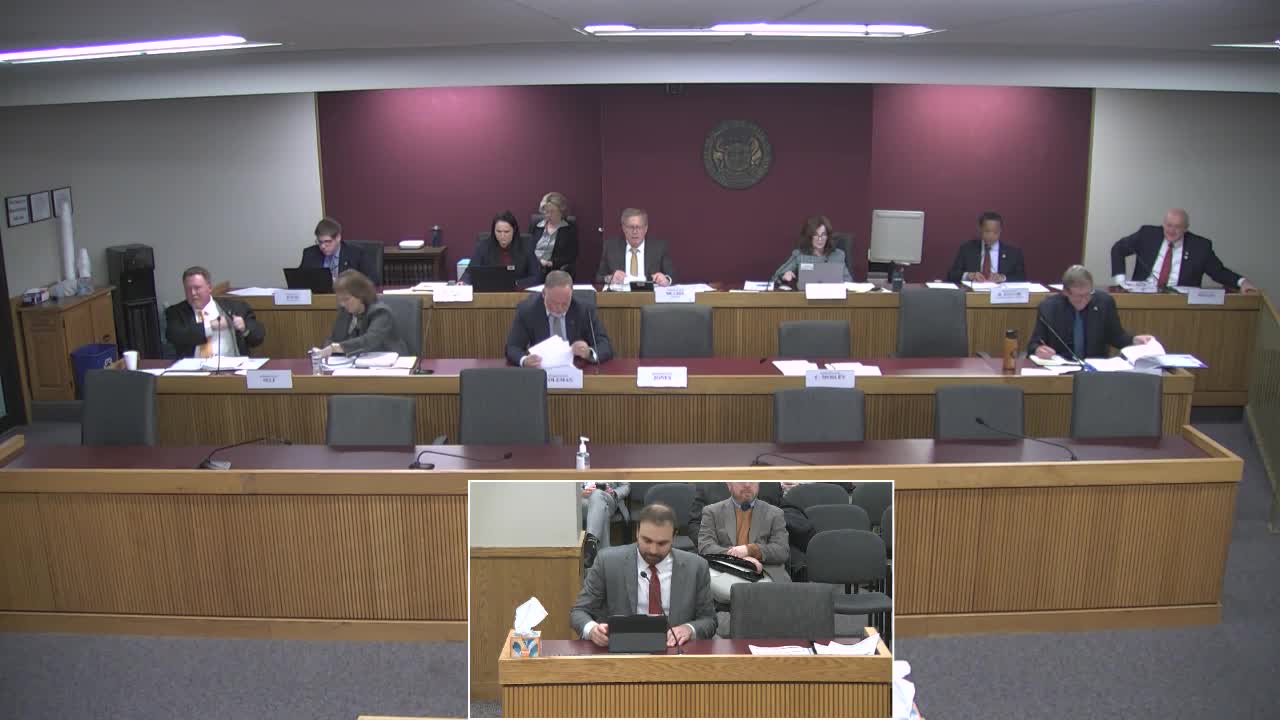
Representative Ben Keathley introduced House Bill 783, a clarifying bill that follows instructions in the state auditor’s annual property tax report to explain how political subdivisions should treat tax‑rate ceilings across reassessment cycles.
The sponsor said the bill preserves flexibility for jurisdictions to ‘‘rebalance’’ rates in non‑reassessment years but clarifies that if a jurisdiction voluntarily rolls back its rate one year and does not readjust within the next reassessment cycle, the lower rate becomes the new ceiling. The bill was described as closing a loophole used in at least one jurisdiction, Town and Country in St. Louis County, where an older, higher ceiling was cited decades later to raise rates without returning to voters.
“This would clarify that when they bounce back up, that bounce back up needs to happen right away,” the sponsor said, describing the bill as aligning statutory language with the auditor’s guidance and preventing political subdivisions from using historical ceilings decades later to avoid voter approval.
Committee members asked whether the clarifying language would discourage voluntary rollbacks; the sponsor and others said jurisdictions can still lower rates voluntarily and then go back up within the reassessment cycle to rebalance without a vote, but that the bill seeks a guardrail against returning to an old ceiling after multiple cycles.
The committee heard questions and then opened the bill to public testimony; no opposition was recorded in the excerpt. The committee concluded the hearing and advanced to other items.
Why it matters: The bill would formalize the auditor’s guidance into statute to limit a practice some members described as circumventing voter approval. Supporters said it protects voters’ intent; critics worried about unintended budgeting consequences. The transcript records questions and sponsor answers; no final vote on HB 783 is shown in the excerpt.
Quotations are verbatim from the committee hearing transcript.