Get Full Government Meeting Transcripts, Videos, & Alerts Forever!
Get email alerts on the Child Trafficking Constitution Amendment topic
No spam. Unsubscribe anytime.
Representative Hausman proposes constitutional amendment to impose life without parole for child trafficking; committee hears testimony
Summary
House Joint Resolution 26 would submit to voters a constitutional amendment imposing life imprisonment without parole for those convicted of first-degree child trafficking; sponsor and committee members debated scope and parole concerns during a public hearing.
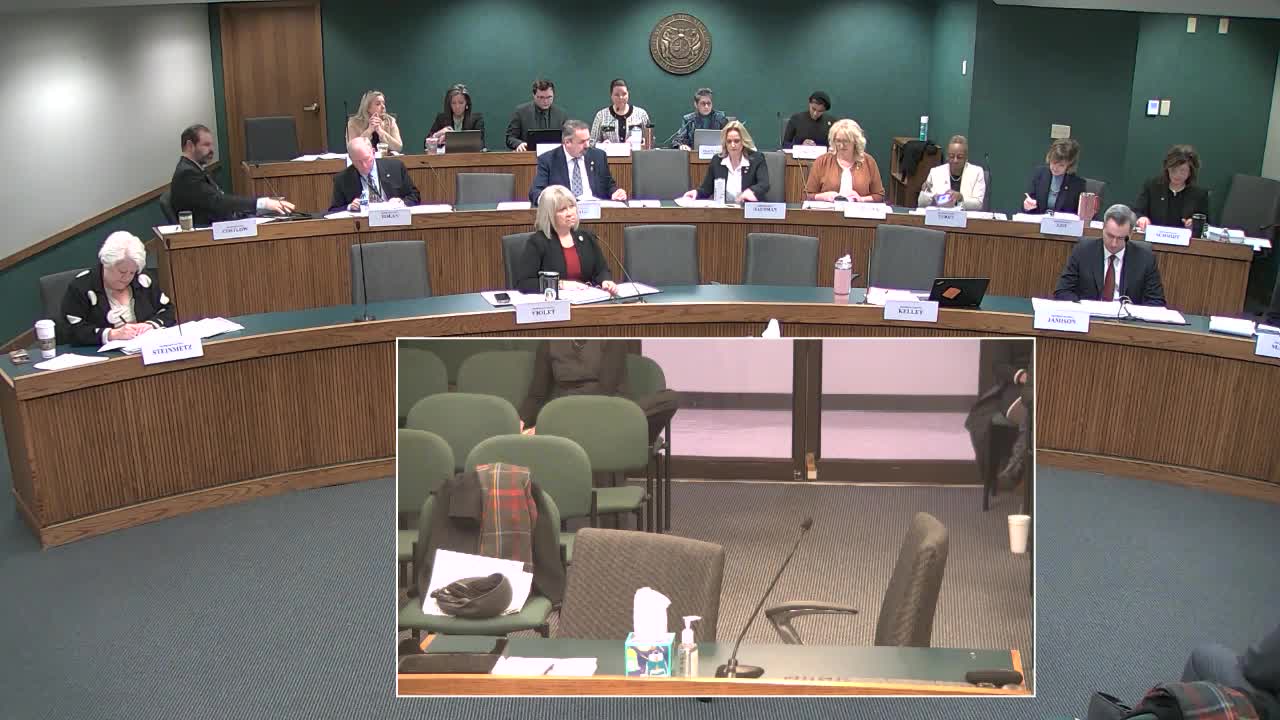
Representative Wendy Hausman told the Committee on Children and Families she is sponsoring House Joint Resolution 26 to ask Missouri voters to amend the state constitution to require life imprisonment without eligibility for parole or probation for anyone convicted of first‑degree child trafficking.
“We must ensure that punishment for this crime is not only severe, but it is just,” Hausman said during the public hearing. She described the proposal as a response to what she called “modern day slavery” in Missouri and said the average age of child trafficking in the state is 14, a statistic she cited from a local Child Advocacy Center.
Committee members generally expressed strong support for tougher penalties for those who traffic children but raised questions about the amendment’s sentencing language. Representative Prouty said he favored life imprisonment for those who commit grave harm to children but sought clarification about the “without parole” language and how the amendment would align with punishments for other serious crimes. Members discussed the possibility that people who were themselves coerced into trafficking could be treated differently in sentencing and asked whether a constitutional amendment framed in this manner could limit judicial sentencing flexibility.
Rep. Hausman said Arizona passed a similar measure last year and framed the proposal as a voter-directed change: if placed on the ballot and approved by voters, the state’s constitutional text would require the specified sentence for a conviction of first‑degree child trafficking. Several members supported placing the question before the electorate as a statement that Missouri would not tolerate trafficking of children.
No witnesses provided oral testimony for or against HJR 26 in the hearing record excerpt; the sponsor took questions and members discussed sentencing scope and the role of the voters in deciding the measure. The committee concluded the public hearing on HJR 26 without recorded votes in the excerpt.