Get Full Government Meeting Transcripts, Videos, & Alerts Forever!
Get email alerts on the Property Tax Policy topic
No spam. Unsubscribe anytime.
Representative Matheson proposes lowering statutory cap on new property‑tax revenue; committee hears mixed reactions (House Bill 517)
Summary
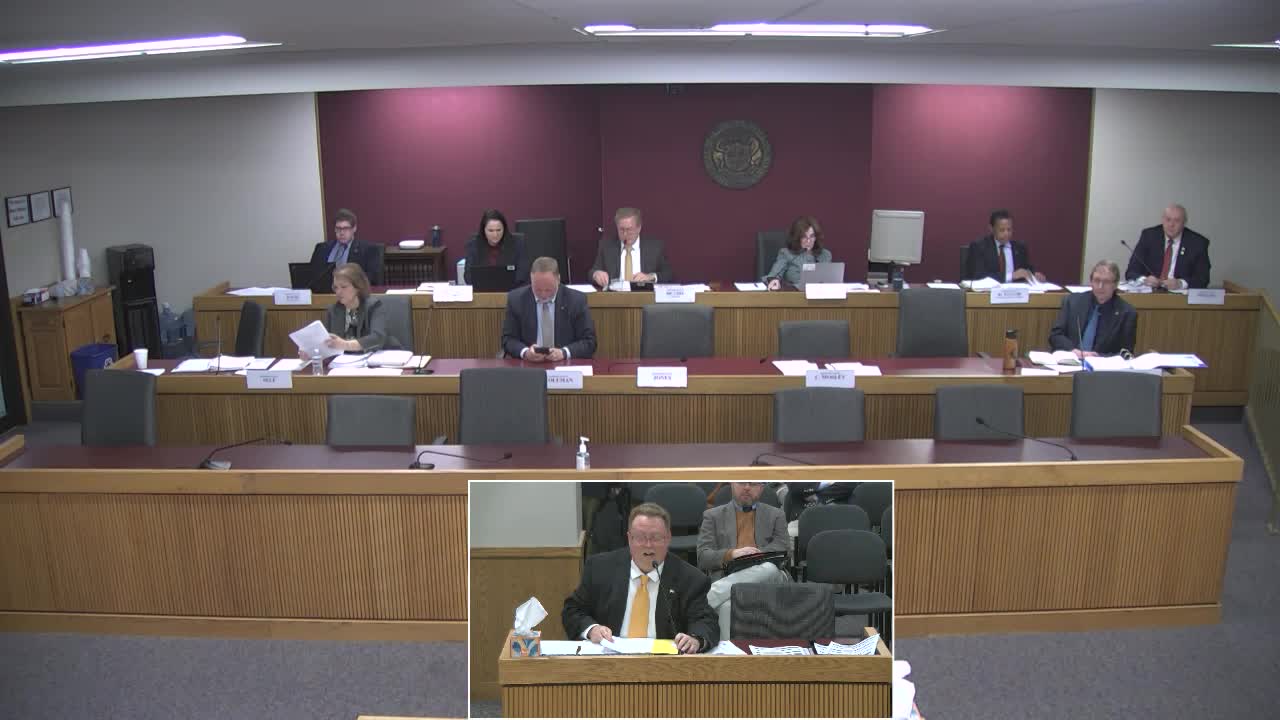
Representative Matheson introduced House Bill 517 to lower the statutory cap on new property‑tax revenue captured from reassessments to 3% (or CPI, whichever is lower), a measure he described as protecting homeowners from sharp tax increases tied to reassessments.
Representative Matheson introduced House Bill 517, a bill that would reduce the statutory cap on new revenue taxing entities may collect from reassessed property values, from 5% to 3% (or CPI, whichever is lower). The sponsor framed the bill as a taxpayer protection measure intended to slow the growth of property tax bills linked to reassessment cycles.
“The bill…slows down the growth of real property taxes. Currently, all of our tax spenders can gain up to 5% or CPI, whichever is lower, in new revenue from the reassessed value of existing property,” Matheson said. He told committee members that, in the last 38 years, CPI exceeded 3% in 16 of those years, meaning the cap would have limited revenue growth in those cycles.
Matheson emphasized that the proposal does not change how assessors value property; it instead caps the amount of new revenue a taxing district may capture from reassessments. “I'm not changing the assessed value at all. I'm simply putting a cap on the new revenue that can be gained from the assessed value,” he said. He added the bill would preserve full capture of revenue from new construction while limiting the share derived from reassessments when CPI is higher.
Committee members pressed practical questions. One member said commercial valuations are cyclical and warned against legislating a cap that could constrain local governments’ ability to manage services and budgets. Representative Coleman asked whether municipalities would still be able to seek voter approval for increased levies; the sponsor answered yes — taxing entities could still present ballot measures to voters to raise revenue.
Members from larger counties described constituent complaints about steep assessment increases (one member referenced 24% and another said averages closer to 36–38% in a county). Matheson said the bill is intended to protect homeowners facing large dollar increases in tax bills tied to reassessments.
Public testimony was not recorded in the transcript excerpt; the committee concluded the hearing on HB 517 after questioning and moved on to the next agenda item.
Why it matters: The proposal would reduce the statutory limit on how much additional revenue taxing districts can claim because of rising reassessed values. Supporters call it a consumer protection for homeowners; critics warn it could limit local governments’ revenue flexibility and shift the burden to voters via additional ballot requests.
The bill was heard in committee; no final committee action on HB 517 is recorded in the excerpt.
(Quotations in this story are taken verbatim from committee remarks in the hearing record.)