Get Full Government Meeting Transcripts, Videos, & Alerts Forever!
Get email alerts on the Social Services Budget topic
No spam. Unsubscribe anytime.
Maryland DHS seeks $791.2M for social services as analysts flag data gaps and rate dispute
Summary
The Maryland Department of Human Services (DHS) told the Health and Social Services Subcommittee that the Social Services Administration’s fiscal 2026 operating allowance increases by $11.8 million, to $791.2 million, while analysts from the Department of Legislative Services (DLS) urged withholding funds until missing performance data are provided and recommended a 5% cut to institutional provider rates.
The Maryland Department of Human Services (DHS) told the Health and Social Services Subcommittee that the Social Services Administration’s fiscal 2026 operating allowance increases by $11.8 million, to $791.2 million, while analysts from the Department of Legislative Services (DLS) urged withholding funds until missing performance data are provided and recommended a 5% cut to institutional provider rates.
DLS told the subcommittee that DHS did not include reliable fiscal 2024 child-safety and placement data in its submissions and recommended adding budget language to withhold funds until those measures are submitted. The DLS presentation also described a proposed fiscal 2026 deficiency of $47.3 million — which the analyst broke down as $18.5 million in general funds, $400,000 in special funds and $28.5 million in federal funds — and forecast shortfalls driven largely by purchased-institution placement costs.
Why it matters: Foster care maintenance payments and purchased-institution costs are the largest single pieces of the Social Services Administration budget, and disagreements over provider rate setting and data reporting affect how the state plans and pays for out-of-home care and related supports.
DLS highlighted that foster care maintenance payments account for roughly $395.6 million, about half of the SSA budget, and personnel costs were listed at about $297.6 million (roughly 38%). DLS reported that residential provider class daily rates rose by wide margins after the new rate structure took effect in fiscal 2025, and that DLS’s two-month post-reform cost estimate for purchased institutions is about $22.5 million higher than DHS’s estimate. Because of those increases and fiscal constraints, DLS recommended a 5% rate reduction for fiscal 2026 to save about $8.5 million and suggested language to prevent an interagency rate committee from approving rate increases for fiscal 2026.
DHS officials defended the rate reforms and framed them as central to reducing hospital overstays and out-of-state placements. Principal Deputy Secretary Carnitra White described the department’s “Family Matters” initiative and said rate reform — a $27 million investment implemented Oct. 1, 2024 — created a category-based structure intended to incentivize providers to offer more specialized programming. “Family Matters reflects our belief that every child deserves a safe, loving, and stable home with people they know and trust,” White said. On the DLS proposal to reduce rates, White said the department “does not concur,” arguing the reform is already helping expand placement options and address hospital overstays.
DHS also contested several DLS data estimates and emphasized ongoing work to improve data collection and public reporting. DHS described a new internal data office and previewed a public-facing dashboard that will publish placement and child-welfare indicators, including jurisdictional breakdowns. DHS officials asked the committee for time to validate and publish corrected federal data and to complete software changes to improve Medicaid and Title IV‑E claiming for certain residential interventions.
On child-fatality reporting, DHS acknowledged past overcounts in federal submissions to the national child-abuse reporting system and said corrective reports for fiscal 2024 have been submitted with additional corrections forthcoming for 2023. DHS characterized the overcount as the result of including all investigated fatalities rather than only those with a substantiated or indicated disposition that meets federal reporting criteria; DHS said a manual review identified 47 fatalities in federal fiscal 2023 where maltreatment was an indicated contributing factor. DHS said it is working with federal partners and state child-fatality review teams to align reporting to national standards and to make child-fatality reports publicly available for the first time.
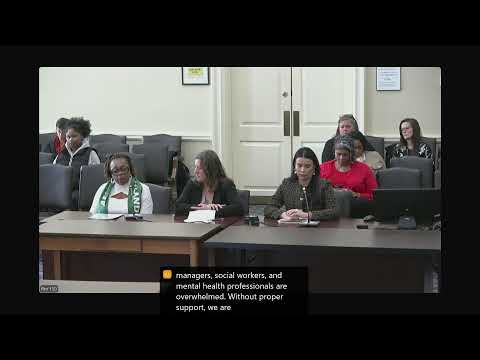
Committee members and outside witnesses urged full funding of rate reform and broader investments in staffing and services. Teresa Hessler of the Maryland Association of Resources for Families and Youth said, “The need for continued provider rate reform is urgent. Without proper funding, providers struggle to retain social workers, behavioral health professionals, and foster parents leading to instability in placements and gaps in care.” Shannon Hall of the Community Behavioral Health Association of Maryland urged the panel to reject proposed cuts and to adopt the governor’s full budget for rate reform.
DHS provided counts for hospital and hotel overstays during testimony: the department’s written testimony reported that on Feb. 26, 2025, there were 16 youth in hospital overstays and 28 youth in hotels; DHS later said the count had declined to 12 hospital overstays on a subsequent Thursday. DHS and several subcommittee members said the state still needs more specialized placement capacity for children with complex medical and behavioral needs and that the new rate structure is intended to spur that capacity.
What the subcommittee asked for next: DLS recommended committee narrative and budget-language actions that would condition portions of funding on submission of specific datasets (including caseload-to-staffing data aligned with Child Welfare League of America standards, monthly out-of-home placement data, hospital-stay and hotel-stay data and child-fatality details by jurisdiction). DHS responded by proposing dates for report submissions and by asking that some jurisdictional breakdowns be withheld from public release when small cell sizes could raise confidentiality concerns.
The hearing ended with DHS and advocates asked to provide follow-up materials and with committee members pressing for continued collaboration on dashboard publishing, child-fatality review processes, and progress on Medicaid claiming for residential interventions. No formal votes on budget language or withholding were recorded at the hearing.