Get Full Government Meeting Transcripts, Videos, & Alerts Forever!
Get email alerts on the Trust Taxation topic
No spam. Unsubscribe anytime.
Missouri hearing examines bill to align taxation of resident family trusts with nonresident trusts
Summary
Supporters said House Bill 1259 would prevent Missouri-formed family trusts from being taxed on income earned outside the state, removing a perceived disincentive for families to form trusts in Missouri; witnesses and members asked about the fiscal note and collection authority.
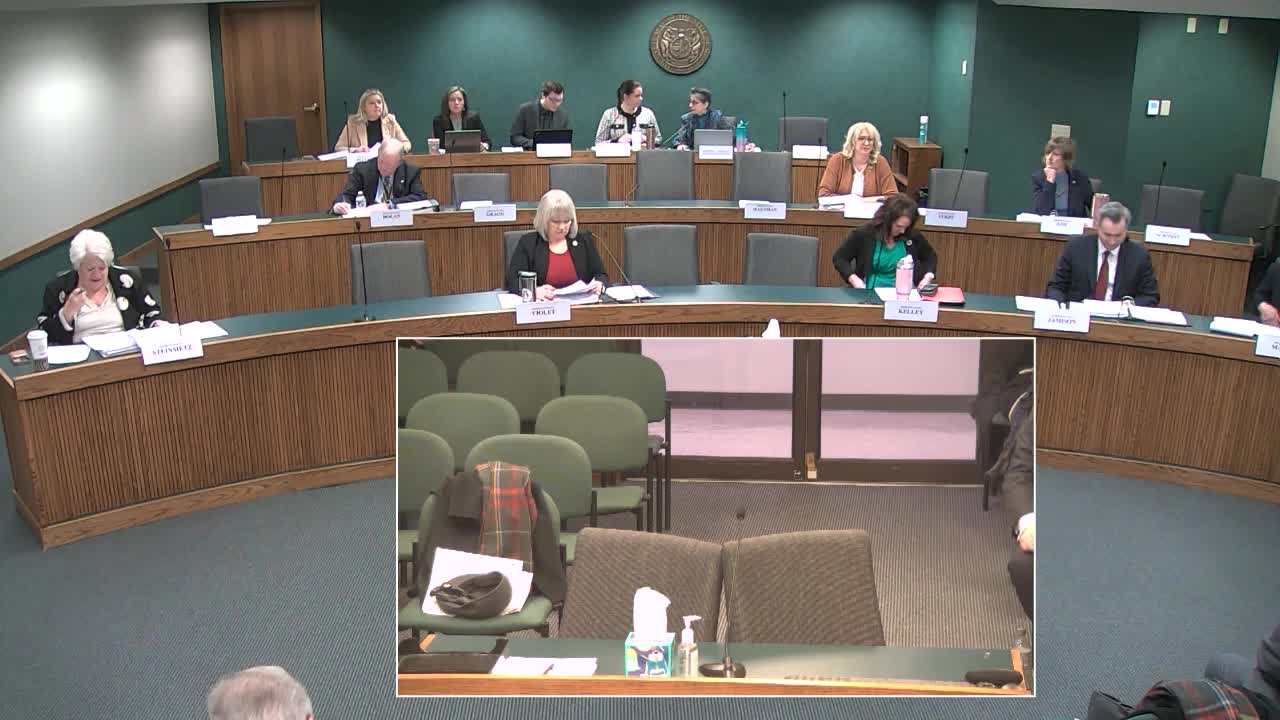
House Bill 1259 would limit Missouri income taxation of resident family trusts so the state does not tax income earned outside Missouri, sponsor Rep. Bill Hardwick told the House Committee on Children and Families during a public hearing.
The bill’s sponsor, Representative Bill Hardwick, R-House District 121, told the committee HB 1259 “seeks to make sure that resident family trusts that are trusts that are formed in the state of Missouri are not a tax disadvantage to nonresident trust.” He said the bill would continue to tax income sourced to Missouri but would not allow Missouri to assess income earned outside the state.
Supporters said the change would remove a state-level disincentive for families to form trusts in Missouri and keep trust administration and associated business in the state.
Trusts attorney Paul Vogel of St. Louis testified in favor of the bill, saying the measure is “one of fundamental fairness.” Vogel said the present treatment leaves some Missouri residents advised to form trusts in other states to avoid what he described as double taxation on income earned outside Missouri. He described the proposal as creating a deferral of tax that would generally become taxable to beneficiaries when trust income is distributed and picked up on individual returns.
Members pressed the sponsor and witnesses about a fiscal note prepared by the Department of Revenue. Representative Manser asked whether the fiscal note showed a revenue loss of approximately $87,000,000 in outgoing years; Representative Hardwick and Mr. Vogel said the department’s assumptions likely include a broader universe of taxable income than the bill’s intended effect and said the bill sponsor expects to offer clarifying language that could reduce that estimate. Hardwick said he expects to work with the Department of Revenue on a clarifying amendment and that the fiscal figure could be revised.
Committee members also asked technical questions about how a federal-level deduction and Missouri’s “piggyback” approach to federal law interact with the bill’s subtraction language. Vogel and Hardwick explained that the bill includes a parenthetical to prevent a double deduction at trust and beneficiary levels under the combined federal–Missouri system.
No one testified in opposition during the hearing and the public hearing on HB 1259 concluded without a committee vote at that time.
Questions for follow-up included: whether the sponsor will file the clarifying amendment manager’s amendment the committee discussed, and whether the Department of Revenue will revise its fiscal estimate after receiving amended language. The sponsor said he expects to return with clarification to address the department’s calculation assumptions.
The committee’s record of the hearing and staff fiscal materials will determine subsequent scheduling and any amendments considered during markup or executive session.