Get Full Government Meeting Transcripts, Videos, & Alerts Forever!
Get email alerts on the Grants Oversight Nonprofits topic
No spam. Unsubscribe anytime.
Committee sends nonprofit grant oversight bill to Ways and Means after debates over unannounced visits and costs
Summary
The State Government and Policy Committee voted to send House File 2 to the House Ways and Means Committee after rejecting several amendments and recording a 7-6 roll-call referral vote.
ST. PAUL, Minn. — The State Government and Policy Committee moved House File 2 to the House Ways and Means Committee on Feb. 18 after a contentious debate over unannounced site visits, immediate effective dates and the bill's fiscal impact.
Representative Davis, the bill author, said the DE and an author amendment (A13) clarified language and made technical changes. The author described the DE as removing criminal-penalty language, narrowing certain reporting requirements and adding exceptions to required site visits.
Nonpartisan staff, members and outside witnesses focused on two recurring issues: (1) whether the committee should require unannounced monitoring visits (some witnesses and agency staff distinguished "unannounced monitoring" from a less intrusive "unannounced verification" visit), and (2) how the bill's implementation costs would be paid and by whom.
Department of Administration Deputy Commissioner Stacy Christiansen told the committee the department supported the intent of verification but was concerned that "an unannounced monitoring visit" could strain state agency staff: "We do have 2 concerns that remain. There is a difference between an unannounced verification visit and an unannounced monitoring visit," she said, and urged the committee to clarify the standard.
Tricia Reinwald of the Metropolitan Alliance of Connected Communities (MAC), representing 62 member nonprofits that contract with the state, told lawmakers that many providers already submit regular financial and program reports and undergo monitoring: "Current monitoring visits take hundreds of hours to gather all of the necessary data and unannounced visits wouldn't improve oversight. They're impractical and duplicative," she said, adding that unannounced visits could disrupt services and be especially difficult for organizations that operate at multiple sites or outside standard business hours.
Representative Jones offered an amendment (A11) to delay the bill's effective date to allow agencies and grantees time to comply; that amendment failed on a voice vote. Representative Kraft offered an amendment (A14) to add an appropriation placeholder; that amendment was put to a roll call and failed (6 yeas, 7 nays on A14). Several other member amendments (including efforts to broaden or narrow coverage to include for-profit contractors) were offered and rejected.
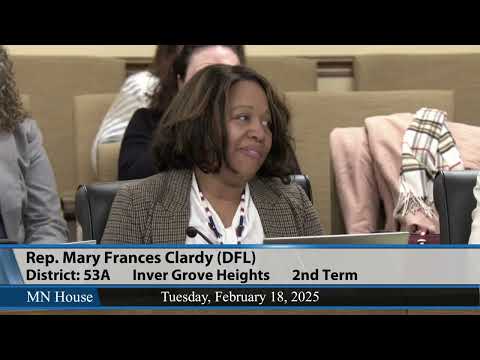
Representative Davis moved to refer the bill to Ways and Means. The committee then recorded a roll-call referral vote with the following result: yesvotes from Chair Nash, Vice Chair Davis, Representative Anderson, Representative Joy, Representative Kosnick, Representative Quam and Representative Sexton (7 yes), and no votes from Representatives Bonner, Clardy, Freyberg, Howard, Jones and Kraft (6 no). The chair announced, "There being 7 yes and 6 no, the bill is approved and will be moving to ways and means."
Opponents repeatedly highlighted the lack of a fiscal note and the potential workload across agencies: Representative Cleburne urged a layover until fiscal estimates were available and argued the bill would impose large costs on at least 35 agencies; that motion failed. Representative Davis said he had requested a fiscal note and would continue to work with agencies.
Supporters said stronger monitoring of grants is necessary to protect taxpayer dollars and to reduce fraud and abuse. Representative Howard urged broader coverage of entities that receive public funds, saying fraud does not only occur in nonprofit organizations.
Ending: With a narrow committee margin, HF2 moves to Ways and Means for consideration of fiscal ramifications and an expected further debate over whether to require unannounced monitoring visits, the bill's effective date and how implementation costs will be allocated.