Get Full Government Meeting Transcripts, Videos, & Alerts Forever!
Get email alerts on the Workplace Safety Public Sector topic
No spam. Unsubscribe anytime.
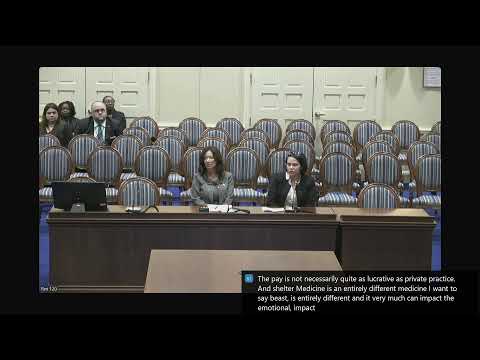
House hearing spotlights Davis Martinez bill to extend MOSH penalties and require workplace-violence standard for public employers
Summary
Lawmakers and unions urged the House Appropriations Committee to advance the Davis Martinez Public Employee Safety and Health Act, which would direct Maryland Occupational Safety and Health (MOSH) to develop a workplace-violence prevention standard for public employers and lift exemptions that currently shield many public agencies from fines.
A House Appropriations Committee hearing drew testimony in support of the Davis Martinez Public Employee Safety and Health Act, legislation that would expand enforcement and standards for public-sector workplaces in Maryland.
The bill would direct the Maryland Department of Labor(MOSH) to establish a unit focused on public-employee safety, require the development of a workplace-violence prevention standard, and remove an exemption that often leaves public employers immune from monetary penalties that private employers face.
Sponsor Delegate Jared Solomon told the committee the bill is intended to add accountability for public employers so "none of our public servants ever have to wonder whether they're coming back at night." Solomon said the measure would align public-employer accountability more closely with existing private-sector standards and clarified several drafting points after consultations with MOSH, local government groups and labor unions.
Union leaders and public-safety advocates described recent workplace deaths and unsafe conditions as driving the bill. Reneka Robinson, president of ASKME Local 3661, which represents community corrections workers, said the bill honors Agent Davis Martinez, who was murdered during a routine home visit, and argued that the death "may have been preventable had our employer had proper plans, procedures, and then the necessary personal protective equipment to keep agents safe." Pat Moran, president of AFSCME Maryland Council 3, and other union witnesses listed multiple recent fatalities of public employees and asked lawmakers to require stronger enforcement tools.
Experts who worked in occupational safety cited enforcement and penalty practice as central to compliance. Jordan Barab, a former deputy assistant secretary at the U.S. Occupational Safety and Health Administration, told the committee that penalties incentivize compliance, noting average federal OSHA penalties are modest but meaningful; he said the maximum federal penalty for a serious violation currently is slightly above $16,000 and the federal average penalty for a serious violation in FY2023 was about $4,597.
Sponsor and supporters said they had revised the bill to address technical concerns raised by MOSH and the Attorney General's Office, including clarifying notification methods to employees who do not have work email and removing proposed criminal penalties for individual officeholders. Delegate Solomon said the AGletterflagging a potential conflict already reflects an existing dynamic because the AG represents multiple state agencies and routinely navigates those conflicts.
Representatives of local government associations said they support the bill's intent but sought technical amendments on employee notification and reporting frequency; the Maryland Association of Counties and Maryland Municipal League said they were working with the sponsor and expected to support amended language. MOSH officials said they had worked with sponsors on technical fixes and would cooperate to implement a workplace-violence standard if the bill passes.
Supporters emphasized the bill's goals as safety and prevention rather than punishment. "This is about making sure we've got accountability and plans in place to make sure that our public workers are working in safe and healthy environments," Solomon told the committee.
The committee took testimony but did not record any formal votes during the hearing.
Ending: Committee members indicated they would continue refining amendments with stakeholders before a committee report and pledged to move the bill quickly given the deaths cited in testimony.