Get Full Government Meeting Transcripts, Videos, & Alerts Forever!
Get email alerts on the Student Basic Needs topic
No spam. Unsubscribe anytime.
Lawmakers probe hunger-free campus grants, statutory caps and distribution efficiency
Summary
OHE described campus food-pantry grants and partnerships with food banks; committee members questioned statutory caps, private-institution limits and whether routing funds through food banks would be more efficient.
Committee members pressed the Minnesota Office of Higher Education about how hunger-free campus grants operate, statutory award caps and whether campus-based pantries or regional food-bank distribution is the more efficient model.
Megan Fitzgibbon told the committee that hunger-free campus grants support on-campus pantry operations, outreach and, in some rounds, one-time equipment purchases. "Many many of the campuses including ones that get hunger free campus grants do have partnerships with food shelves and food banks to either provide access to students for food pantries that are close by campus or actually on campuses and also to source food and bring it on campus for their on campus food pantry," Fitzgibbon said.
Members asked about statutory caps and recent award limits. Agency staff noted statutory caps and then momentarily misstated the amounts during discussion; the fiscal analyst, Ken Savory, clarified the program base and one-time equipment funding. Savory told the committee the base for the Hunger Free Campus Act in FY26-27 is $2,000,000; the prior finance bill allowed permissive one-time equipment funding up to $500,000 in FY24. Fitzgibbon also told members the statute limits private nonprofit institutions to receive no more than 20% of total award funds, which affected award sizes in the recent round and required proportional reductions to stay within the cap.
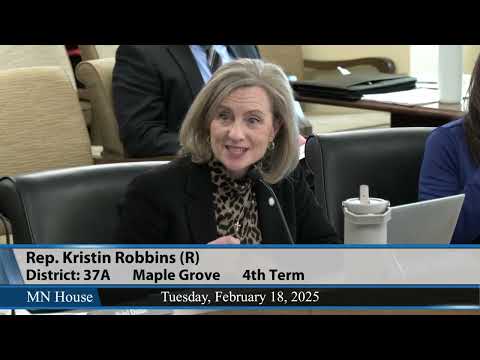
Committee members urged caution about shifting distribution arrangements. Representative Cleburne described a campus pantry model that reduces stigma and provides local distribution on campus, while Representative Liebling and others asked whether routing the funds through regional food banks might yield lower per-unit costs. Fitzgibbon said campuses typically partner with food banks where possible but hunger-free grants also fund outreach and operations at campus pantries, not just food purchase.
Why it matters: hunger-free campus grants are intended to address student food insecurity at Minnesota colleges; statute defines grant types and caps, and the committee questioned whether the current structure maximizes food purchased while preserving campus-based, low-stigma access. Savory’s fiscal note gave committee members the base appropriation and explained why one-time equipment funding was a short-term add-on to support campus pantry infrastructure.
Ending: members agreed the program is valuable but should be reviewed for efficiency and statutory clarity; OHE said it will provide further detail if the committee wants to explore statutory caps or adjustments during budget deliberations.