Get Full Government Meeting Transcripts, Videos, & Alerts Forever!
Get email alerts on the Conservation Programs topic
No spam. Unsubscribe anytime.
BWSR briefs committee on conservation programs, CREP expansion and federal funding risks
Summary
The Board of Water and Soil Resources (BWSR) described its role delivering voluntary conservation programs on private land, discussed recent federal partnerships (soil health funding, water‑storage grants and CREP expansion), and warned members that federal program pauses and recent NRCS staffing layoffs could interrupt delivery.
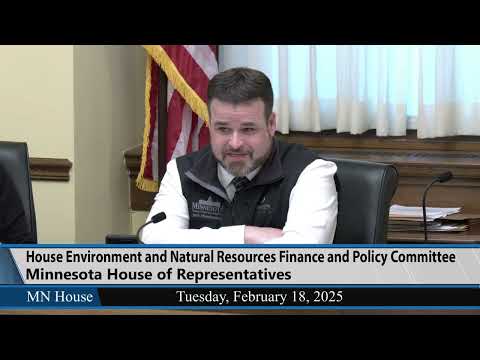
John Jasky, executive director of the Minnesota Board of Water and Soil Resources, and Assistant Director Andrea Fish told the House committee that BWSR’s core role is delivering conservation programs on privately held land through a network of local governments and partners.
“The vision of BWSR is that all of Minnesota benefits from lands and waters that are ecologically and economically sustainable,” Andrea Fish said in the committee presentation as she described the agency’s mission and local delivery model.
Jasky described several recent investments and federal partnerships: a $25 million USDA contribution to soil‑health work contracted through BWSR over five years; a prospective $21 million federal agreement to supplement state water‑storage funding; and an expansion of the Conservation Reserve Enhancement Program (CREP) to add 12 counties and increase acreage caps and eligible practices. He said the CREP update also adjusted the federal‑to‑state leveraging ratio to 7:3.
When asked about federal funding risk, Jasky said the three agreements are at different stages: the soil‑health contract is signed, the water‑storage agreement was prepared but not finalized, and CREP relies on CRP enrollments in the federal Farm Bill, which the agency said is currently in a pause that prevents new CRP enrollments. Jasky added that USDA Soil Conservation Service layoffs of probationary staff will reduce federal capacity in many local offices.
Representative Paul Jacob and others raised questions about the cost and pace of implementing the one‑watershed, one‑plan approach; Jasky defended the watershed approach as “targeting” work to deliver measurable public benefits. He said the agency would provide committee members with data on implementation costs and local adoption upon request.
BWSR closed by asking the committee to note the local delivery model — SWCDs, watershed districts and counties — and to consider the operational impacts if federal partners are unable to sustain staffing or contract reimbursements.
No votes were taken; committee members requested follow‑up information on federal agreements, staffing impacts and the economic effects of conservation investments.