Get Full Government Meeting Transcripts, Videos, & Alerts Forever!
Get email alerts on the Cannabis Equity topic
No spam. Unsubscribe anytime.
Social-equity cannabis license bill divides industry, local-control advocates
Summary
Senate Bill 5758 would relax some buffer and spacing rules for social-equity cannabis licenses; equity advocates said zoning blocks openings while industry groups and public-health advocates warned of local preemption and youth exposure risks.
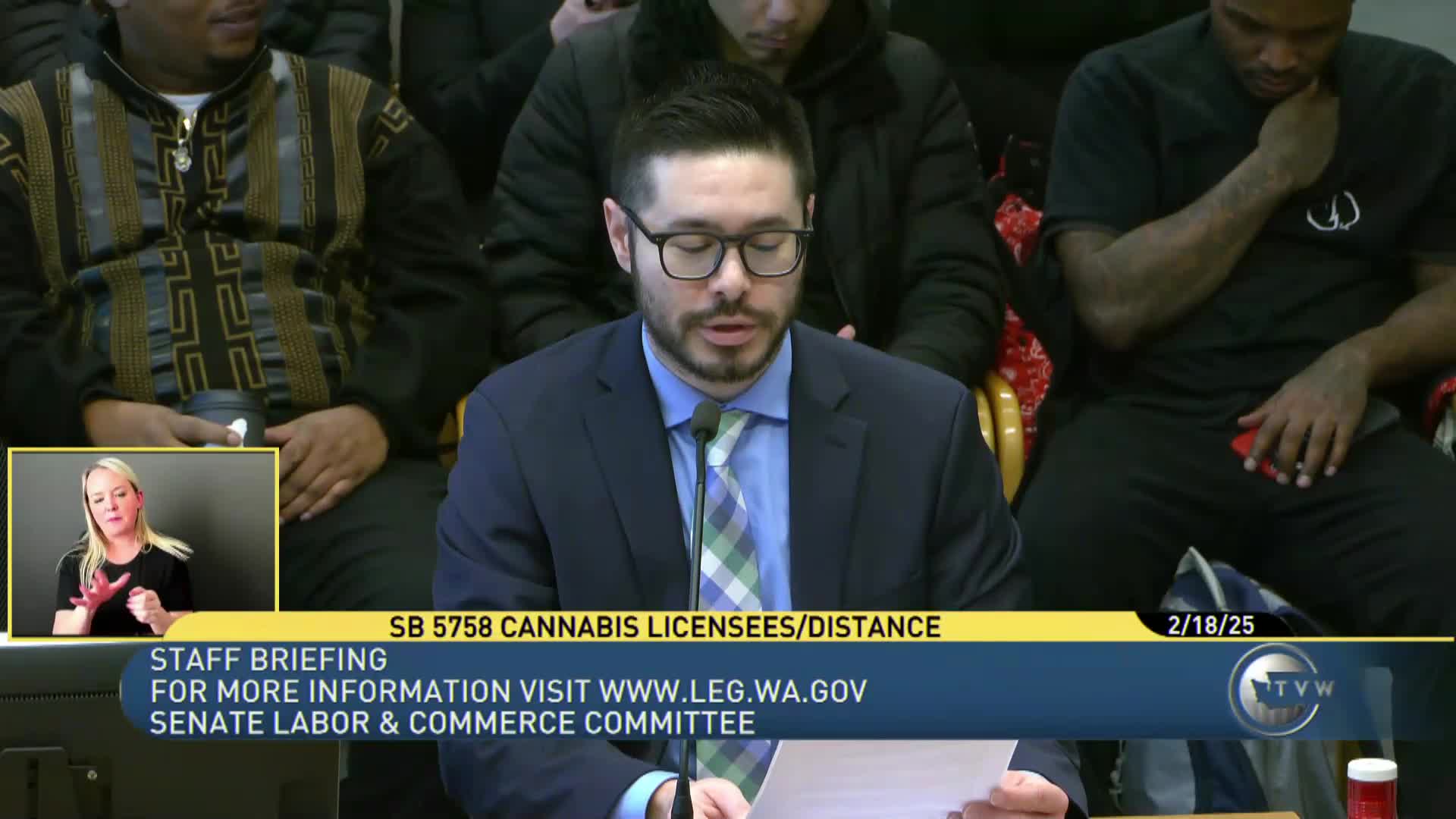
Senate Bill 57 58, which would change distance and spacing rules for cannabis retail outlets licensed under the social equity program, drew sharply divided testimony before the Labor & Commerce Committee.
Committee staff explained the current structure: LCB cannot issue a cannabis license for a premises within 1,000 feet of certain locations (schools, certain parks), and local governments may adopt shorter buffers but not less than 100 feet; the bill would allow LCB to approve social-equity licenses located closer to youth-oriented facilities (not less than 500 feet) and would limit local governments from imposing store-to-store spacing greater than 250 feet for social-equity retailers.
Social-equity applicants and advocates urged the committee to reduce state-level buffer constraints, saying the 1,000-foot rule and local spacing effectively block licensees from finding commercially viable locations. Black- and brown-owned applicants described multi-year attempts to secure sites and said zoning, not capital, has been the primary barrier to opening. "We have not one Black-owned store open in King County," said one social-equity applicant.
Opponents including public-health and substance-misuse prevention organizations, local governments and trade groups argued the bill preempts local control and raises youth-exposure risks. A public-health witness noted existing local ordinances (for example, Seattle) that already limit proximity and said a statewide, narrow change focused only on buffers for social-equity licensees is incomplete.
Several industry witnesses also urged a holistic statewide conversation about retail caps, local bans and technical assistance for equity applicants rather than a mid-session change that could disadvantage licensees who already located under existing rules. One social-equity retailer warned that changing buffer rules now could allow better locations to be taken by later applicants and undercut retailers who opened earlier under the existing requirements.
The committee did not take action on the bill and allowed a broad public record; the sponsor said she would continue discussions with stakeholders.