Get Full Government Meeting Transcripts, Videos, & Alerts Forever!
Get email alerts on the Noncompetes topic
No spam. Unsubscribe anytime.
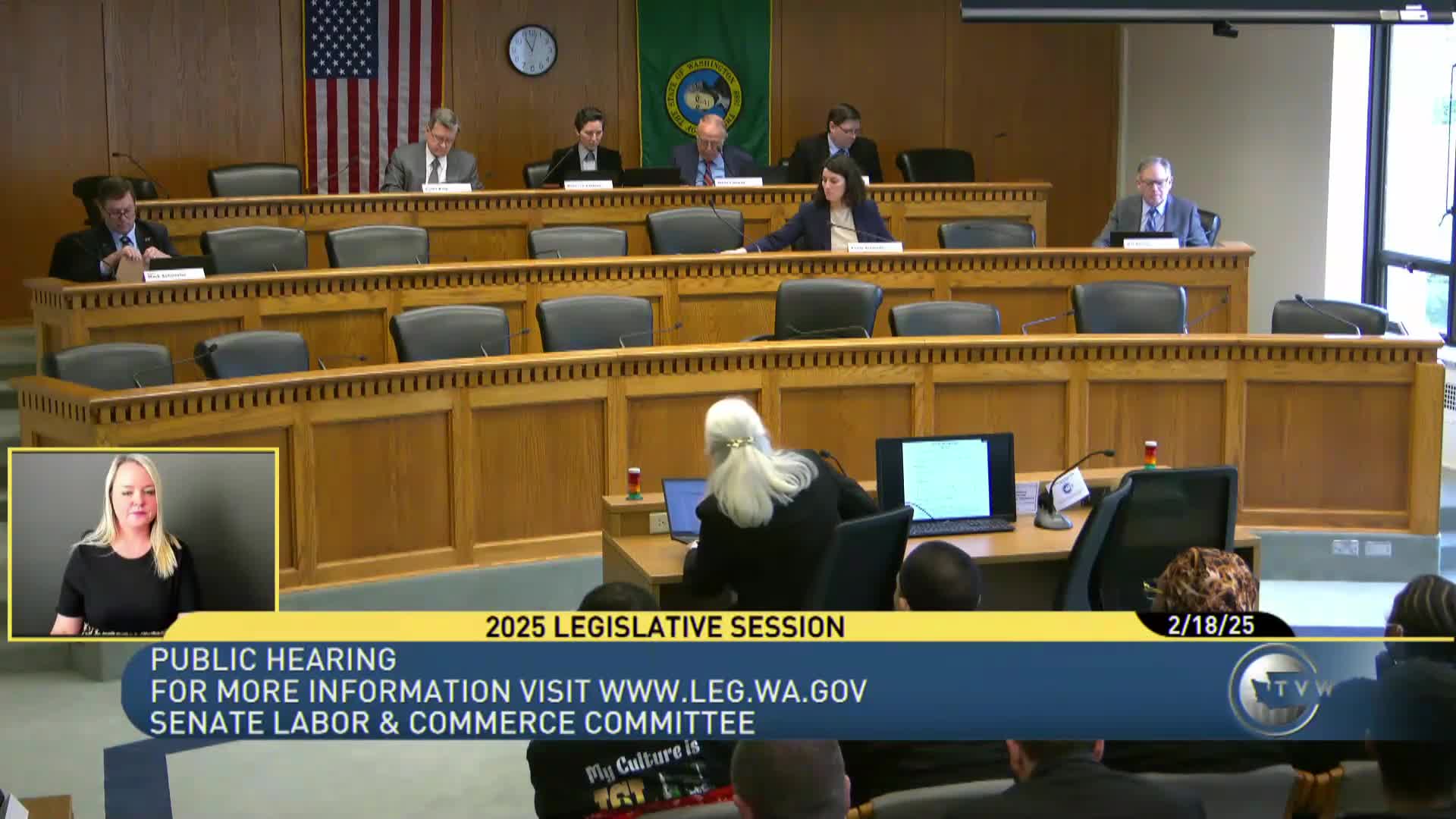
Committee hears bipartisan testimony on expanding noncompete ban statewide
Summary
Senate Bill 5437 would void most noncompetition covenants in Washington, expand existing limits and require employers to notify current and former workers that noncompetes are void; business groups oppose while labor and worker advocates support the change.
The Senate Labor & Commerce Committee heard testimony on Senate Bill 54 37, a proposal to void most noncompetition covenants in Washington and require employers to notify affected workers that such agreements are unenforceable.
Committee staff Susan Jones summarized current law and the bill's changes. Under existing state law certain noncompetes are void unless narrow conditions are met, and earnings thresholds exclude many workers from the protection. Jones said the bill would expand the definition of a noncompete, eliminate the earnings thresholds, and require employers to notify current and former employees and independent contractors by Oct. 1, 2025 that their noncompetition covenants are void and unenforceable.
Sponsor Senator Stanford said eliminating noncompetes will remove artificial barriers for employees seeking new jobs or launching businesses and preserve nondisclosure and non solicitation tools to protect trade secrets. "If a business wants to protect its intellectual property, trade secrets, anything like that, that can be protected with nondisclosure agreements," Stanford told the committee.
Several employees and worker-advocacy groups offered firsthand testimony of harm caused by noncompetes, including financial hardship, cross-jurisdictional litigation and restricted mobility. A marketing executive described being sued in another state despite working from Washington; a veterinary specialist said a 25-mile, 18-month noncompete left her unable to find comparable work near home after a clinic reorganized.
Business groups including the Association of Washington Business, the Washington State Fairs, and trade associations urged the committee to retain existing carve-outs, limit the ban to post-employment restrictions, or preserve the earnings threshold. The Association of Washington Business argued that many noncompetes are negotiated between "sophisticated parties" and are part of compensated employment arrangements.
No final action was taken during the hearing; the committee opened the record for an extended period of public testimony. Proponents argued the bill would spur competition and innovation; opponents warned of unintended impacts on contracting, entertainment performance agreements and franchising. The committee will consider amendments and continued testimony as the bill moves forward.