Get Full Government Meeting Transcripts, Videos, & Alerts Forever!
Get email alerts on the Law Enforcement Child Abuse topic
No spam. Unsubscribe anytime.
State police, East Baton Rouge detectives describe steps to improve child sexual‑abuse and trafficking investigations
Summary
Louisiana State Police and East Baton Rouge Parish detectives told the Senate Committee on Women and Children that they are increasing tracking, cross‑agency coordination and investigative capacity for child sexual‑abuse and human‑trafficking reports, while acknowledging staffing and data‑sharing gaps.
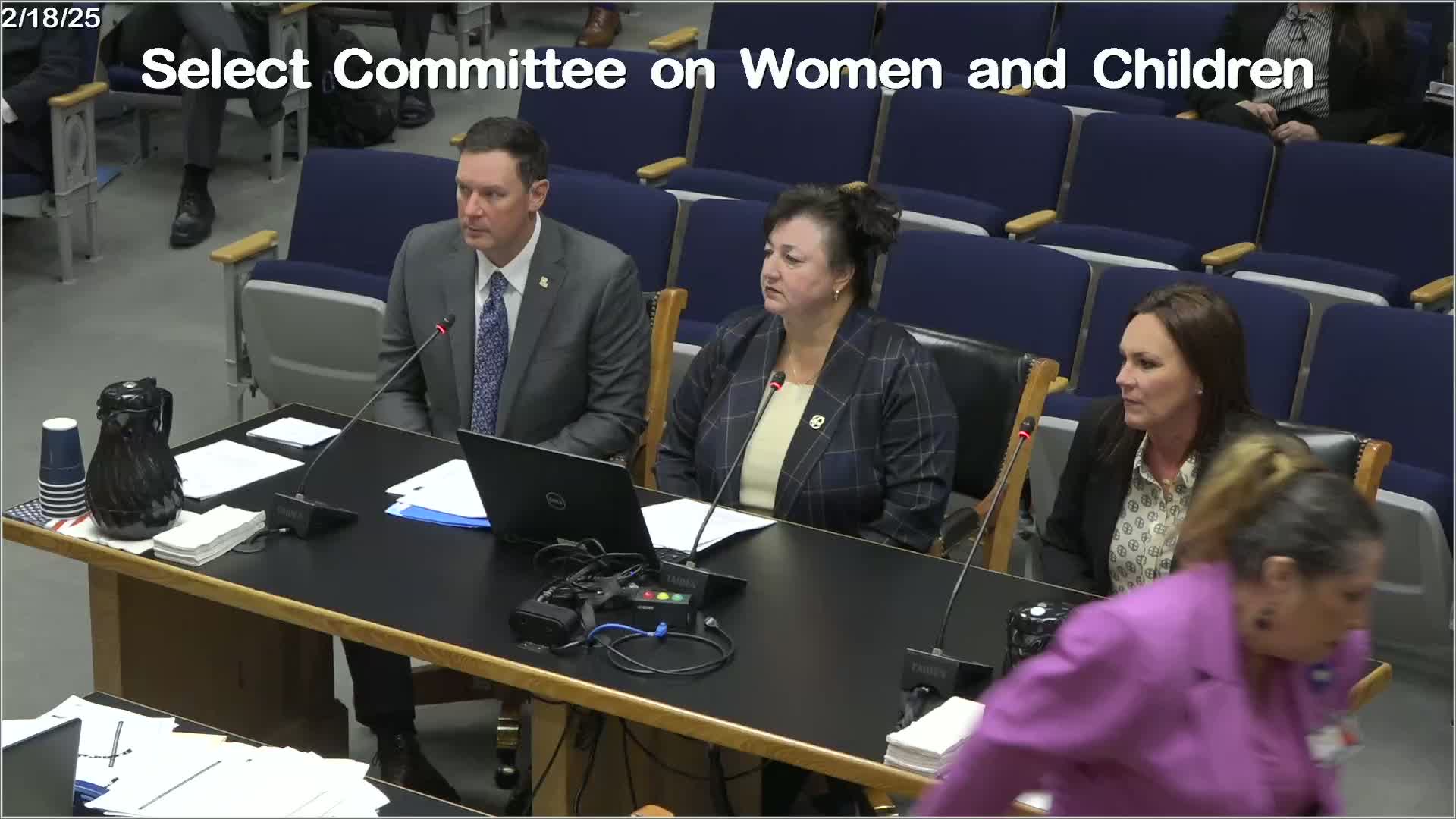
Louisiana State Police and East Baton Rouge Parish detectives described steps and limits to their work on child sexual‑abuse and human‑trafficking cases at a Feb. 2025 meeting of the Senate Committee on Women and Children.
Captain Belinda Murphy of the Louisiana State Police told the committee that LSP does not serve as the ‘‘first reporting agency’’ for child abuse: local police or sheriff’s offices initially receive 911 calls and reports. She said LSP will assist when a local agency asks or when members of the public contact state police directly through the LSP website (LSP.org) or the agency’s online complaint system. Murphy said the State Police returned 31 human‑trafficking arrests for 2024 that had been logged by state police alone, and that the agency is beginning to track sexual‑assault evidence kits so prosecutions can be followed from collection through disposition.
Lieutenant John Turquine of LSP’s Special Victims Unit described how tips and cross‑parish cases are routed through the state fusion center so investigations “don’t fall through the gaps,” especially when offenses cross parish lines. Turquine said DCFS referrals and fusion‑center entries are documented to show whether local agencies are already addressing a report; if they are not, state detectives will evaluate whether state police have authority to investigate. He also noted the unit’s limited size: the SVU team has seven investigators plus two troopers and two sergeants for statewide work.
East Baton Rouge Parish Captain Don Dortez and Lieutenant Lisonbee Garofalo explained their department’s Internet Crimes Against Children (ICAC) handling and partnership with the Baton Rouge Children’s Advocacy Center, the National Center for Missing and Exploited Children and DCFS. Garofalo said her unit handled 922 tips through NCMEC last year and closed 902 for insufficient leads; the unit reported 34 arrests from that caseload and said task‑force work helped secure long sentences in at least one high‑profile case.
Both the state police and local detectives told senators they sometimes receive reports that other agencies have already investigated and closed. Capt. Murphy and Lt. Turquine described routine practice of contacting the local agency to offer assistance rather than supplant it. Turquine said LSP will take the lead when the case requires state jurisdiction or crosses parish lines; otherwise LSP documents contacts and offers investigative support.
Committee members pressed officials on response times and follow‑up. Murphy described LSP’s public intake paths and said investigators attempt to contact complainants; Turquine said the fusion center allows the state to document referrals from DCFS and others so nothing is missed. East Baton Rouge detectives described monthly multidisciplinary reviews that include DCFS, the DA’s office, medical staff and the CAC to look for investigative gaps and child‑safety problems.
Both agencies said staffing levels limit capacity and can slow turnaround: Turquine noted the limited number of statewide investigators, and Murphy and Dortez both said some smaller local agencies need to call state resources when their own investigators are short on personnel. Senators asked whether police compile statewide prosecution and conviction data; LSP said it tracks only LSP cases and that no statewide, multi‑agency disposition database exists now beyond ad hoc Fusion Center compilations.
Committee members and detectives also discussed evidence‑tracking improvements. Murphy said the new tracking of sexual‑assault kits should allow authorities to follow kit submissions and later dispositions, but that the program is new and will take time to show results. Turquine and Garofalo recommended keeping multidisciplinary teams active to examine cases from multiple angles and to detect system failings earlier.
Asked what lawmakers could do, law‑enforcement witnesses cited funding for investigators and better channels for compiling statewide data. Dortez urged continued legislative support for specialized units and for coordinated, cross‑agency reviews that can identify problems beyond individual criminal cases.
The committee received printed materials and asked LSP and the East Baton Rouge detectives to provide follow‑up details on staffing and on how the fusion‑center referral counts were assembled.