Get Full Government Meeting Transcripts, Videos, & Alerts Forever!
Get email alerts on the Correctional Facilities topic
No spam. Unsubscribe anytime.
Committee considers $50 million set-aside for jail improvement loans as counties report capacity and staffing crisis
Summary
House Bill 1213 would designate $50 million within the infrastructure revolving loan fund for correctional facility projects after committees reduced an original $200 million request; county and Bank of North Dakota testimony highlighted demand, limited existing fund availability and workforce constraints.
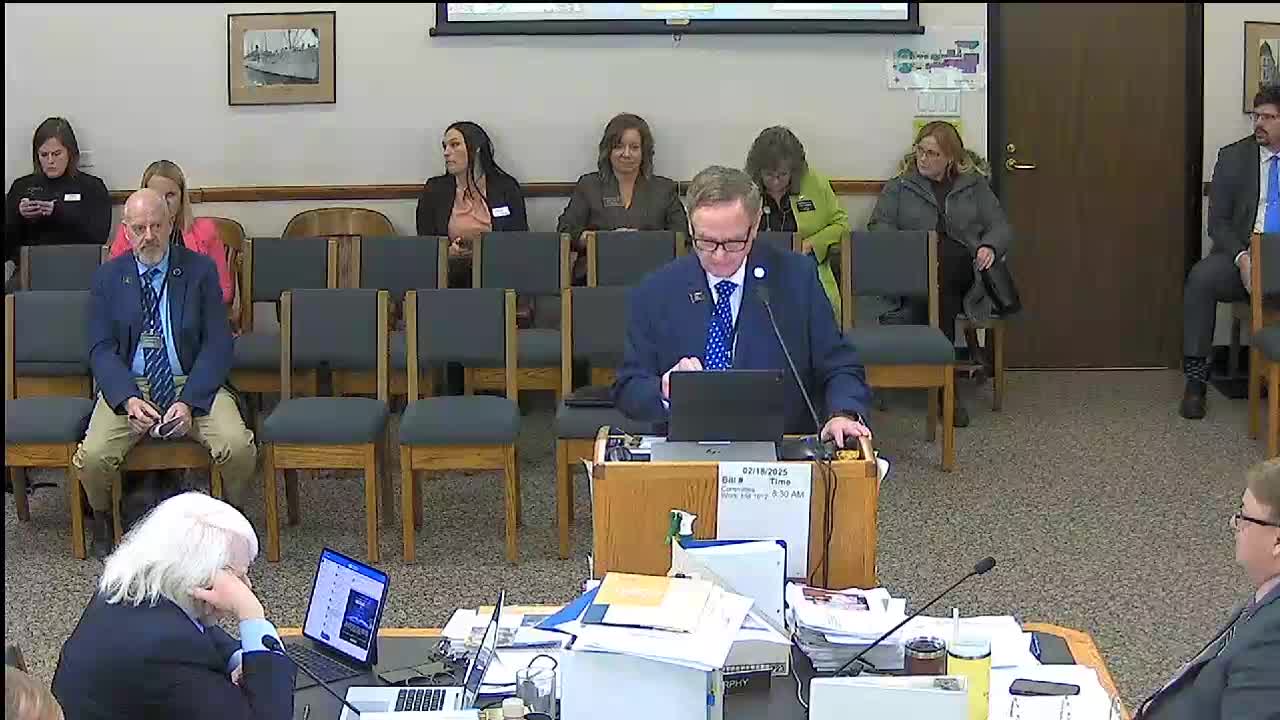
Don Longmore, Chair of the Political Subdivisions Committee, presented House Bill 1213, amended to designate $50 million within the state’s infrastructure revolving loan fund for correctional facility improvements (renovation, expansion, or new construction) with a project cap suggested in committee (no more than $20 million per project as discussed). The original request presented to Political Subdivisions had sought a much larger amount (reported in committee as $200 million); the committee scaled that back and proposed a related study (House Bill 1197) to assess statewide needs.
Why it matters: County officials and the Association of Counties told the committee they are in a near‑term capacity crisis. Several regional and county jails are planning expansions or new construction; the association provided an aggregate estimate of roughly $250 million for five projects currently in planning or construction that would add about 434 new beds. Counties also reported staffing shortages that reduce usable bed capacity, and members said counties now hold a substantial number of state‑sentenced inmates because of state system capacity limits.
Key evidence and fiscal context from testimony: - Bank of North Dakota (Kylie Merkel) informed the committee that correctional facilities already are eligible under the current statutory language for the infrastructure revolving loan fund and that the Bank has made at least one loan for a jail project (a Grand Forks County correctional facility portion). However, the fund is substantially committed: Bank testimony said there is about $6 million currently available for new loans and that the legislature has appropriated roughly $375 million to the program across prior sessions (including legacy funds administered together). - The Association of Counties (Danelle Presky) said 19 jails operate in the state (not every county has a jail), five projects were actively planning or building, and the five projects’ estimated combined cost was about $250 million to add roughly 434 beds. She also said counties were presently holding an estimated 200–250 state-sentenced inmates in local facilities due to state capacity constraints. - Committee members and presenters emphasized that the revolving fund is a loan program requiring demonstrated ability to repay; counties typically need voter approval for tax or sales-tax revenue measures to support debt service, which delays loan applications.
Quotations (from transcript): - "We felt that a $200,000,000 lift was just not realistic ... so we reduced down their request for the dollar amount to $50,000,000," Don Longmore said, summarizing committee compromise. - Kylie Merkel, Bank of North Dakota: "Today correctional facilities can use the infrastructure revolving loan fund... But I believe the reason we aren't seeing them is they have to show the ability to pay before they can get the loan... today, we have about $6,000,000 available for new loans."
Action status: The bill was presented and discussed; no recorded Appropriations vote appears in the provided transcript. Committee members asked technical questions of Bank of North Dakota staff and the Association of Counties and requested additional data (fund balances, repayment terms and capacity inventories).
Ending note: Presenters framed HB 1213 as a targeted, near-term response to an operational public-safety problem; committee members asked for additional fiscal details and the bank and counties offered to provide loan-availability, repayment-term and capacity figures to help shape any appropriation or statutory change.