Get Full Government Meeting Transcripts, Videos, & Alerts Forever!
Get email alerts on the NAGPRA topic
No spam. Unsubscribe anytime.
Committee adopts requirement for tribal match in $500,000 NAGPRA compliance grant
Summary
Representatives advanced House Bill 1603 to fund NAGPRA compliance with a $500,000 state pool that requires tribes to provide dollar-for-dollar matching, after the Appropriations Committee adopted an amendment changing permissive language to a requirement.
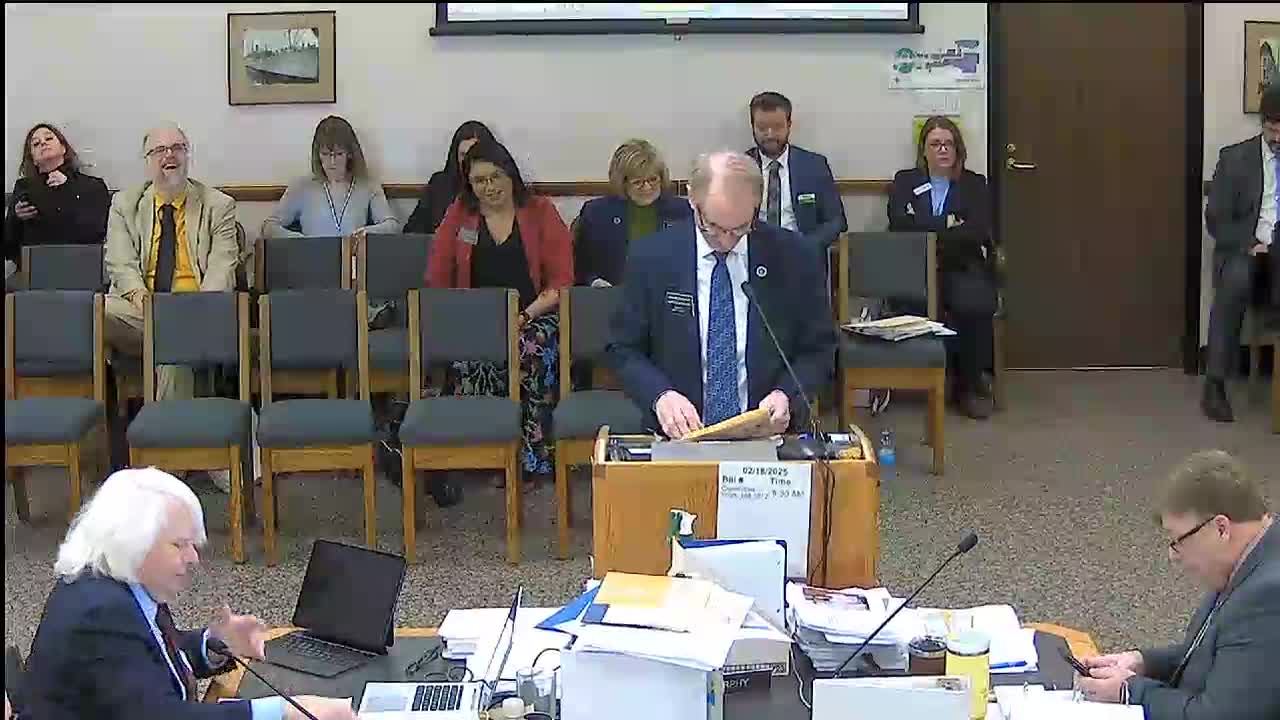
Representative Austin Schauer, District 13 (West Fargo), presented House Bill 1603 as amended, a $500,000 maximum matching grant to help implement the federal Native American Graves Protection and Repatriation Act (NAGPRA) and North Dakota compliance. The funds would be divided among the state’s five federally recognized tribes (up to $100,000 per tribe) and directed to the State Historical Society to establish a NAGPRA compliance committee that includes representatives of the historical society, tribal historic preservation offices and the attorney general’s office.
Why it matters: A 2023 U.S. Interior Department rule change altered tribal authority, consent requirements, inventories and transparency for repatriation, increasing workload for institutions and tribes. Proponents said state funding would pay for staff, training and consulting to identify, inventory and repatriate human remains and cultural items held in collections.
The committee debated the bill’s matching language. The engrossed bill used “may provide” for tribal matching; Representative Nelson moved and Representative O’Brien seconded an amendment to replace “may” with mandatory matching language (interpreted in committee as a one-to-one match). The amendment passed on a recorded role call and was adopted; later the committee took a due-pass motion as amended. Committee members and the chairman repeatedly emphasized that the intent is to move compliance work forward while acknowledging some tribes differ in fiscal capacity and that the matching rule could limit access if a tribe cannot raise funds.
Key details from testimony and discussion: - The state ask: $500,000 maximum, directed to the State Historical Society for a NAGPRA compliance committee; each of North Dakota’s five tribes could receive up to $100,000 contingent on matching funds. - Purpose: staffing, training, inventories, consulting and to facilitate repatriation of human remains and cultural items per federal law and 2023 Interior Department rule changes. - Committee action: amendment to change “may provide” to mandatory matching (mover: Representative Nelson; second: Representative O’Brien) was adopted; a motion for a due pass as amended (mover: Representative Nelson; second: Representative Steaman) passed on the committee role call. - Proponents noted the State Historical Society currently has limited staff (testimony referenced one full-time and two part-time staff working on NAGPRA matters) and cited the Heritage Center’s large holdings. - Committee members pressed for clarity about whether tribes would be disqualified from state funds if they could not provide the match; presenters and the sponsor said the one-for-one matching language was intended to encourage reciprocal investment but acknowledged it could limit access for tribes with less capacity.
Quotations (from transcript): - "House Bill 1603 will help with the implementation and compliance of the Native American Graves Protection and Repatriation Act ... The request is a $500,000 matching grant maximum to be divided among North Dakota's 5 tribes," said Representative Austin Schauer. - On the 2023 federal rule changes: "Number 1, enhanced tribal authority. Number 2, consent requirements. Number 3, inventory updates. Number 4, increased transparency," Schauer said.
Next steps: The bill was returned to the sponsor’s committee for floor carry after the committee adopted the amendment and gave a due pass recommendation. Further floor consideration may address details of matching mechanics or flexibility for tribes that cannot meet a mandatory match.
Ending note: Committee members noted the objective is both legal compliance and building trust with tribal nations; several members emphasized the process will require time, staff and funding to complete inventories and repatriations.