Get Full Government Meeting Transcripts, Videos, & Alerts Forever!
Get email alerts on the Transportation Planning topic
No spam. Unsubscribe anytime.
MPO outlines road, bike-ped and transit priorities; few county projects secured in draft STIP
Summary
Adrienne Ritchie of the Western Piedmont Council of Governments told Burke County commissioners on Feb. 17 that the MPO is coordinating long-range transportation plans, project prioritization and discretionary TMA funds, and that several local projects are in the current STIP though many schedules remain subject to change.
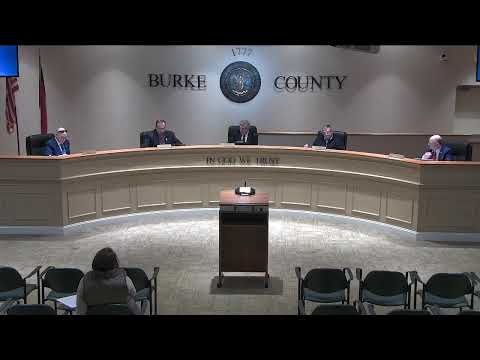
Adrienne Ritchie, transportation planner with the Western Piedmont Council of Governments and the Greater Hickory Metropolitan Planning Organization (MPO), briefed the Board of Commissioners on Feb. 17 about regional transportation planning, project prioritization and funded projects affecting Burke County.
Ritchie explained the MPO’s role — preparing federally required planning products (a unified planning work program, a metropolitan transportation plan, and a transportation improvement program), coordinating technical and elected committees, and performing public involvement and performance tracking. She said the Western Piedmont MPO qualifies as a Transportation Management Area (TMA) and thus receives discretionary funds available to TMAs, which are commonly used for bike/pedestrian and small transit projects.
Ritchie listed projects that had been scored and submitted through the DOT prioritization process; she said the recent rounds were competitive and that, statewide, relatively few projects received funding. In Burke County she named funded elements in the current step (2024–2033): I‑40 Exit 118 interchange improvements, a segment of NC‑181, Castle Bridge (a portion of Malcolm Boulevard/Connolly Springs Road), and a small segment of U.S. 321A in the county. She warned that right-of-way and construction schedules are shifting in the draft STIP and that draft adoption could change dates and funding and that several previously funded interstate segments had been moved to unfunded status in the draft.
Ritchie described locally administered discretionary funds (the LAP program) used to fund four bike/ped projects in the MPO region and encouraged the county and municipalities to adopt bicycle, pedestrian and transit elements in local plans to improve chances for funding via DOT’s complete-streets approach. She also outlined public-transit flex routes and microtransit service in Burke County (same-day, curb-to-curb service currently 9 a.m.–4 p.m., Monday–Friday) and noted a committed rail safety crossing project in Morganton.
The board accepted the transportation update as presented, 5–0.
Why it matters: MPO planning frames how and which transportation projects become eligible for state and federal funds. Adoption of pedestrian/bicycle elements in local plans can unlock construction funding for those features if a highway project moves to environmental review.