Get Full Government Meeting Transcripts, Videos, & Alerts Forever!
Get email alerts on the Healthcare Affordability topic
No spam. Unsubscribe anytime.
State officials, insurers and providers spar over governor’s three‑bill health affordability package
Summary
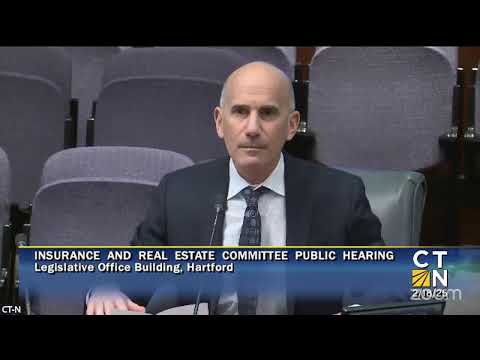
Senators and representatives heard hours of testimony Thursday on the governor’s three‑bill health affordability package as officials, patient advocates, hospitals and doctors debated whether the proposals would lower costs for consumers or destabilize providers.
Senators and representatives heard hours of testimony Thursday on the governor’s three‑bill health affordability package as officials, patient advocates, hospitals and doctors debated whether the proposals would lower costs for consumers or destabilize providers.
The package includes: House Bill 6,870, which would limit some drug price increases, allow the Department of Consumer Protection to study and seek FDA permission for a Canadian drug importation program, and let patients apply low‑cost out‑of‑network purchases toward insurance deductibles; House Bill 6,871, which would cap out‑of‑network reimbursements at 240 percent of Medicare beginning in 2027; and Senate Bill 1253, which would allow the Insurance Department to consider the state’s cost growth benchmark and, in limited circumstances, reduce pending premium rate increases by up to two percentage points.
Why it matters: Connecticut officials and patient advocates said Connecticut families are already being priced out of care — citing national and state figures — and argued the package attacks the problem from multiple angles: prescription prices, premiums and out‑of‑network bills. Hospitals, physician groups and some insurers countered the bills would shift costs, worsen staffing shortages and threaten access to care.
"My name is Deidre Gifford, and I'm the commissioner of the Office of Health Strategy," OHS Commissioner Deidre Gifford told the committee, opening the administration's case. Gifford said Connecticut faces acute affordability problems: "10 percent of our residents in Connecticut are burdened by medical debt," she said, and in 2023 "an average family premium was up to $25,500 and the average deductible . . . was $4,000 for a family." She noted that "46 percent of residents report delaying or avoiding care due to cost." Gifford briefly outlined each of the three bills and urged the committee's support.
Prescription drug proposals: DCP Commissioner Brian Capparelli told the panel that sections 1–10 of HB 6,870 would let the Department of Consumer Protection conduct a feasibility study and, if warranted, apply to the U.S. Food and Drug Administration to establish a safe wholesale Canadian importation program. He described a two‑year feasibility timeline: a study through Oct. 1, 2027, paid in part with consulting funds in the governor’s proposed budget, and, if the study supports it, further work to assemble suppliers and seek FDA approval. "Approval of this study would put Connecticut at the forefront of lowering prescription drug costs for our residents," Capparelli said.
Capparelli and Gifford both acknowledged significant uncertainties: Commissioner Capparelli noted Florida was approved by the FDA in January 2024 but had not, as of testimony, begun imports, and Colorado’s application remains under review. Lawmakers repeatedly pressed whether Canada would permit large U.S. import programs; DCP witnesses said states must identify willing Canadian suppliers and that the FDA application process is iterative.
The drug bill also would: let consumers receive credit toward an annual deductible when they buy a lower‑priced drug outside their plan (for example using the ArrayRx discount card), and cap year‑over‑year increases for generics and off‑patent drugs to the annual rate of inflation. Gifford said preliminary OHS work identified more than 400 generics that could be affected and estimated up to about $9 million in savings on some off‑patent brand drugs in a preliminary analysis.
Out‑of‑network cap: Supporters argued the 240 percent of Medicare cap in HB 6,871 would reduce extreme out‑of‑network charges and put downward pressure on overall prices. "Data collected by our Connecticut Insurance Department suggests that when consumers and insurers are required to pay out‑of‑network care, they can be charged as much as 7½ times Medicare," Commissioner Gifford said. "Governor's bill would cap this amount at a more reasonable, roughly two and a half times Medicare."
But hospital officials and physician groups said the measure would damage fragile provider finances and undermine negotiations. Mark Schafer of the Connecticut Hospital Association told the committee the cap "is not a patient‑focused policy; it is an insurer‑focused policy" and argued Connecticut hospitals remain under stress: "In 2023, statewide operating margins remain negative and Connecticut hospitals overall lost $76,000,000." Multiple emergency‑medicine and anesthesiology witnesses warned that capping out‑of‑network payments would worsen staffing shortages and reduce access to specialists.
Insurance‑rate bill and the benchmark: Paul Lombardo of the Insurance Department described SB 1253 as a permissive tool for the department, not an automatic cut. The bill would permit the department to consider the state cost‑growth benchmark when reviewing rate filings and, in the event a carrier’s approved rates exceed the benchmark over two years, to reduce a proposed rate increase up to two percentage points if the department finds a carrier has not pursued reasonable contracting strategies. Lombardo said the intent is to align negotiations with the benchmark and to give regulators another mechanism to spur restraint.
Lawmakers and witnesses debated that approach. Several committee members warned of unintended consequences: Representative Scott Woods and others asked whether a discretionary reduction could push carriers to exit Connecticut and noted the difficulty carriers face in negotiating with large health systems. Hospital witnesses said state Medicaid underpayment — OHS and provider testimony cited a multi‑hundred‑million‑dollar shortfall — forces providers to rely on higher commercial payments, and they urged addressing Medicaid reimbursement as part of any affordability strategy.
Public‑interest advocates and patients: The Health Care Advocate's Kathy Holt and AARP volunteers told the committee the measures would benefit patients. Holt said a 240 percent cap would likely encourage more in‑network participation and curb extreme bills that leave patients exposed. Several individual patients described high out‑of‑pocket drug costs; a testimony from a resident with Parkinson’s disease noted two drugs costing about $3,000 a month out of pocket.
Unresolved implementation questions: Committee members pressed agencies on implementation details: how a state importation program would find Canadian suppliers, how the DCP study would be funded (the department said consulting funds and an additional staffer in 2027 were in the proposed budget), and how insurers would be required to ensure any savings from lower out‑of‑network payments flowed to consumer premiums (the administration said reporting requirements would be added). Witnesses also raised concerns about data quality in the state cost‑growth benchmark and whether the data are sufficient to underpin regulatory action.
Where things stand: No formal votes were taken at the hearing. The administration asked the committee to advance the bills. Agency witnesses offered to work with legislators on technical edits and assurances; opponents urged caution or rejection, particularly of the out‑of‑network cap and the CPI‑based drug price control. Several witnesses urged a broader, multi‑state or federal solution to drug pricing and noted potential legal, supply and trade limits to wholesale importation from Canada.
What’s next: Agencies said they would supply additional technical details and that some implementation elements — DCP’s feasibility study design, reporting rules for insurers and the mechanics of counting outside purchases toward deductibles — would need drafting in follow‑up language.
Ending
The hearing illustrated a central tension: measures designed to protect patients from extreme prices and delayed access are popular among advocates, but hospitals and physician groups say the same measures threaten provider finances and could reduce capacity. Committee members signaled interest in further analysis and technical changes rather than an immediate, unanimous decision.