Get Full Government Meeting Transcripts, Videos, & Alerts Forever!
Pew: Connecticut’s volatility-cap formula pushed more revenue into BRF and pensions; rolling-average option would more closely track revenue
Summary
Pew Charitable Trusts told lawmakers the volatility cap formula (2017 baseline + five‑year personal income growth) has kept the statutory threshold below actual volatile revenue, producing large BRF deposits and pension transfers; Pew offered alternatives including a rolling-average threshold
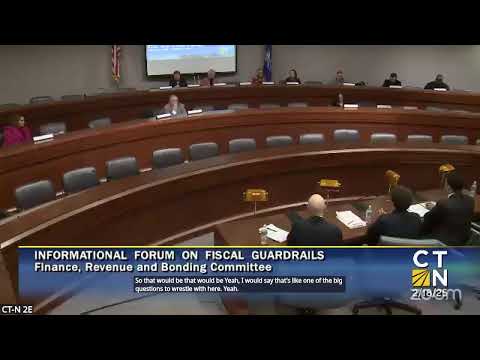
Pew Charitable Trusts analysts told the Finance, Revenue and Bonding Committee that Connecticut’s volatility cap formula — using a 2017 starting level grown by the five‑year compound annual growth rate in personal income — has historically left the statutory threshold below actual estimated-and-final payments (E&F) and pass‑through entity (PET) tax collections, producing large transfers to the BRF and then to pensions.
Mark Robin of Pew said the volatility deposits through 2024 totaled about $10 billion (about 29% of the combined E&F and PET revenue stream over the period) and amounted to roughly 7% of annual general fund appropriations. “The current…
Already have an account? Log in
Subscribe to keep reading
Unlock the rest of this article — and every article on Citizen Portal.
- Unlimited articles
- AI-powered breakdowns of topics, speakers, decisions, and budgets
- Instant alerts when your location has a new meeting
- Follow topics and more locations
- 1,000 AI Insights / month, plus AI Chat