Get Full Government Meeting Transcripts, Videos, & Alerts Forever!
Get email alerts on the Volatility Cap Options topic
No spam. Unsubscribe anytime.
Pew: Connecticut’s volatility-cap formula pushed more revenue into BRF and pensions; rolling-average option would more closely track revenue
Summary
Pew Charitable Trusts told lawmakers the volatility cap formula (2017 baseline + five‑year personal income growth) has kept the statutory threshold below actual volatile revenue, producing large BRF deposits and pension transfers; Pew offered alternatives including a rolling-average threshold
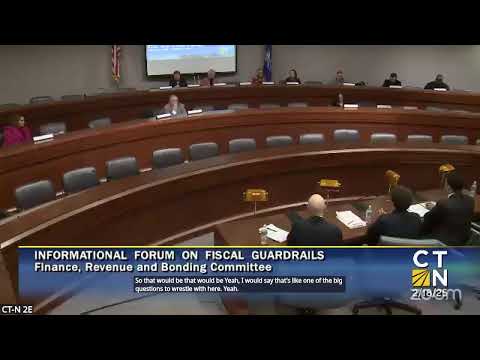
Pew Charitable Trusts analysts told the Finance, Revenue and Bonding Committee that Connecticut’s volatility cap formula — using a 2017 starting level grown by the five‑year compound annual growth rate in personal income — has historically left the statutory threshold below actual estimated-and-final payments (E&F) and pass‑through entity (PET) tax collections, producing large transfers to the BRF and then to pensions.
Mark Robin of Pew said the volatility deposits through 2024 totaled about $10 billion (about 29% of the combined E&F and PET revenue stream over the period) and amounted to roughly 7% of annual general fund appropriations. “The current formula has resulted in the volatility cap being consistently below where actual revenue has tended to be,” Robin said, adding that the formula “has helped you fill your budget reserve fund relatively quickly and make large pension transfers.”
Pew outlined four broad approaches lawmakers could consider if they want the threshold to track more closely with revenue: 1) change the 2018 starting value (the baseline), for example by using an average of prior years rather than 2017 alone; 2) change the annual adjustment factor (for example use a one‑year personal income growth rate instead of a five‑year average); 3) combine a higher starting point with a different growth factor; or 4) replace the current mechanics with a rolling average of inflation‑adjusted revenue (a moving window of revenue that resets annually).
Pew’s analysis found that under any of the illustrative alternatives the BRF would have been filled by the end of fiscal 2022 at the latest; most proposed changes would chiefly affect the size of subsequent pension transfers, not BRF deposits, assuming no large withdrawals from the BRF. The presenters cautioned that each approach involves trade‑offs: a threshold set closer to typical revenue lets lawmakers spend more in the current budget but increases the chance that revenue will fall below the threshold in a downturn, exposing the budget to volatility.
Pew also recommended regular stress testing to set savings targets. Analyst Josh Goodman said stress tests estimate the size of budget shortfalls in recession scenarios and help determine whether the state’s reserves are sufficient; he noted Connecticut’s BRF balance has risen rapidly since guardrail adoption and that the state’s tax system is relatively volatile because of capital‑gains exposure.
Ending: Pew recommended additional forward‑looking analysis — including historical volatility studies and stress tests that model recessions and rebasing effects — to guide any statutory change to the volatility cap.