Get Full Government Meeting Transcripts, Videos, & Alerts Forever!
Get email alerts on the Criminal Justice topic
No spam. Unsubscribe anytime.
Committee debates tougher penalties for failure to stop for police; debate adjourned to Judiciary
Summary
A bill to enhance penalties for failing to stop for law enforcement drew extended debate over which aggravating factors should upgrade the offense to a felony. The committee adopted a subcommittee report and a Robbins amendment but voted to adjourn further debate to the next Judiciary Committee meeting.
A proposal to stiffen penalties for failing to stop when signaled by law enforcement — referenced in the hearing as bill 31‑27 — drew hours of discussion before members voted to pause further debate until the next Judiciary Committee meeting.
Mr. Britton, the committee presenter, told the panel, “This bill provides that certain factors can increase the penalty up to 10 years when great bodily injury or death are not present.” The subcommittee report also added a $10,000 threshold for property‑damage enhancements and new language about unlawful passing and driving on the wrong side of the road.
Representative Gregory Robbins offered two amendments, which he described as “a housekeeping matter” and an enactment delay requested by the Department of Motor Vehicles (DMV). Robbins said the DMV asked that the law “be enacted 1 year after the governor's signature” to allow the agency time to update systems. He also explained a drafting change that removed a “moderate bodily injury” phrase and returned to the original wording discussed in subcommittee.
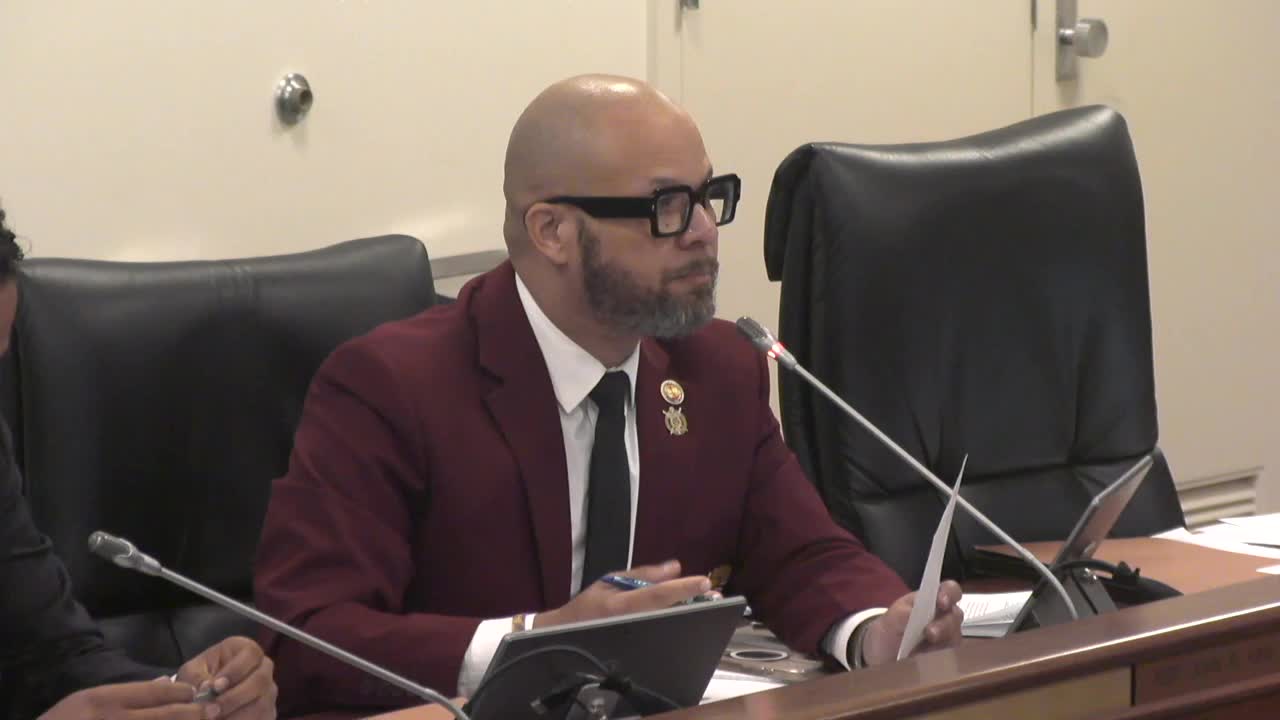
Committee members expressed divided views about which conduct should trigger felony treatment. Representative Spencer Rose questioned whether nonviolent first‑time offenders could be swept into enhanced penalties by narrowly defined aggravators. “I get the logic of everything, and I do support the enhancements. I just get a little more concerned when we start talking about meeting these other things that could then subject someone who has no prior failure to stop,” Rose said.
Representative Bamberg and others stressed officer and public safety, pointing to high‑speed chases and foot pursuits as occasions when officers can be injured. “From a practical standpoint, you've got to give prosecutors discretion,” Mr. Britton said, adding that prosecutors could plea these cases to lesser charges where appropriate.
After adopting the general‑laws subcommittee report and the Robbins amendment (both approved by voice vote), Representative Case moved to adjourn debate on the bill to the next Judiciary Committee meeting; the motion passed on a voice vote. No final committee vote on the bill’s merits or on a full committee floor recommendation was recorded during this session.
The debate left several open questions members asked to resolve before the bill returns: whether enhancements should apply only to second or subsequent convictions or also to first offenses when specified aggravating facts are present; how prosecutor discretion and charging practices will interact with the new statutory elements; and the DMV’s requested one‑year enactment delay to accommodate system changes.
The panel did not take a roll‑call vote on the bill itself and set the matter for continued consideration at the next Judiciary Committee meeting.