Get Full Government Meeting Transcripts, Videos, & Alerts Forever!
Get email alerts on the School Board Elections topic
No spam. Unsubscribe anytime.
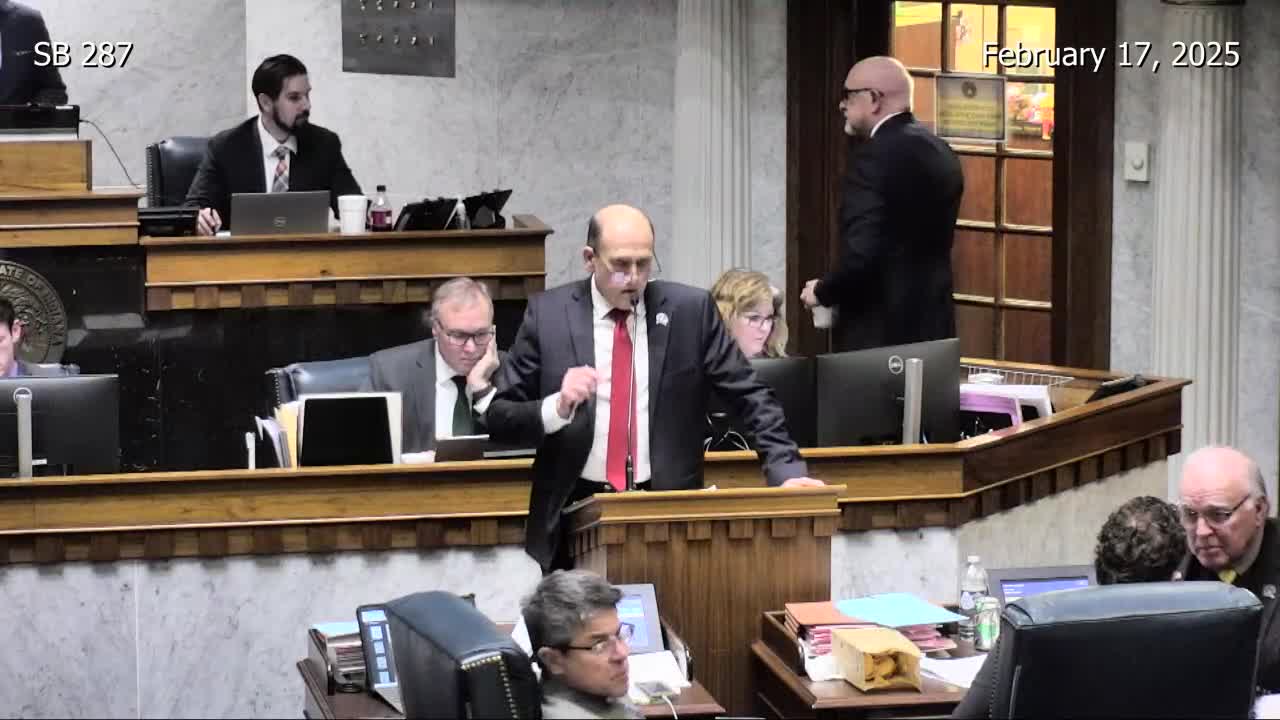
Senate narrowly approves bill to make school board elections partisan after lengthy floor fight
Summary
Senate Bill 287 will permit partisan school board nominations and move contests into the primary process; it passed 26-20 after hours of debate about partisanship, the Hatch Act and local recruitment.
Senate Bill 287, filed by Senator Burns, advanced through a full floor debate and passed 26-20 on third reading. The bill would allow school board candidates to run with party labels and use the party primary process to nominate candidates; candidates may still run as independents where applicable.
Burns urged passage as a transparency measure, saying school board races are already political and that party labels help voters decide. "The current system is not fair. It's already political. It's already partisan," Burns said, arguing that party labels would help voters and increase participation.
Opponents said the change risks driving volunteers away from school boards and injecting broader partisan fights into local schools. Senator Taylor said the measure would politicize parents and community volunteers and warned it would make recruiting candidates harder: "If you want scribe boards, to get nothing done and be like Washington, D.C., unlike us, we can say we agree about 85% of this stuff, then put a whole bunch of Democrats in 1 room, and put a whole bunch of Republicans in 1 room, and ask them to come up with a compromise. It ain't gonna work."
Legal and administrative concerns were raised about the federal Hatch Act and who would be disqualified from running. Several senators noted that certain federally funded local employees (for example, some positions funded in whole or in part with federal grants) could be affected, and that the bill may create unintended disqualifications for local public employees; supporters said the bill could in some cases clarify compliance.
Polling and stakeholder statements were debated on the floor. Senators cited a Ball State Bowen Center 2024 survey showing about 27% support among Hoosiers for partisan school board races; proponents referenced a January 2025 Center for Excellence in Polling result reporting higher approval. Education associations including the state school board association and teacher organizations publicly opposed the bill in committee and on the floor; several local school board presidents spoke in favor in written statements referenced on the floor.
Vote and next steps: The Senate recorded 26 ayes and 20 noes and sent the bill to the House. The floor exchange made clear the issue will remain controversial as it advances.
Ending: If enacted, the change would alter the nomination process for school board candidates statewide and could shift how local school governance campaigns are organized and funded.